
Egungun
In its own language: Egúngún
A Yoruba ancestor masquerade where robed dancers embody the spirits of the dead.
Egungun is a Yoruba masked performance from southwestern Nigeria that honors departed ancestors. Dancers wear layered cloth costumes to become vessels for ancestral spirits who visit to offer blessings and enforce community ethics.
Watch it dancedShare on WhatsApp
- Dancers whirl to create a breeze of blessing from flying cloth lappets.
- Men only perform the masking; women sing praise poems and support rituals.
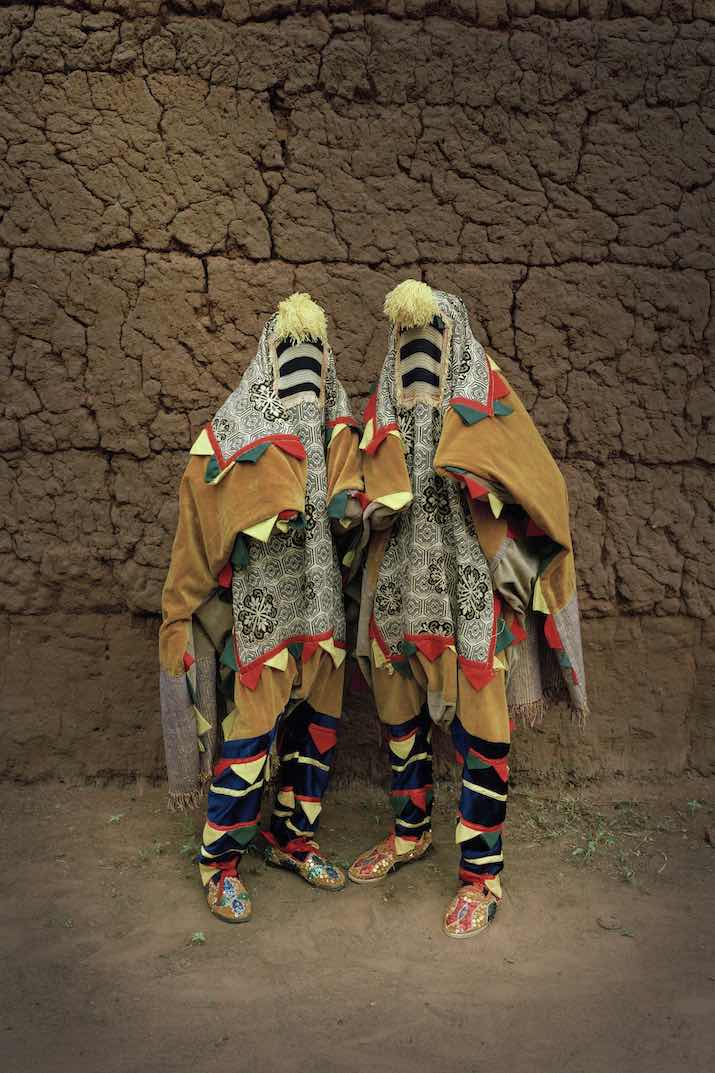
- Costumes use indigo Aso-Oke cloth resembling burial shrouds under the skin.
- Amulets inside the costume protect the wearer during spiritual possession.
- The festival strengthens community bonds and promotes trade in Yorubaland.
What is Egungun?
Egungun refers to both the masked figure and the collective spirit of ancestors in Yoruba culture. It serves as a visible bridge between the living and the departed. Performers wear elaborate, multi-layered costumes to transform into these spiritual entities. The dance acts as a communal event where ancestors return to bless families and remind people of ethical standards. It is a powerful display of social prestige and religious devotion within the Yoruba world.
Where does Egungun come from?
The practice originates from the Yoruba people of southwestern Nigeria. Legends suggest women once controlled the cult but lost power to men through trickery. The term derives from 'Egúngún,' meaning the collective dead. Variations exist across towns like Ibadan and Ogbomoso. The tradition spread to Brazil via the diaspora, particularly on Itaparica island. It remains a core element of Yoruba identity and ancestral worship.
How is Egungun danced?
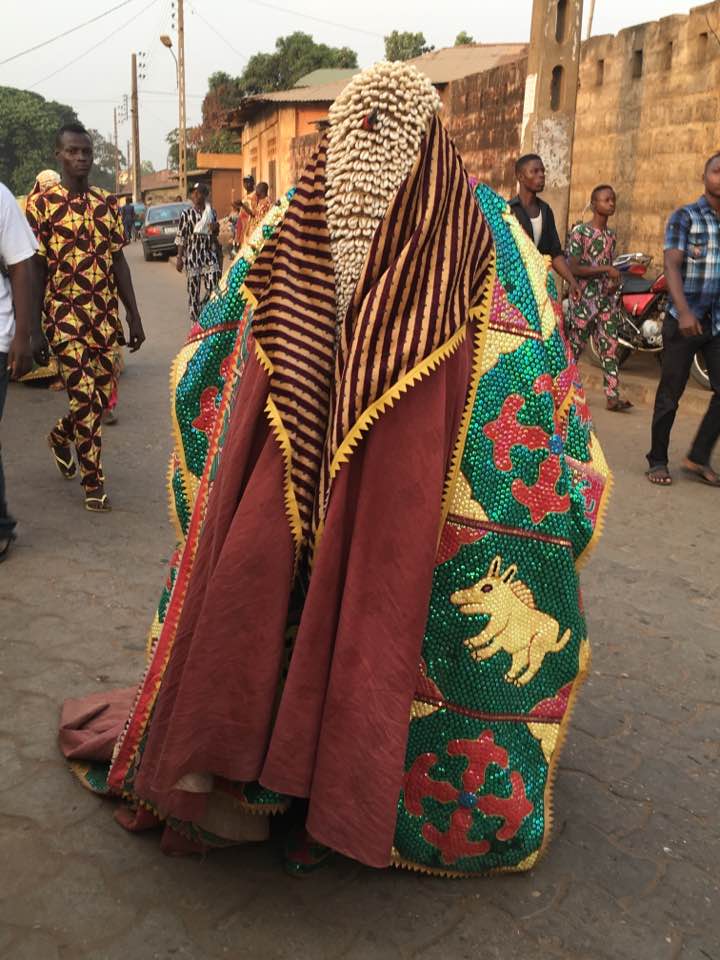
Dancers whirl vigorously, causing the long cloth lappets of their costumes to fly outward. This motion creates a 'breeze of blessing' associated with wind deities. Attendants guide the masked figures through crowds using separate masquerade costumes. The performers mime behaviors to expose community strengths and weaknesses. They move in processions to marketplaces and gather for staged performances before spectators.
Egungun, drawn
The music of Egungun
Drumming accompanies the rhythmic movements of the dancers. Women participate by singing oriki, which are praise poems detailing family histories. The music supports the trance-like state of the performers. Choral responses from the audience engage with the spiritual presence. The soundscape reinforces the connection between the physical dance and the invoked spirits.
Costume and what is carried
The ensemble features an inner sack made of indigo and white Aso-Oke cloth, resembling a burial shroud. Face and hands are covered by netting to hide the wearer's identity. Outer layers consist of expensive textile lappets decorated with sequins, braids, and amulets. Metallic objects catch light during movement. Amulets containing medicinal preparations provide spiritual protection for the vulnerable dancer.


When and where Egungun is danced
Festivals occur annually, with specific days assigned to different lineages. Elders known as Alagba preside over family rites. Community priests invoke ancestors through drumming and dance. The event strengthens bonds between families and the deceased. It promotes trade and social cohesion across religious beliefs. Performances conclude with messages and warnings delivered to the assembled crowd.
Styles of Egungun
Different towns feature distinct types such as Danafojura in Ogbomoso and Elewe in Ìgbómìnà regions. Costumes vary in wealth and complexity based on family status. Some ensembles are repaired yearly, while others are replaced entirely through divination. The Brazilian tradition maintains the cult on Itaparica island with local adaptations. Classification remains complex due to overlapping categories and layering practices.
What Egungun means
Egungun embodies the Yoruba belief in the ongoing influence of ancestors. It reinforces social order by compelling adherence to past ethical standards. The ritual highlights the separation of genders, with men masking and women supporting. It represents a reunion of the sacred and worldly through fabric layers. The tradition persists as a vital expression of heritage and spiritual continuity.
Questions people ask about Egungun
What is Egungun?
Egungun is a Yoruba masked performance honoring ancestors. Dancers wear layered costumes to embody spirits who visit to bless communities and enforce ethical standards.
Where does Egungun come from?
It originates from the Yoruba people of southwestern Nigeria. The tradition also exists in Brazil, particularly on Itaparica island, following the African diaspora.
Who performs Egungun?
Only men wear the masks and costumes to become the spirits. Women support the ritual by singing praise poems, dancing, and participating in the chorus without masking.
When is it danced?
It is performed during annual festivals called Odun Egungun. Specific days are assigned to different lineages to present their ancestral masquerades to the public.
Why is it important?
It connects the living with the dead, ensuring ancestors remain part of the community. It reinforces social ethics, promotes trade, and strengthens familial and communal bonds.
Good reading and sources
- Encyclopaedia BritannicaArticle
- Nigeria's Egungun festival: Colour, culture and communityBBC, Article
- Egungun on WikipediaEncyclopedia
- More photos and video on Wikimedia CommonsPhotos and video
- Wikidata recordOpen data
- Videos of Egungun on YouTubeSearch results, not chosen by Ghungroo
The facts on this page come from the Wikipedia article "Egungun", written by its contributors and used under the CC BY-SA 4.0 licence, and from its Wikidata record (CC0). Ghungroo rewrote the text in its own words, with AI assistance, and compares every page with the article to make sure no passage is copied. It may be reused under the same CC BY-SA 4.0 licence with a link back.
It may contain mistakes, and it describes the dance in outline: it is not a lesson. Traditions differ from one teacher, village or family to the next. If something is wrong, tell us. Last refreshed 2026-10-03.

Its cousins elsewhere
All ritual and sacred dances 🇮🇳 India and 1 moreGarba
A circle dance from Gujarat performed around a clay pot during the Navratri festival.Folk dance · Circle
🇮🇳 India and 1 moreGarba
A circle dance from Gujarat performed around a clay pot during the Navratri festival.Folk dance · Circle
 🇻🇪 VenezuelaDancing devils of Corpus ChristiDiablos danzantes de Corpus Christi
Masked dancers in red parade and perform on Corpus Christi in Venezuelan townsRitual dance · Procession · Group
🇻🇪 VenezuelaDancing devils of Corpus ChristiDiablos danzantes de Corpus Christi
Masked dancers in red parade and perform on Corpus Christi in Venezuelan townsRitual dance · Procession · Group
 🇮🇱 IsraelHakafotהַקָּפוֹת
A joyful circling procession with Torah scrolls in synagogue on Simchat Torah and SukkotRitual dance · Procession · Circle
🇮🇱 IsraelHakafotהַקָּפוֹת
A joyful circling procession with Torah scrolls in synagogue on Simchat Torah and SukkotRitual dance · Procession · Circle
 🇮🇳 India and 1 moreManipuri danceJagoi Raas, Raas Jagoi
A classical dance-drama from Manipur, telling stories of Krishna and RadhaClassical dance · Group · Solo
🇮🇳 India and 1 moreManipuri danceJagoi Raas, Raas Jagoi
A classical dance-drama from Manipur, telling stories of Krishna and RadhaClassical dance · Group · Solo