Nutbush
A group line dance from Australia, performed to the song Nutbush City Limits.
The Nutbush is a social line dance that originated in Australia during the 1970s. It is danced by mixed groups of all ages at parties and schools, following a simple grid pattern set to Ike & Tina Turner's hit song.
Watch it dancedShare on WhatsApp
- Named after Tina Turner's birthplace, though she never danced it.
- Likely created by NSW educators in the mid-1970s as a teaching aid.
- Features a long intro allowing dancers to form a grid before starting.
- World records for participation were set at Big Red Bash festivals.
- Taught in Australian schools, ensuring multi-generational popularity.
What is Nutbush?
This is a group activity where people stand in rows or boxes to perform synchronized steps. Dancers of any age and gender join together at weddings, community gatherings, and school events. The movements are straightforward, allowing newcomers to learn quickly by watching others. Participants typically place their hands on their hips while standing with feet apart. The routine follows a steady beat, creating a unified visual effect as everyone moves in time with the music.
Where does Nutbush come from?
The dance emerged in the mid-1970s within Australian educational settings. Researchers suggest it may have been created by the New South Wales Department of Education as a teaching tool. Some studies link its roots to the Madison dance, possibly evolving from early attempts to teach that older style. Another theory claims it started as a faster version of the Alley Cat dance in Melbourne discotheques. Despite being named after Tina Turner's birthplace, she never actually performed these specific steps herself.
How is Nutbush danced?
Dancers begin with weight on one leg, touching the opposite foot twice before switching sides. This eight-beat sequence repeats with backward touches. Next, participants bring knees across their body toward the opposite hip. A single kick follows for each leg. The final section involves turning a quarter circle clockwise and clapping. Some groups add a jumping variation called the criss-cross, where legs cross over during the beat before opening outward for the clap.
Nutbush, drawn
The music of Nutbush
The routine is performed exclusively to the track Nutbush City Limits by Ike & Tina Turner. The song features a prominent drum rhythm that guides the dancers' timing. A key feature is the moderately long introduction before the main beat begins. This pause allows seated guests to rise and form the necessary grid arrangement on the floor before the active dancing starts.
Costume and what is carried
There are no specific traditional garments required for this dance. Participants wear everyday clothing suitable for movement. Hands are generally kept akimbo, resting on the hips throughout the performance. No masks, props, or special accessories are used during the standard execution of the steps.
When and where Nutbush is danced
The dance is deeply embedded in Australian culture, particularly within school systems. It has been taught in classrooms for decades, ensuring its survival across generations. It appears at social functions, weddings, and community festivals. In recent years, viral videos on platforms like TikTok introduced it to international audiences. Large-scale attempts to break Guinness World Records have taken place at music festivals in Queensland.
Styles of Nutbush
While the core steps remain consistent, minor changes exist in the final clapping sequence. The most common alternative is the criss-cross variation, which adds jumps and leg crossings. Some regions may emphasize different parts of the formation, such as strict lines versus box configurations. The dance has not developed distinct regional styles but remains largely uniform in its basic structure.
What Nutbush means
The Nutbush holds a unique place in Australian social history due to its integration into education curricula. Its popularity surged internationally through digital media in the late 2010s. It represents a shared cultural experience for many Australians who learned it in school. The dance serves as a communal bonding activity, often bringing together thousands of people at large public events.
Questions people ask about Nutbush
Where did the Nutbush dance originate?
It likely began in the mid-1970s within Australian schools, possibly developed by the New South Wales Department of Education as a physical education tool based on earlier dances like the Madison.
What song is the Nutbush danced to?
It is performed exclusively to Ike & Tina Turner's 1973 hit song Nutbush City Limits. The track's structure, with a long intro, helps dancers assemble before the beat begins.
Is the Nutbush difficult to learn?
No, the steps are considered simple and repetitive. Dancers can usually pick them up by watching others, making it accessible for all ages and skill levels at social gatherings.
Why is the Nutbush so popular in Australia?
Its enduring popularity stems from its inclusion in school curricula across various states since the 1970s, ensuring that multiple generations of Australians know the routine.
Has the Nutbush broken any world records?
Yes, multiple Guinness World Records for largest group dancing have been set in Queensland, culminating in over 5,800 participants at the Big Red Bash festival in 2023.
Good reading and sources
- Nutbush (dance) on WikipediaEncyclopedia
- Wikidata recordOpen data
- Videos of Nutbush on YouTubeSearch results, not chosen by Ghungroo
The facts on this page come from the Wikipedia article "Nutbush (dance)", written by its contributors and used under the CC BY-SA 4.0 licence, and from its Wikidata record (CC0). Ghungroo rewrote the text in its own words, with AI assistance, and compares every page with the article to make sure no passage is copied. It may be reused under the same CC BY-SA 4.0 licence with a link back.
It may contain mistakes, and it describes the dance in outline: it is not a lesson. Traditions differ from one teacher, village or family to the next. If something is wrong, tell us. Last refreshed 2026-10-03.
More from Australia
All the dances of Australia 🇬🇧 United Kingdom and 5 moreBallroom dance
Partner dances performed socially and in competition, with roots in EuropeSocial dance · Couple · Group
🇬🇧 United Kingdom and 5 moreBallroom dance
Partner dances performed socially and in competition, with roots in EuropeSocial dance · Couple · Group
 🇺🇸 United States and 4 morePole dance
A vertical acrobatic dance combining strength and artistry on a chrome or steel column.Social dance · Solo
🇺🇸 United States and 4 morePole dance
A vertical acrobatic dance combining strength and artistry on a chrome or steel column.Social dance · Solo
 🇺🇸 United States and 2 moreSwing dance
A lively group of partner dances born with jazz in 1920s–40s AmericaSocial dance · Couple · Circle
🇺🇸 United States and 2 moreSwing dance
A lively group of partner dances born with jazz in 1920s–40s AmericaSocial dance · Couple · Circle
Its cousins elsewhere
All folk dances 🇬🇧 United Kingdom and 5 moreMorris dance
A group folk dance from England, with bells, sticks or handkerchiefsFolk dance · Group · Procession
🇬🇧 United Kingdom and 5 moreMorris dance
A group folk dance from England, with bells, sticks or handkerchiefsFolk dance · Group · Procession
 🇰🇪 Kenya and 1 moreAdumu
A vertical leaping dance performed by Maasai warriors in a circle to show strength and agility.Folk dance · Circle
🇰🇪 Kenya and 1 moreAdumu
A vertical leaping dance performed by Maasai warriors in a circle to show strength and agility.Folk dance · Circle
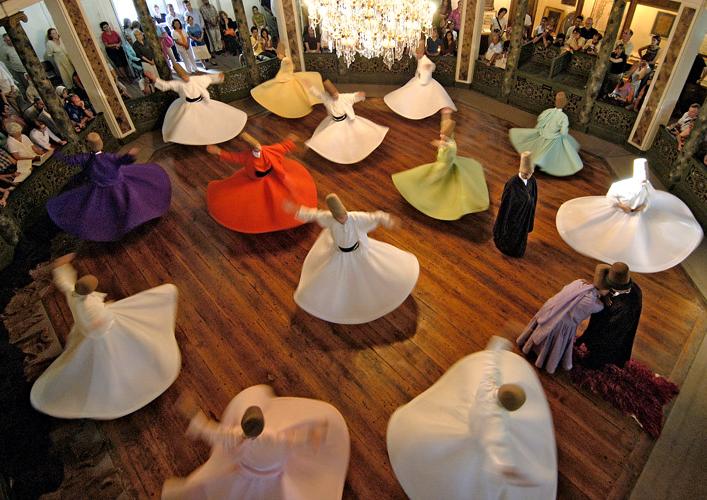 🇹🇷 Turkey and 3 moreSufi whirling
A meditative spinning dance practiced by Sufi dervishes during worship ceremoniesRitual dance · Solo · Group
🇹🇷 Turkey and 3 moreSufi whirling
A meditative spinning dance practiced by Sufi dervishes during worship ceremoniesRitual dance · Solo · Group
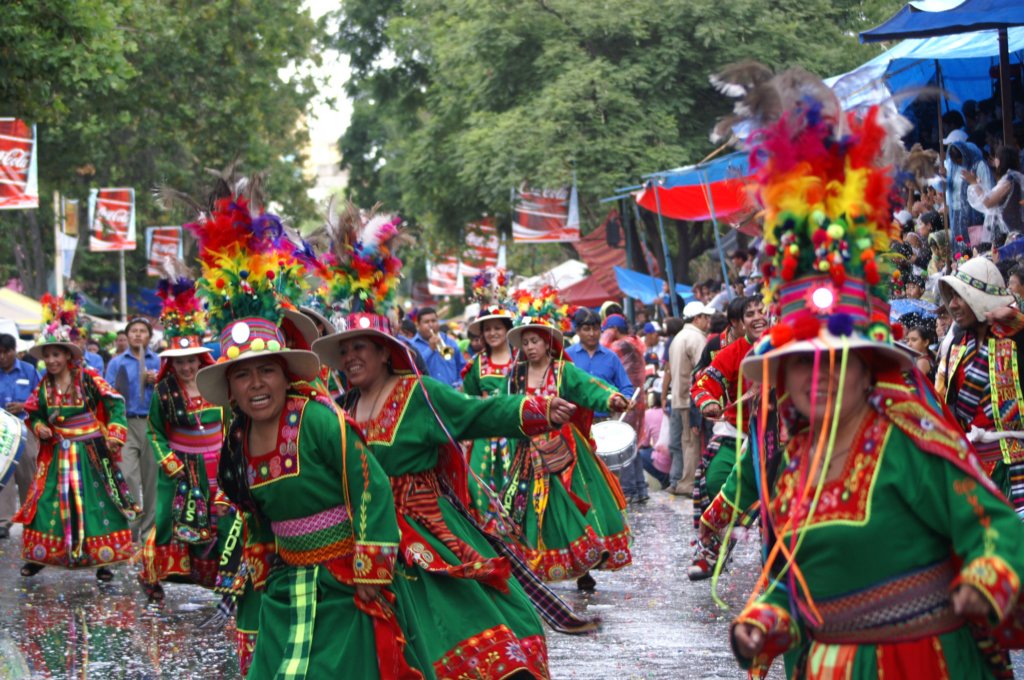 🇧🇴 BoliviaTinku
A Bolivian dance that echoes ritual combat, with bold costumes and warlike rhythmsFolk dance · Circle · Group
🇧🇴 BoliviaTinku
A Bolivian dance that echoes ritual combat, with bold costumes and warlike rhythmsFolk dance · Circle · Group