🇦🇹 The dances of Austria
8 dances from Austria, best known first, across 4 cities and regions.
Austrian folk dancing centers on the Ländler, waltz, and Schuhplattler, blending figure and round dances into a distinct national style. It is defined by specific instruments like the Styrian harmonica and strict social structures at festivals.
- Schuhplattler and Ländler are central to Austrian folk dancing.
- The Ländler rhythm influenced the 19th-century Viennese waltz.
- Styrian harmonica is a typical instrument for these dances.
- Edelweiss was created for The Sound of Music, not a folk song.
- Sprachinseltänze originate in Austria but are danced by minorities abroad.
Dance in Austria
In Austria, the term Volkstanz refers to the national folk dance tradition, while Folkloretänze describes broader folklore activities. The core of this practice involves combining different figures with specific tunes or using basic steps for round dancing. This includes the waltz and polka, which differ significantly from standard ballroom versions. Figure dancing links various movements under one name, creating a structured yet flexible social experience. The tradition emphasizes community participation through organized blocks of dance, maintaining a clear separation between authentic local customs and international misconceptions about what constitutes true Austrian heritage.
Folk and regional dances 5 dances
The most recognized forms include Schuhplattler, Ländler, and Zwiefacher. The Ländler serves as a foundational rhythm that influenced the later development of Viennese waltz music. Dancers perform in groups, often starting with an opening round before moving into specific sets. In Vienna, events feature four long sets with breaks for figure dancing. Other regions prefer shorter blocks of three to five dances. These gatherings are attended by those dedicated to preserving tradition, often held in historic venues like baroque palaces during summer months.
Music and dress
The sound is driven by the Styrian harmonica, a type of accordion, alongside fiddles, clarinets, harps, flutes, and brass bands. The contrabass or guitar often provides accompaniment. Unlike modern folk-pop styles, drums are strictly avoided in traditional settings. The music supports the rhythmic structure of the Ländler, which directly informed the tempo and feel of the 19th-century Viennese waltz. This acoustic setup creates a warm, acoustic environment suitable for close partner dancing.
From region to region
Dance practices vary across the country. Vienna hosts longer, more elaborate sets with significant breaks, often in grand architectural spaces. Other parts of Austria utilize shorter blocks containing three to five dances with quicker transitions. Additionally, Sprachinseltänze represent dances created by German-speaking minorities living outside Austria, such as those in Transylvania. These language island dances, like Rediwaire, originate from Austrian roots but have evolved within different cultural contexts abroad.
Dance today
Modern interest focuses on correcting common myths, such as the belief that the Chicken Dance or Edelweiss are traditional Austrian elements. Authentic preservation efforts highlight the Land der Berge anthem and genuine Ländler forms. Festivals continue to thrive in summer, offering twice-weekly events during July and August. Organizations maintain archives and calendars to support enthusiasts, ensuring the distinction between choreographed derivatives and original folk traditions remains clear.
The facts in this overview come from the Wikipedia article "Austrian folk dance", written by its contributors and used under the CC BY-SA 4.0 licence. Ghungroo rewrote the text in its own words, with AI assistance, and compares every page with the article to make sure no passage is copied. It may be reused under the same CC BY-SA 4.0 licence with a link back.
Cities and regions of Austria
 🇦🇹 Austria and 4 moreWaltz
A turning couple dance in triple time, first popular in 18th-century EuropeBallroom or Latin dance · Couple
🇦🇹 Austria and 4 moreWaltz
A turning couple dance in triple time, first popular in 18th-century EuropeBallroom or Latin dance · Couple
 🇬🇧 United Kingdom and 5 moreBallroom dance
Partner dances performed socially and in competition, with roots in EuropeSocial dance · Couple · Group
🇬🇧 United Kingdom and 5 moreBallroom dance
Partner dances performed socially and in competition, with roots in EuropeSocial dance · Couple · Group
 🇭🇺 Hungary and 5 moreCsárdás
A Hungarian folk dance that begins slowly and ends in a fast spin.Folk dance · Couple · Group
🇭🇺 Hungary and 5 moreCsárdás
A Hungarian folk dance that begins slowly and ends in a fast spin.Folk dance · Couple · Group
 🇫🇷 France and 4 moreQuadrille
A social dance for four couples in a square, with set figures and changing musicSocial dance · Set or square · Group
🇫🇷 France and 4 moreQuadrille
A social dance for four couples in a square, with set figures and changing musicSocial dance · Set or square · Group
 🇦🇹 Austria and 2 moreViennese waltz
A fast-turning partner dance from Vienna, danced in a closed holdBallroom or Latin dance · Couple
🇦🇹 Austria and 2 moreViennese waltz
A fast-turning partner dance from Vienna, danced in a closed holdBallroom or Latin dance · Couple
 🇦🇹 Austria and 4 moreLändler
A lively partner dance with hops and stamps, found across Austria and its neighborsFolk dance · Couple
🇦🇹 Austria and 4 moreLändler
A lively partner dance with hops and stamps, found across Austria and its neighborsFolk dance · Couple
 🇫🇷 France and 4 moreGalop
A fast-paced ballroom dance in 2/4 time, often closing the nightBallroom or Latin dance · Couple
🇫🇷 France and 4 moreGalop
A fast-paced ballroom dance in 2/4 time, often closing the nightBallroom or Latin dance · Couple
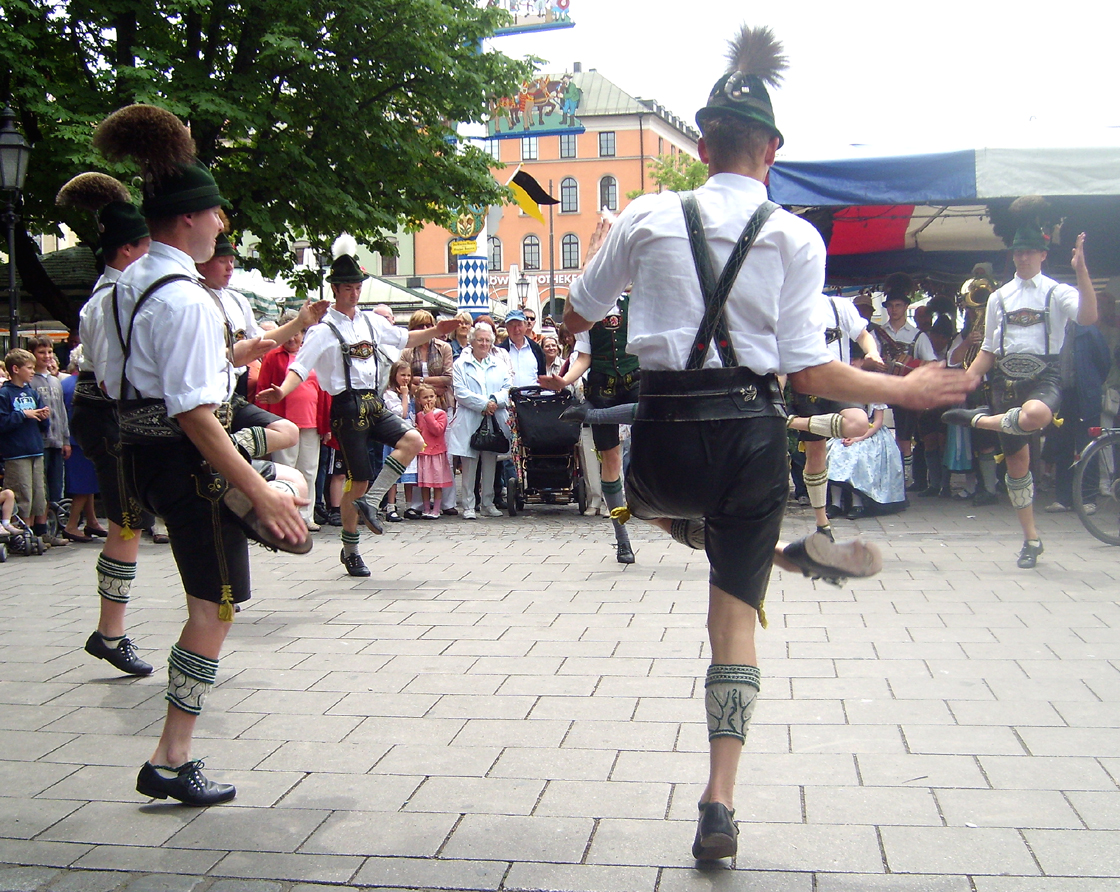 🇩🇪 Germany and 1 moreSchuhplattler
A stomping, slapping folk dance from the Eastern Alps, danced in lederhosen and dirndlsFolk dance · Couple · Circle
🇩🇪 Germany and 1 moreSchuhplattler
A stomping, slapping folk dance from the Eastern Alps, danced in lederhosen and dirndlsFolk dance · Couple · Circle
Photo credits on this page
The small pictures above come from Wikimedia Commons under free licences. Some are cropped to fit.
- Viennese waltz: Sigismund von Dobschütz, CC BY-SA 3.0, source
- Ballroom dance: Johnston, Frances Benjamin, 1864-1952, photographer., Public domain, source
- Ländler: Emil Rau, Public domain, source
- Schuhplattler: Harald Bischoff, CC BY-SA 3.0, source
- Galop: Johann Christian Schoeller / Andreas Geiger the Elder, Public domain, source
- Waltz: unknown engraver, Public domain, source
- Quadrille: Silar, CC BY-SA 4.0, source
- Csárdás: Unknown author, Public domain, source
Social and popular dance 6 dances
Festivals follow a predictable sequence to ensure everyone participates. Attendees begin with an opening round on the dance floor. A welcoming speech follows before waltzes are danced in blocks with pauses in between. The event concludes with a special dance and a goodbye song. These gatherings are carefully organized, taking place in extraordinary locations such as the Alpenverein or the Belvedere palace. They provide a space for tradition-minded individuals to connect through shared movement and music.