
Quadrille
A social dance for four couples in a square, with set figures and changing music
Quadrille is a group dance for four couples arranged in a square, first popular in late 18th- and 19th-century Europe and later in its colonies. Dancers perform a sequence of figures to a series of musical parts, often using steps from ballet. It survives in folk traditions in the Caribbean, Jamaica, and Madagascar.
Watch it dancedShare on WhatsApp
- Danced by four couples arranged in a square set
- Originated in France around 1760 and spread across Europe
- Uses ballet terms and steps like jeté and chassé
- Music is divided into five or six distinct parts
- Survives as a folk tradition in Jamaica and Madagascar
What is Quadrille?
Quadrille is a dance for four couples who stand at the corners of a square, facing the center. Each couple takes turns leading figures, while the others follow or rest. The dance is made up of several sections, each with its own music and steps. Movements often borrow from ballet, with terms like jeté and chassé. Quadrille is lively and coordinated, with dancers forming patterns as a group.
Where does Quadrille come from?
The quadrille began as a form of cotillion in France around 1760, evolving from military parades where four horsemen performed in square formations. It spread through European high society in the early 19th century, reaching England in 1816 and becoming a fashionable craze. Over time, it absorbed elements from other dances, such as the waltz, and inspired new forms like The Lancers. The dance later took root in colonies, where it became part of local folk traditions.
How is Quadrille danced?
Dancers stand in a square set, with each couple at a corner. The head couple and side couples alternate leading the figures. Steps are drawn from ballet, including movements like plié (bending the knees), chassé (gliding step), and arabesque (balancing on one leg). The group performs set patterns, sometimes with only one couple moving while others wait, then switching roles. The dance is structured and precise, with each figure repeated in turn.
Quadrille, drawn
The music of Quadrille
Quadrille music is divided into five or six parts, each with its own theme and rhythm. Common time signatures are 2/4 and 6/8. Each part is based on popular songs or dances of the 19th century, and the music often features a lively finale. In the 19th century, composers like Josef Lanner and the Strauss family wrote quadrilles, sometimes using opera melodies. The sequence of musical themes matches the dance figures.


When and where Quadrille is danced
Quadrille was originally danced at social gatherings and balls in Europe. It remains part of folk and festival traditions in places like Jamaica and Madagascar, where it may be performed in both ballroom and local styles. In some regions, it is taught and danced in clubs or at cultural events, helping to keep the tradition alive.
Styles of Quadrille
Several versions of the quadrille developed over time. The Lancers and The Caledonians are well-known variants, each with its own figures and music. In Vienna, an extra figure was added, making six parts instead of five. In the Caribbean and Jamaica, local adaptations include kwadril and two distinct styles: ballroom and campstyle. These regional forms often reflect local music and customs.
What Quadrille means
Quadrille became a symbol of polite society in 19th-century Europe and was referenced in literature and politics as a metaphor for shifting alliances. In former colonies, it has become a marker of cultural identity and heritage. The dance is still performed in folk clubs and at festivals, connecting communities to their history and traditions.
Questions people ask about Quadrille
Where does the quadrille come from?
Quadrille originated in France around 1760, evolving from cotillion and military parade formations. It later spread to other parts of Europe and to colonies such as Jamaica and Madagascar.
Who dances the quadrille and how are they arranged?
Quadrille is danced by four couples, usually mixed, who stand at the corners of a square formation. Each couple takes turns leading the figures while others follow or rest.
When and why is the quadrille performed?
Quadrille was originally performed at social gatherings and balls in Europe. Today, it is danced at festivals, folk events, and cultural celebrations, especially in places like Jamaica and Madagascar.
What kind of music is used for the quadrille?
The music for quadrille is divided into several parts, often using 2/4 or 6/8 time, and is based on popular songs or dances from the 19th century. Each part matches a figure in the dance.
Are there different styles of quadrille?
Yes, there are several variants, such as The Lancers and The Caledonians in Europe, and local forms like kwadril in the Caribbean and two styles in Jamaica: ballroom and campstyle.
Good reading and sources
- Quadrille on WikipediaEncyclopedia
- More photos and video on Wikimedia CommonsPhotos and video
- Wikidata recordOpen data
- Videos of Quadrille on YouTubeSearch results, not chosen by Ghungroo
The facts on this page come from the Wikipedia article "Quadrille", written by its contributors and used under the CC BY-SA 4.0 licence, and from its Wikidata record (CC0). Ghungroo rewrote the text in its own words, with AI assistance, and compares every page with the article to make sure no passage is copied. It may be reused under the same CC BY-SA 4.0 licence with a link back.
It may contain mistakes, and it describes the dance in outline: it is not a lesson. Traditions differ from one teacher, village or family to the next. If something is wrong, tell us. Last refreshed 2026-10-03.
More from France
All the dances of France 🇦🇹 Austria and 4 moreWaltz
A turning couple dance in triple time, first popular in 18th-century EuropeBallroom or Latin dance · Couple
🇦🇹 Austria and 4 moreWaltz
A turning couple dance in triple time, first popular in 18th-century EuropeBallroom or Latin dance · Couple
 🇧🇪 Belgium and 5 moreProcessional giant
Huge costumed figures carried and danced in European street processionsFolk dance · Solo · Procession
🇧🇪 Belgium and 5 moreProcessional giant
Huge costumed figures carried and danced in European street processionsFolk dance · Solo · Procession
 🇵🇱 Poland and 3 morePolonaisePolonez, chodzony
A stately walking dance in triple time, opening Polish celebrations and ballsFolk dance · Couple · Procession
🇵🇱 Poland and 3 morePolonaisePolonez, chodzony
A stately walking dance in triple time, opening Polish celebrations and ballsFolk dance · Couple · Procession
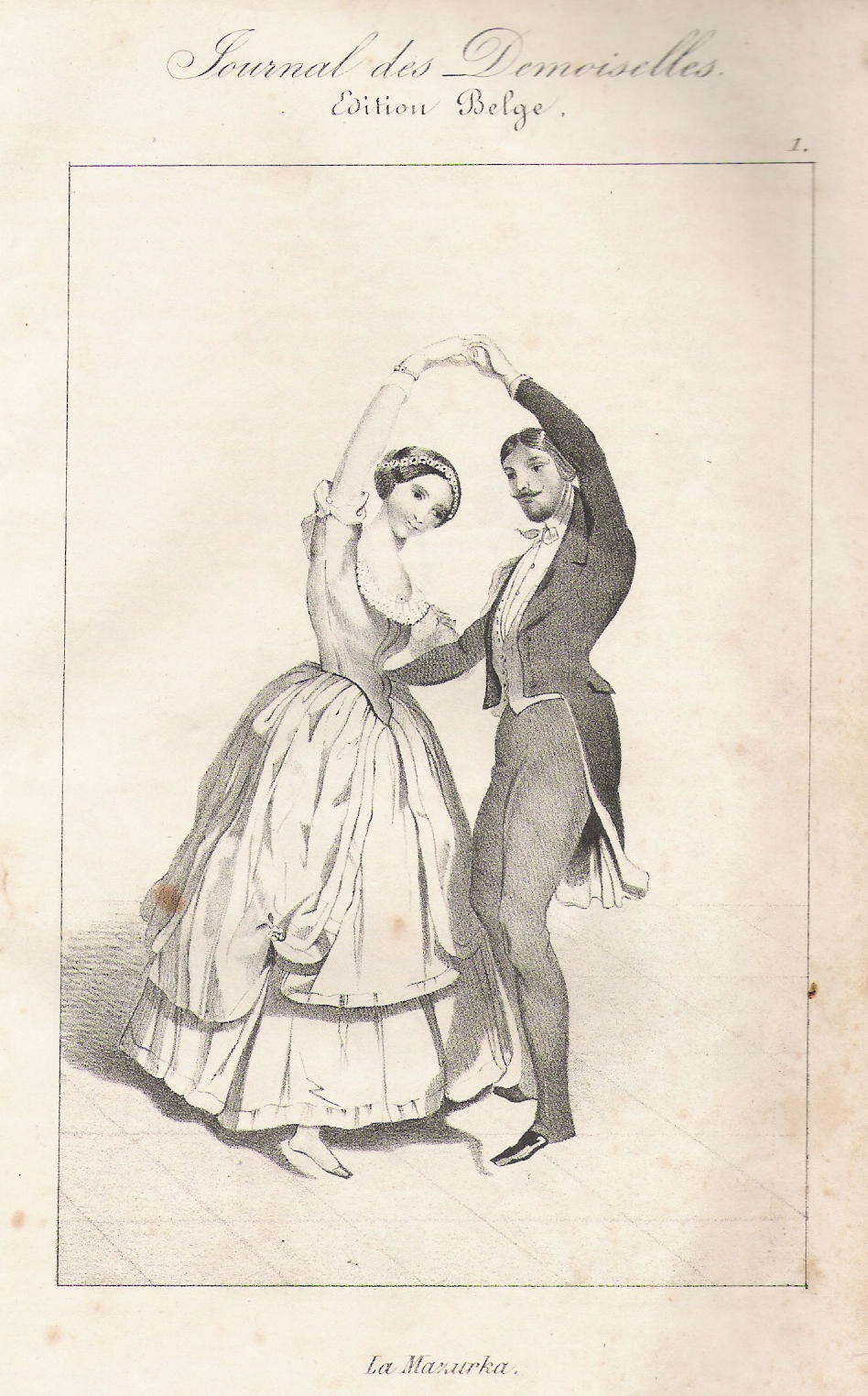 🇵🇱 Poland and 5 moreMazurka
A lively Polish folk dance in triple time, known for its shifting accentsFolk dance · Couple · Group
🇵🇱 Poland and 5 moreMazurka
A lively Polish folk dance in triple time, known for its shifting accentsFolk dance · Couple · Group
Its cousins elsewhere
All social dances 🇦🇷 Argentina and 1 moreTango
A partner dance from the Río de la Plata, danced in close or open embraceSocial dance · Couple
🇦🇷 Argentina and 1 moreTango
A partner dance from the Río de la Plata, danced in close or open embraceSocial dance · Couple
 🇮🇳 India and 1 moreFolk dance
Traditional group dances rooted in local life and passed down through generationsFolk dance · Group · Circle
🇮🇳 India and 1 moreFolk dance
Traditional group dances rooted in local life and passed down through generationsFolk dance · Group · Circle
 🇪🇬 Egypt and 3 moreBelly danceرقص شرقي
A Middle Eastern dance focused on hip and torso articulation.Folk dance · Solo
🇪🇬 Egypt and 3 moreBelly danceرقص شرقي
A Middle Eastern dance focused on hip and torso articulation.Folk dance · Solo
 🇦🇷 Argentina and 1 moreArgentine tango
A partner dance from Buenos Aires suburbs, defined by the bandoneon and an intimate embrace.Social dance · Couple
🇦🇷 Argentina and 1 moreArgentine tango
A partner dance from Buenos Aires suburbs, defined by the bandoneon and an intimate embrace.Social dance · Couple