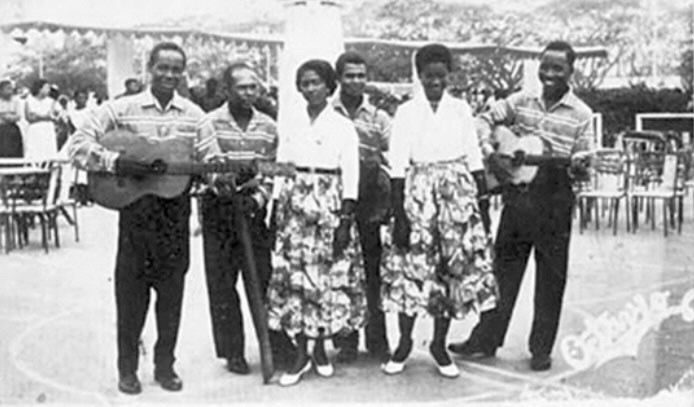
Rebita
A circle dance from Angola where couples link bellies in a rhythmic sway.
Rebita is a traditional music and dance form from Angola. Couples dance in a circle led by a central coordinator, performing the Massemba step which involves touching bellies. The style gained popularity in Luanda and influenced dances in Brazil.
Watch it dancedShare on WhatsApp
- Couples dance in a circle touching bellies in the Massemba step.
- Enslaved people brought the dance to Brazil in the late 1700s.
- It influenced the creation of Umbigada, lundu, and Samba in Brazil.
- Angola applied for UNESCO heritage status in 2019.
- Musicians added the concertina to traditional local rhythms.
What is Rebita?
Rebita is a social dance tradition from Angola. It features couples arranged in a circle around a leader. The dancers perform a movement called Massemba, which translates to a touch of the bellies. This physical connection creates a unified group motion. The dance is accompanied by music that evolved with the addition of European instruments like the concertina.
Where does Rebita come from?
The dance originated in Angola and became popular in Luanda. Enslaved people brought variations of this style to Brazil in the late eighteenth century. There, it contributed to the development of Umbigada and lundu, which later influenced Samba. In Angola, it was known as Massemba when introduced to Portuguese settlers. The style migrated to dance halls as artists incorporated new instruments.
How is Rebita danced?
Dancers form a circle with a coordinator standing in the middle. Couples hold each other close enough to touch bellies during the Massemba step. The group moves together in a traditional rhythm. The central figure leads the formation through the dance floor. The posture requires close contact between partners to maintain the shared movement pattern.
Rebita, drawn
The music of Rebita
The performance relies on musical accompaniment that defines the genre. Early versions used local rhythms. Later iterations included European instruments such as the concertina. Musicians like Ngola Ritmos and Mestre Geraldo Morgado helped develop the style. The music supports the circular formation and the belly-touching movements.
Costume and what is carried
The sources do not provide specific details about costumes or attire. Dancers likely wear clothing suitable for social dancing in Angola. No masks or special props are mentioned in the provided text.
When and where Rebita is danced
Rebita is danced in social settings and dance halls. It has roots in the streets of Luanda. In 2019, Angola applied for UNESCO Intangible Cultural Heritage status under the name Massemba. The dance is passed down through community practice and musical evolution.
Styles of Rebita
In Brazil, the dance evolved into Umbigada and lundu. These forms eventually contributed to Samba. In Angola, the style is known as Massemba in Luanda. Different musicians have shaped the sound over time. The introduction of the concertina marked a shift toward dance hall performances.
What Rebita means
The dance represents a significant part of Angolan cultural heritage. It influenced Brazilian dance traditions through the transatlantic slave trade. UNESCO recognized its importance through a heritage application. The style reflects the blending of African rhythms with European instruments. It remains a key element of Luanda's social history.
Questions people ask about Rebita
What is Rebita?
Rebita is a traditional Angolan dance where couples form a circle and perform the Massemba step, involving touching bellies while moving to music.
Where does Rebita come from?
It originates from Angola, specifically gaining popularity in Luanda before spreading to other regions and influencing dances in Brazil.
How is it related to Samba?
Enslaved people brought Rebita to Brazil, where it mixed with local rhythms to create Umbigada and lundu, which later evolved into Samba.
What instruments accompany Rebita?
Traditional local rhythms are used, along with European instruments like the concertina, which were introduced by artists migrating to dance halls.
Is Rebita recognized internationally?
Yes, Angola applied for UNESCO Intangible Cultural Heritage status in 2019, listing the dance under its Luandan name, Massemba.
Good reading and sources
- Rebita on WikipediaEncyclopedia
- Wikidata recordOpen data
- Videos of Rebita on YouTubeSearch results, not chosen by Ghungroo
The facts on this page come from the Wikipedia article "Rebita", written by its contributors and used under the CC BY-SA 4.0 licence, and from its Wikidata record (CC0). Ghungroo rewrote the text in its own words, with AI assistance, and compares every page with the article to make sure no passage is copied. It may be reused under the same CC BY-SA 4.0 licence with a link back.
It may contain mistakes, and it describes the dance in outline: it is not a lesson. Traditions differ from one teacher, village or family to the next. If something is wrong, tell us. Last refreshed 2026-10-04.
More from Angola
All the dances of Angola 🇺🇸 United States and 3 moreTwerking
A hip-thrusting dance rooted in African traditions and New Orleans bounce music.Folk dance · Solo
🇺🇸 United States and 3 moreTwerking
A hip-thrusting dance rooted in African traditions and New Orleans bounce music.Folk dance · Solo
 🇦🇴 Angola and 4 moreKizomba
A slow partner dance from Angola, blending Semba steps with Zouk rhythms for social gatherings.Social dance · Couple
🇦🇴 Angola and 1 moreKuduro
A fast electronic dance from Angola with sharp, staccato movements inspired by street life and resilience.Social dance · Circle · Group
🇦🇴 Angola and 4 moreKizomba
A slow partner dance from Angola, blending Semba steps with Zouk rhythms for social gatherings.Social dance · Couple
🇦🇴 Angola and 1 moreKuduro
A fast electronic dance from Angola with sharp, staccato movements inspired by street life and resilience.Social dance · Circle · Group
Its cousins elsewhere
All folk dances 🇷🇺 RussiaKamarinskayaкамаринская
A fast Russian folk dance with squatting steps, played to a repeating tuneFolk dance · Solo · Group
🇷🇺 RussiaKamarinskayaкамаринская
A fast Russian folk dance with squatting steps, played to a repeating tuneFolk dance · Solo · Group
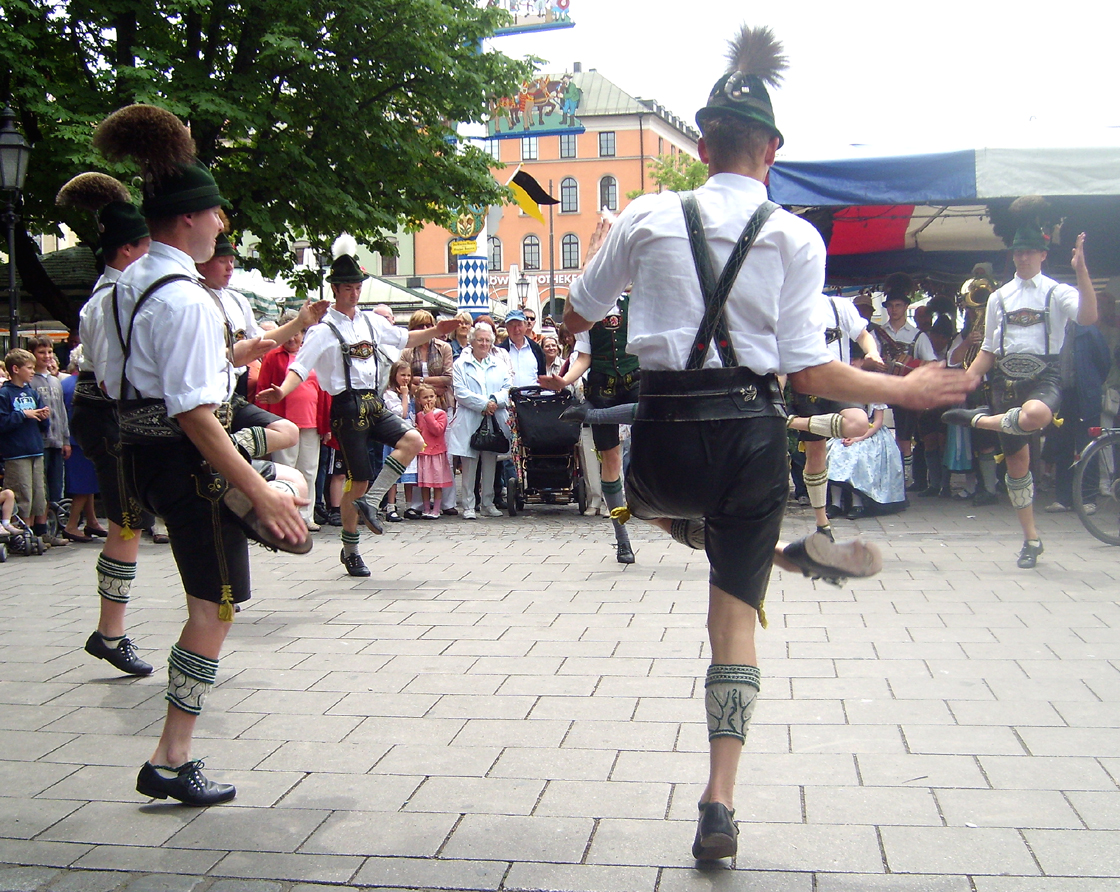 🇩🇪 Germany and 1 moreSchuhplattler
A stomping, slapping folk dance from the Eastern Alps, danced in lederhosen and dirndlsFolk dance · Couple · Circle
🇮🇪 IrelandIrish set dancing
A square folk dance of eight people, performed to Irish tunes without a caller.Folk dance · Group
🇩🇪 Germany and 1 moreSchuhplattler
A stomping, slapping folk dance from the Eastern Alps, danced in lederhosen and dirndlsFolk dance · Couple · Circle
🇮🇪 IrelandIrish set dancing
A square folk dance of eight people, performed to Irish tunes without a caller.Folk dance · Group
 🇬🇧 United KingdomBorder Morris
A winter stick dance from the English villages near WalesFolk dance · Group
🇬🇧 United KingdomBorder Morris
A winter stick dance from the English villages near WalesFolk dance · Group