
Volta
A Renaissance couple dance featuring a lifted turn, popular in the late 1500s.
The volta is a partner dance from the later Renaissance period. Couples performed it to music similar to the galliard, executing a distinctive turn and lift in a closed hold. It was once viewed as controversial but appeared in court settings across Europe.
Watch it dancedShare on WhatsApp
- Featured in the film Shakespeare in Love (1998).
- Considered risqué in its original time period.
- Involves a lift and three-quarter turn per measure.
- Associated with the galliard through shared music.
- Known as la volte in French contexts.
What is Volta?
The volta is a historical partner dance that gained popularity during the later Renaissance era. Dancers moved in a close embrace, performing a signature figure that involved turning and lifting one partner. The movement could be directed to either the right or left side. Although often linked with the galliard through shared musical styles, the volta stood apart due to its intimate physical contact. At the time of its emergence, the closeness of the hold and the nature of the lift led some observers to label the dance as risqué and morally questionable.
Where does Volta come from?
This dance emerged in the later Renaissance period, primarily within European courts. While it reached the court of Elizabeth I in England, specific records of her dancing it are likely myths popularized by modern media. The dance was known under various names, including La volta in Italian and la volte in French. Its origins are tied to the social dances of the aristocracy, though exact birthplaces remain unclear in the sources provided.
How is Volta danced?
Dancers began with steps resembling the galliard before transitioning into a closed position. The leader held his partner below her waist with one hand and placed the other on her back, while she rested her hand on his shoulder. They stepped forward simultaneously, springing onto their outside feet. The follower then leaped into the air, supported by the leader’s hands and thigh. They completed roughly three-quarters of a turn per measure before landing together. This sequence repeated for several measures before returning to an open formation.
Volta, drawn
The music of Volta
The volta was performed to music closely related to the galliard. Specific rhythmic structures or instruments are not detailed in the available sources, but the tempo allowed for the springing and lifting actions described in period instructions. The music facilitated the transition between the initial galliard-like steps and the subsequent lifted turns.
Costume and what is carried
Period attire included clothing typical of the Renaissance era. Men wore doublets and hose, while women wore gowns with structured bodices. The term 'busk' refers to a stiff support in the front of a woman's gown, which influenced how the leader could place his hand during the dance hold. No specific masks or props were used beyond the partners themselves.
When and where Volta is danced
The dance was performed at royal courts and among the aristocracy. It served as entertainment for nobility and was sometimes used in theatrical portrayals of historical figures. Despite its courtly setting, the intimate nature of the dance caused moral debates among contemporary observers who found the physical closeness inappropriate.
Styles of Volta
Spelling varied across regions, appearing as La volta, Volte, la volte, or levolto. Instructions by Thoinot Arbeau provide the most detailed account of the movement, suggesting a standardized technique despite regional name differences. Modern reconstructions vary in accuracy, with some film depictions being historically precise while others are entirely fictional.
What Volta means
The volta has been featured in numerous films and television series, often inaccurately. Movies like *Elizabeth* and *Shakespeare in Love* depict the dance, though some productions confuse it with other historical forms. The dance remains a subject of interest for historians studying Renaissance social customs and the evolution of partner dancing.
Questions people ask about Volta
What is the volta?
The volta is a Renaissance partner dance known for its closed hold and lifted turns. Couples danced to music similar to the galliard, performing a signature move where the man lifts the woman while they rotate together.
Where did the volta originate?
The dance originated in the later Renaissance period, primarily within European courts. It was popular among the aristocracy and spread across regions with varying names like La volta in Italy and la volte in France.
Why was the volta considered controversial?
Contemporary observers viewed the dance as risqué due to the close physical contact required. The closed position and the intimacy of the lift were seen as morally questionable by many people of that era.
How is the volta different from the waltz?
Although sometimes hypothesized as a precursor, the volta differs fundamentally from the waltz. The volta involves distinct springing steps and a specific lift mechanism, whereas the waltz relies on continuous gliding rotation without such lifts.
Good reading and sources
- Volta (dance) on WikipediaEncyclopedia
- Wikidata recordOpen data
- Videos of Volta on YouTubeSearch results, not chosen by EveryGhunghroo
The facts on this page come from the Wikipedia article "Volta (dance)", written by its contributors and used under the CC BY-SA 4.0 licence, and from its Wikidata record (CC0). EveryGhunghroo rewrote the text in its own words, with AI assistance, and compares every page with the article to make sure no passage is copied. It may be reused under the same CC BY-SA 4.0 licence with a link back.
It may contain mistakes, and it describes the dance in outline: it is not a lesson. Traditions differ from one teacher, village or family to the next. If something is wrong, tell us. Last refreshed 2026-10-04.
Its cousins elsewhere
All social dances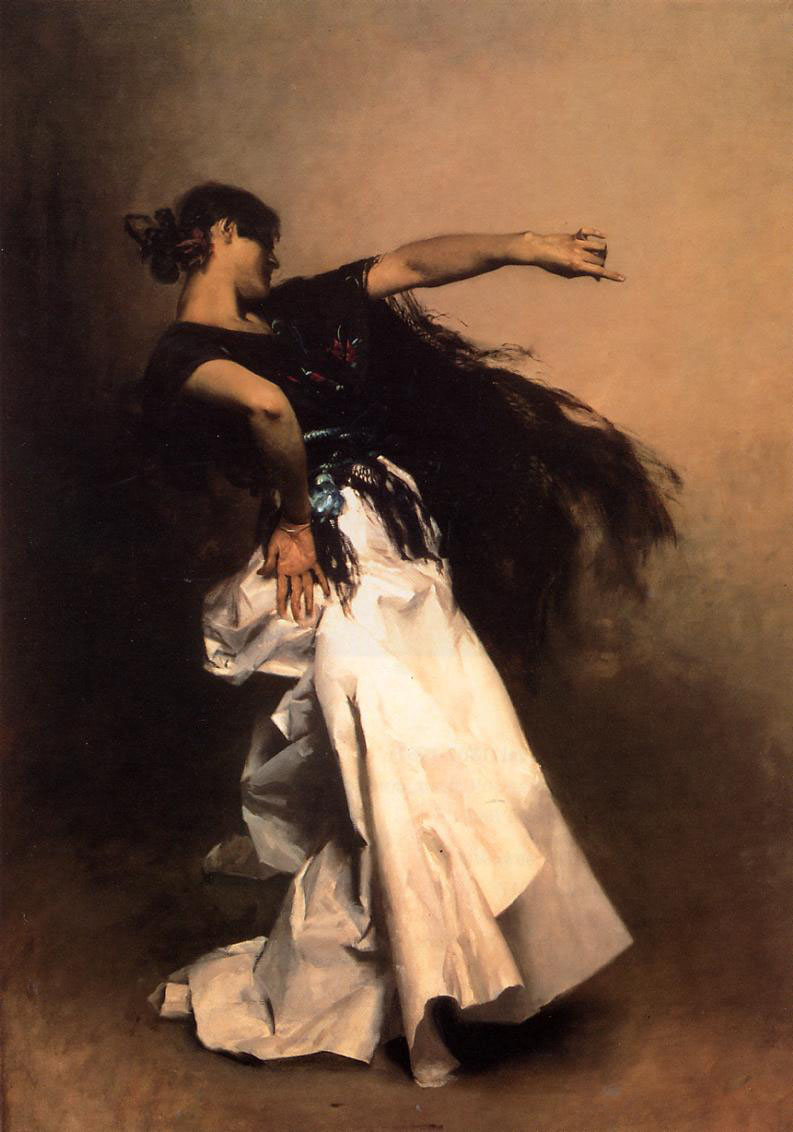 🇪🇸 SpainFlamenco
A southern Spanish art form of rhythmic footwork, singing, and acoustic guitarFolk dance · Solo · Group
🇪🇸 SpainFlamenco
A southern Spanish art form of rhythmic footwork, singing, and acoustic guitarFolk dance · Solo · Group
 🇦🇷 Argentina and 4 moreTango
A dramatic partner dance born in the ports of the Río de la Plata.Social dance · Couple
🇦🇷 Argentina and 4 moreTango
A dramatic partner dance born in the ports of the Río de la Plata.Social dance · Couple
 🇦🇹 Austria and 5 moreWaltzWalzer
A gliding partner dance in triple time, performed in a turning closed embraceBallroom or Latin dance · Couple · Set or square
🇦🇹 Austria and 5 moreWaltzWalzer
A gliding partner dance in triple time, performed in a turning closed embraceBallroom or Latin dance · Couple · Set or square
 🇮🇳 India and 1 moreFolk dance
Traditional group dances rooted in local life and passed down through generationsFolk dance · Group · Circle
🇮🇳 India and 1 moreFolk dance
Traditional group dances rooted in local life and passed down through generationsFolk dance · Group · Circle