
Ardah
In its own language: العرضة
A group sword or cane dance in two lines, performed by men in Saudi Arabia
Ardah is a traditional group dance from Saudi Arabia, performed by men in two facing rows, often holding swords or canes. Once a pre-battle ritual, it is now seen at weddings, festivals, and national events, accompanied by drums and spoken poetry.
Watch it dancedShare on WhatsApp
- Performed by men in two facing rows with swords or canes
- Accompanied by drums and spoken poetry
- Originated as a pre-battle tribal dance
- Najdi ardah is the most common form in Saudi Arabia
- Inscribed by UNESCO as Intangible Cultural Heritage in 2015
What is Ardah?
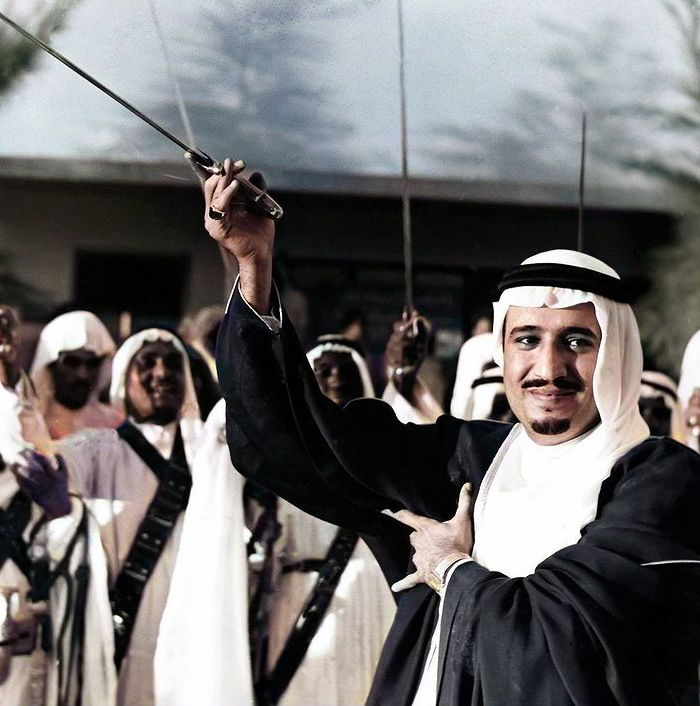
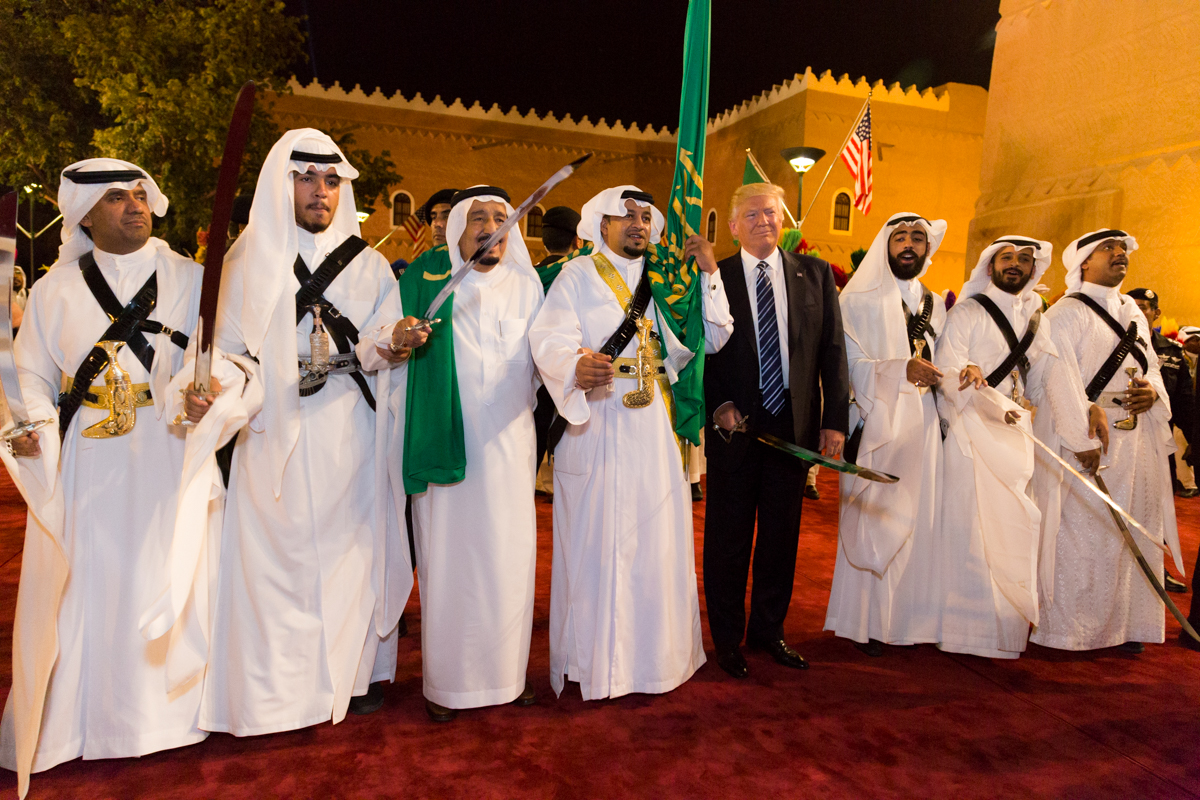
Ardah is a group dance performed by men, who stand in two lines facing each other. Dancers may hold swords or canes and move in unison, often to the rhythm of drums and the recitation of poetry. The dance is marked by its strong, collective movements and the visual display of weapons, reflecting its origins in tribal gatherings. Ardah is a prominent feature at public celebrations and official events in Saudi Arabia.
Where does Ardah come from?
The name ardah comes from the Arabic word for 'to show' or 'to parade', reflecting its original purpose of displaying a tribe's strength before battle. Historically, it was performed by male members of Arabian Peninsula tribes as a morale booster prior to armed conflict. Over time, the dance shifted from a war ritual to a cultural practice, now featured at weddings, festivals, and national ceremonies. In 2015, UNESCO recognized Najdi ardah as part of the Intangible Cultural Heritage of Humanity.
How is Ardah danced?
During ardah, men form two rows facing each other. Movements are synchronized, with dancers sometimes raising or swinging swords or canes in rhythm. The choreography is simple but powerful, emphasizing unity and collective strength. The lines may move forward and backward, and the dance is accompanied by chanting or spoken poetry, which sets the pace and mood.
Ardah, drawn
The music of Ardah
Drums provide the main musical accompaniment for ardah, setting a steady beat for the dancers. The performance is also marked by the recitation or chanting of poetry, which can be improvised or traditional. The combination of drum rhythms and spoken word gives the dance a ceremonial and communal feel.
Costume and what is carried
Dancers typically wear traditional dress, though the sources do not specify details. The most distinctive elements are the swords or canes held by participants, which are integral to the dance's visual impact. The weapons are sometimes raised or brandished in time with the music.

When and where Ardah is danced
Ardah is now performed at a range of public and private events, including weddings, festivals, and national celebrations. It is especially prominent during cultural festivals and official ceremonies, where it serves as a symbol of unity and heritage. The dance is passed down through community participation and is often featured in televised events.
Styles of Ardah
There are several regional forms of ardah across Saudi Arabia and the Arabian Peninsula. The Najdi ardah is the most widely practiced and is often called 'Saudi ardah'. Other notable versions are found in Najran, Asir, and Jizan, each with its own local style. Despite differences in steps or music, all versions share the basic structure and purpose.
What Ardah means
Ardah holds a special place in Saudi Arabian culture as a symbol of identity and tradition. Its transformation from a pre-battle ritual to a celebration of heritage reflects changes in society. The dance is recognized by UNESCO and is regularly featured in national ceremonies, reinforcing its role as a marker of cultural pride.
Questions people ask about Ardah
Where does ardah come from?
Ardah comes from the Arabian Peninsula, especially Saudi Arabia, and is linked to tribal traditions there.
When is ardah performed?
It is performed at weddings, festivals, national events, and other celebrations in Saudi Arabia.
Who takes part in ardah?
The dance is performed by men, who stand in two lines facing each other, often holding swords or canes.
What music is used for ardah?
Drums provide the main rhythm, and the dance is accompanied by spoken or chanted poetry.
What is the purpose of ardah today?
Today, ardah is a symbol of cultural identity and unity, performed at important public and private events.
Good reading and sources
- Ardah on WikipediaEncyclopedia
- More photos and video on Wikimedia CommonsPhotos and video
- Wikidata recordOpen data
- Videos of Ardah on YouTubeSearch results, not chosen by Ghungroo
The facts on this page come from the Wikipedia article "Ardah", written by its contributors and used under the CC BY-SA 4.0 licence, and from its Wikidata record (CC0). Ghungroo rewrote the text in its own words, with AI assistance, and compares every page with the article to make sure no passage is copied. It may be reused under the same CC BY-SA 4.0 licence with a link back.
It may contain mistakes, and it describes the dance in outline: it is not a lesson. Traditions differ from one teacher, village or family to the next. If something is wrong, tell us. Last refreshed 2026-10-03.
Its cousins elsewhere
All folk dances 🇧🇪 Belgium and 5 moreProcessional giant
Huge costumed figures carried and danced in European street processionsFolk dance · Solo · Procession
🇧🇪 Belgium and 5 moreProcessional giant
Huge costumed figures carried and danced in European street processionsFolk dance · Solo · Procession
 🇧🇧 BarbadosBarbados Land-ship
A parade and dance tradition in Barbados, mimicking naval maneuvers on landFolk dance · Group · Procession
🇧🇧 BarbadosBarbados Land-ship
A parade and dance tradition in Barbados, mimicking naval maneuvers on landFolk dance · Group · Procession
 🇫🇷 FranceFarandolefarandola
A long chain dance of Provence, led by a drummer with a tambourine and flute.Folk dance · Group
🇫🇷 FranceFarandolefarandola
A long chain dance of Provence, led by a drummer with a tambourine and flute.Folk dance · Group
 🇬🇧 United Kingdom and 5 moreMorris dance
A group folk dance from England, with bells, sticks or handkerchiefsFolk dance · Group · Procession
🇬🇧 United Kingdom and 5 moreMorris dance
A group folk dance from England, with bells, sticks or handkerchiefsFolk dance · Group · Procession