
Debaa
A women's danced choral tradition from the island of Mayotte
Debaa is a traditional form of dance, music, and singing performed exclusively by women on the island of Mayotte. Rooted in Sufi Islamic traditions, it is enacted for spiritual devotion, community recreation, or friendly village contests.
Watch it dancedShare on WhatsApp
- Exclusively performed by women across the island of Mayotte
- Began in the 1920s and 1930s through the guidance of a madrasa school teacher
- Evolved from an all-male Rifa'iyya Sufi devotional practice
- Combines traditional Sufi chanting with simple percussion and dance
- Featured in social leisure gatherings and village competitions
What is Debaa?
Debaa is a traditional expressive art from the island of Mayotte that blends singing, music, and dance. Although it began as a male practice, today it is performed exclusively by women. Participants come together in groups to sing sacred verses and perform coordinated movements. The form occupies a central place in island life, serving as an expression of Islamic spirituality, an enjoyable pastime, and a structured contest between ensembles representing different local villages. Through communal singing accompanied by basic percussion, it transforms spiritual devotional rituals into a distinctive island performance tradition.
Where does Debaa come from?
Debaa has its roots in Sufi Islamic spirituality, which grew historically in Basra through the lineage of Al-Hassan al-Basrî and Abdou-l-Wâhid ibnou Zayd. In Mayotte, where Islam is the majority religion, the practice emerged in the 1920s and 1930s under the guidance of a madrasa school teacher, known locally as a foundi. Associated with the Rifa'iyya Sufi order, the ritual began as an all-male devotional ceremony. Over time, female performers joined the gatherings, and the tradition gradually transitioned into an art form preserved and performed solely by women.
Debaa, drawn
The music of Debaa
The sound of debaa directly reflects Sufi devotional music. The performance relies heavily on vocal chanting and communal singing. Rhythmic accompaniment is understated, provided by a small selection of simple percussion instruments. While the songs and chants remain faithful to traditional Sufi spiritual practices, the integration of rhythmic bodily movement sets the island style apart from conventional religious recitations.

When and where Debaa is danced
Debaa is performed across several different social settings in Mayotte. It holds religious importance, serving as a spiritual expression within the community. It is also organized as a casual recreation or leisure event among neighbors. Additionally, women form village-based teams to take part in lively competitions, presenting their chants, percussive rhythms, and dance routines against groups from surrounding settlements.
What Debaa means
Debaa is intertwined with the Islamic identity of Mayotte, where the majority of residents adhere to Islam. Rooted in the Rifa'iyya Sufi brotherhood, it illustrates how formal devotional disciplines from the wider Islamic world took root in the island. By evolving from an exclusively male religious gathering into a vibrant women's tradition, debaa became an important medium for female community expression and social connection.
Questions people ask about Debaa
Where does debaa come from?
Debaa originated on the island of Mayotte during the 1920s and 1930s. It developed under the influence of a local madrasa teacher linked to the Rifa'iyya Sufi brotherhood, drawing upon older devotional chanting traditions from the wider Islamic world.
Who performs debaa today?
Today, debaa is danced and sung exclusively by women. Although it began as a male religious practice when first established on the island, it eventually opened to female participants and became an entirely women's tradition organized across different villages.
When and why is debaa performed?
Women perform debaa for religious observance, as an enjoyable social distraction, and in competitive gatherings. During competitions, organized groups of women from different villages face one another to display their singing, percussion, and dance skills.
What instruments and music accompany the dance?
Debaa is accompanied by vocal chanting and a few simple percussion instruments. The musical and singing style mirrors customary Sufi spiritual practices, with the addition of dance creating a distinctive island tradition.
Good reading and sources
- Debaa on WikipediaEncyclopedia
- More photos and video on Wikimedia CommonsPhotos and video
- Wikidata recordOpen data
- Videos of Debaa on YouTubeSearch results, not chosen by Ghungroo
The facts on this page come from the Wikipedia article "Debaa", written by its contributors and used under the CC BY-SA 4.0 licence, and from its Wikidata record (CC0). Ghungroo rewrote the text in its own words, with AI assistance, and compares every page with the article to make sure no passage is copied. It may be reused under the same CC BY-SA 4.0 licence with a link back.
It may contain mistakes, and it describes the dance in outline: it is not a lesson. Traditions differ from one teacher, village or family to the next. If something is wrong, tell us. Last refreshed 2026-10-04.
More from France
All the dances of France 🇦🇹 Austria and 4 moreWaltz
A turning couple dance in triple time, first popular in 18th-century EuropeBallroom or Latin dance · Couple
🇦🇹 Austria and 4 moreWaltz
A turning couple dance in triple time, first popular in 18th-century EuropeBallroom or Latin dance · Couple
 🇧🇪 Belgium and 5 moreProcessional giant
Huge costumed figures carried and danced in European street processionsFolk dance · Solo · Procession
🇧🇪 Belgium and 5 moreProcessional giant
Huge costumed figures carried and danced in European street processionsFolk dance · Solo · Procession
 🇵🇱 Poland and 3 morePolonaisePolonez, chodzony
A stately walking dance in triple time, opening Polish celebrations and ballsFolk dance · Couple · Procession
🇵🇱 Poland and 3 morePolonaisePolonez, chodzony
A stately walking dance in triple time, opening Polish celebrations and ballsFolk dance · Couple · Procession
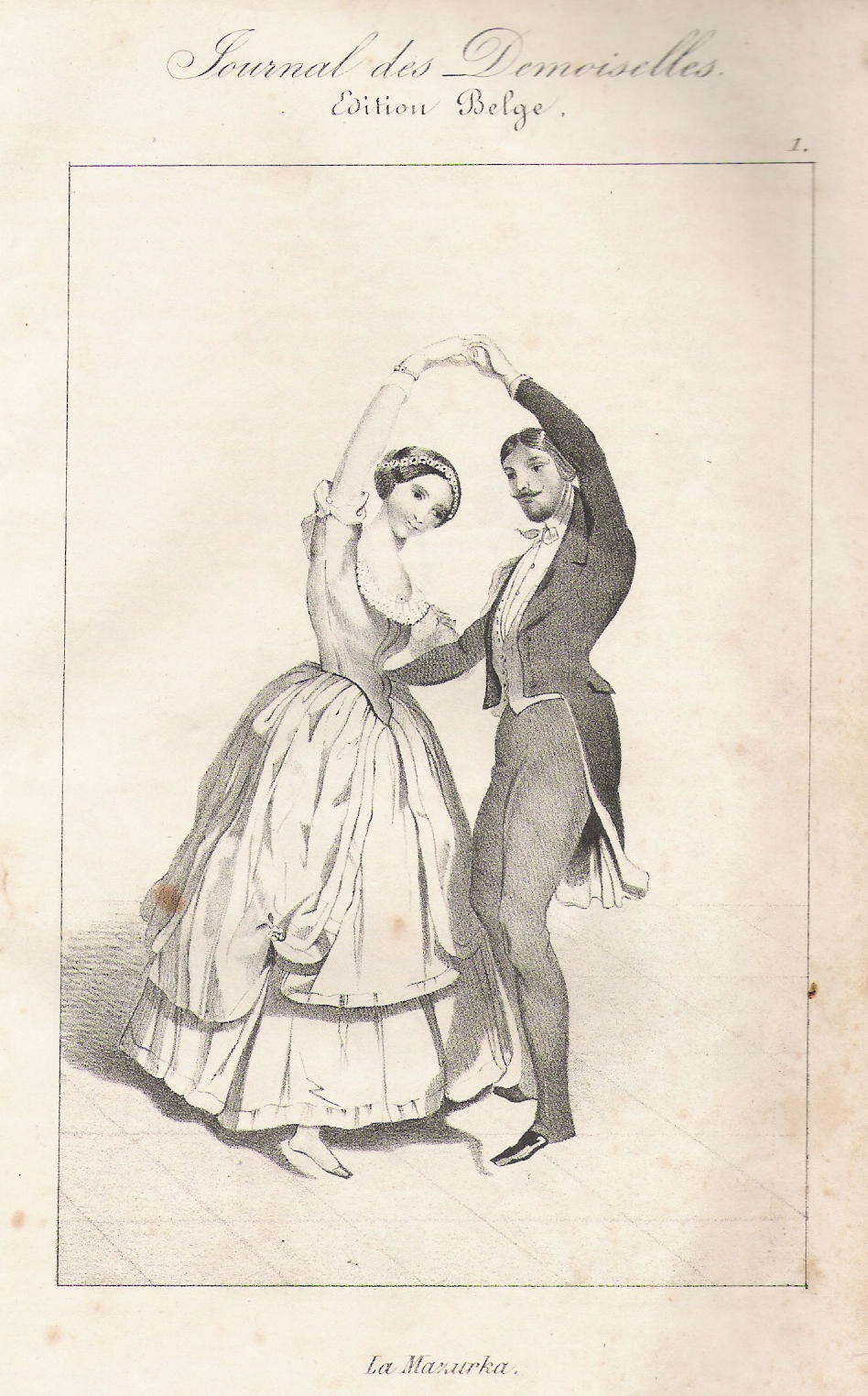 🇵🇱 Poland and 5 moreMazurka
A lively Polish folk dance in triple time, known for its shifting accentsFolk dance · Couple · Group
🇵🇱 Poland and 5 moreMazurka
A lively Polish folk dance in triple time, known for its shifting accentsFolk dance · Couple · Group
Its cousins elsewhere
All folk dances 🇧🇴 Bolivia and 2 moreDiablada
A masked devil dance from the Andes, led by Saint Michael at CarnivalFolk dance · Procession · Group
🇧🇴 Bolivia and 2 moreDiablada
A masked devil dance from the Andes, led by Saint Michael at CarnivalFolk dance · Procession · Group
 🇯🇵 Japan and 5 moreYosakoiよさこい
An energetic group dance from Japan using wooden clappers and modern music.Folk dance · Group
🇯🇵 Japan and 5 moreYosakoiよさこい
An energetic group dance from Japan using wooden clappers and modern music.Folk dance · Group
 🇰🇪 Kenya and 2 moreBeni
An East African brass band dance parodying colonial military drillsFolk dance · Group · Procession
🇰🇪 Kenya and 2 moreBeni
An East African brass band dance parodying colonial military drillsFolk dance · Group · Procession
 🇯🇵 JapanAwa Dance Festival阿波踊り
A street dance festival held during Obon in Tokushima, JapanFolk dance · Group · Procession
🇯🇵 JapanAwa Dance Festival阿波踊り
A street dance festival held during Obon in Tokushima, JapanFolk dance · Group · Procession