
Fugdi
A circle dance of clapping and singing by women in Goa and the Konkan
Fugdi is a folk dance from Goa and the Konkan region, mainly performed by women. Dancers form a circle, clap, sing songs about daily life or deities, and spin together, often during festivals like Dhalo and Ganesh Chaturthi. Some versions use props like water pots or coconut shells, and in a few communities, men join in with drums.
Watch it dancedShare on WhatsApp
- Performed mainly by women in Goa and the Konkan region
- Dancers form a circle, clap, sing, and spin together
- Songs are composed by the women and focus on daily life or deities
- Some versions use water pots or coconut shells as props
- In some communities, men join in and drums are played
What is Fugdi?
Fugdi is a folk dance where women gather in a circle, clap their hands, sing, and spin around together. The songs are often made up by the dancers and talk about daily life or praise local deities. The dance is usually done without musical instruments, but in some communities, drums and other percussion are used. Dancers wear nine-yard sarees and decorate their hair with flower garlands. Fugdi is most often seen in Goa and the Konkan region during festivals and special occasions.
Where does Fugdi come from?
Fugdi comes from the western coastal regions of India, especially Goa and the Konkan. It is a long-standing tradition among women, linked to festivals like Dhalo and Ganesh Chaturthi. Some forms, such as Nagdi Fugdi, were once performed as ritual vows for blessings or after childbirth, but these practices have faded. The dance has many local versions, reflecting the customs of different communities. In Maharashtra, the dance has its own style and is part of several festivals.
How is Fugdi danced?
The main pattern is a circle of women, clapping and spinning as they sing. In some versions, dancers use props: water pots are held to the mouth to make a blowing sound, or coconut shells are struck together for rhythm. In Maharashtra, two women may face each other, hold hands, and spin. The dance is energetic, with spinning and coordinated clapping or striking of props, and the group moves together in time with the singing.
Fugdi, drawn
The music of Fugdi
Fugdi is usually performed without instruments. The rhythm comes from clapping and the sound of the dancers’ singing. The songs are mostly composed by the women themselves and focus on daily struggles or praise for deities like Radha and Krishna. In some community versions, drums such as the ghumat, mhadle, and kansalem are played. In Kalashi Fugdi, the sound is made by blowing into water pots.
Costume and what is carried
Women wear a tightly draped nine-yard saree called navvari kapad, styled in the kanshata way. Hair is decorated with garlands of flowers, often Abolem, and gold jewelry is worn. Props like water pots or coconut shells are used in some variations. The attire is traditional and suited for energetic movement.
When and where Fugdi is danced
Fugdi is most often danced during festivals and religious events, especially Dhalo and Ganesh Chaturthi. It is also seen at Mahalakshmi Vrata and other local celebrations. In some communities, it is part of rituals for blessings or after childbirth, though some of these customs are no longer practiced. Fugdi may also be performed in competitions, where endurance is tested.
Styles of Fugdi
There are several main types: Saadi Fugdi, Kalashi Fugdi, and Katti Fugdi. Kalashi Fugdi uses water pots and is common among Kokanastha Brahmin women. Katti Fugdi uses coconut shells. In the Kunbi and Gavda communities, men join in and drums are played. Maharashtra has its own styles, including Dandafugdi and Eka hatachi fugdi, with some overlap with Goan forms.
What Fugdi means
Fugdi is a symbol of women’s community life in Goa and the Konkan. It is a way for women to express themselves, share stories, and celebrate together. The dance has adapted to different festivals and local customs, and some forms have faded or changed over time. Fugdi is still a living tradition, seen at festivals and sometimes in competitions.
Days Fugdi is danced for
Questions people ask about Fugdi
Where does Fugdi come from?
Fugdi comes from the Goa and Konkan regions of India. It is a traditional folk dance performed mainly by women during festivals and special occasions.
When is Fugdi danced?
Fugdi is performed during festivals such as Dhalo, Ganesh Chaturthi, Mahalakshmi Vrata, and other local celebrations. It may also be danced in competitions or as part of community rituals.
Who performs Fugdi?
Fugdi is mainly danced by women, though in some communities like the Kunbi and Gavda, men also participate. The dance is a group activity, often done in a circle.
Are musical instruments used in Fugdi?
Most Fugdi performances use only clapping and singing for rhythm. In some community versions, drums like the ghumat, mhadle, and kansalem are played.
What props are used in Fugdi?
Some variations use props such as water pots, which are blown into to make sound, or coconut shells, which are struck together for rhythm.
Good reading and sources
- Fugdi on WikipediaEncyclopedia
- Wikidata recordOpen data
- Videos of Fugdi on YouTubeSearch results, not chosen by Ghungroo
The facts on this page come from the Wikipedia article "Fugdi", written by its contributors and used under the CC BY-SA 4.0 licence, and from its Wikidata record (CC0). Ghungroo rewrote the text in its own words, with AI assistance, and compares every page with the article to make sure no passage is copied. It may be reused under the same CC BY-SA 4.0 licence with a link back.
It may contain mistakes, and it describes the dance in outline: it is not a lesson. Traditions differ from one teacher, village or family to the next. If something is wrong, tell us. Last refreshed 2026-10-03.
More from India
All the dances of India 🇮🇳 India and 1 moreFolk dance
Traditional group dances rooted in local life and passed down through generationsFolk dance · Group · Circle
🇮🇳 IndiaPaika akhada
A martial dance with swords and shields from Odisha, rooted in warrior trainingWar or martial dance · Group · Line or chain
🇮🇳 India and 1 moreFolk dance
Traditional group dances rooted in local life and passed down through generationsFolk dance · Group · Circle
🇮🇳 IndiaPaika akhada
A martial dance with swords and shields from Odisha, rooted in warrior trainingWar or martial dance · Group · Line or chain
 🇮🇳 IndiaDhunuchi nritya
A dance with incense burners during Durga Puja in BengalFolk dance · Solo · Group
🇮🇳 IndiaDhunuchi nritya
A dance with incense burners during Durga Puja in BengalFolk dance · Solo · Group
 🇮🇳 IndiaRamlilaरामलीला
A folk drama of the Ramayana, staged outdoors during Navaratri and DussehraFolk dance · Group · Procession
🇮🇳 IndiaRamlilaरामलीला
A folk drama of the Ramayana, staged outdoors during Navaratri and DussehraFolk dance · Group · Procession
Its cousins elsewhere
All folk dances 🇬🇷 Greece and 5 moreCircle dance
A group dance in a circle or curved line, joined by hand and led around the floorFolk dance · Circle · Line or chain
🇬🇷 Greece and 5 moreCircle dance
A group dance in a circle or curved line, joined by hand and led around the floorFolk dance · Circle · Line or chain
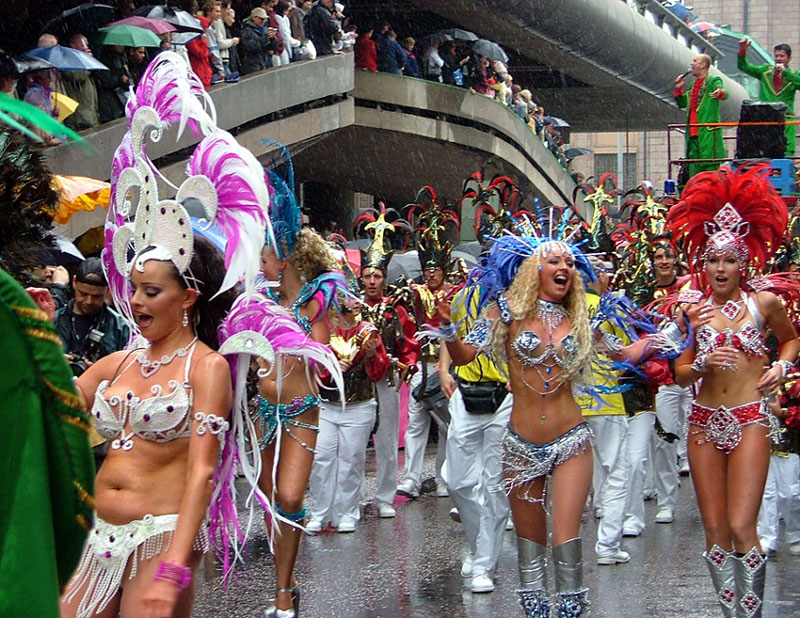 🇧🇷 BrazilSamba
A lively Brazilian dance with fast footwork and syncopated rhythmsFolk dance · Solo · Couple
🇧🇷 BrazilSamba
A lively Brazilian dance with fast footwork and syncopated rhythmsFolk dance · Solo · Couple
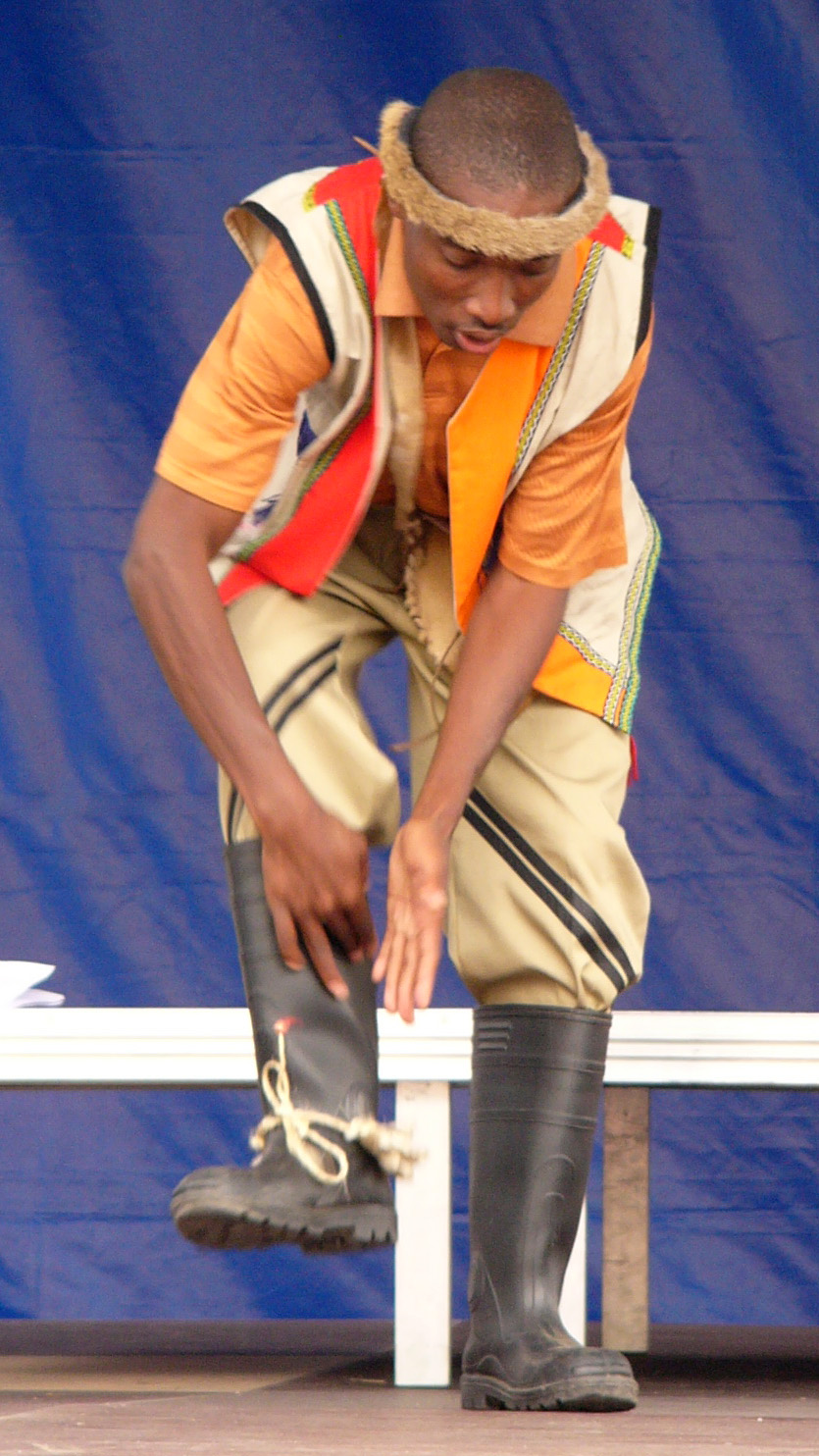 🇿🇦 South AfricaGumboot dance
A South African dance performed in rubber boots, using stamping and slapping for rhythmFolk dance · Group
🇿🇦 South AfricaGumboot dance
A South African dance performed in rubber boots, using stamping and slapping for rhythmFolk dance · Group
 🇨🇴 Colombia and 3 moreMapalé
A fast, energetic Afro-Colombian dance echoing the movements of fish and the seaFolk dance · Couple · Group
🇨🇴 Colombia and 3 moreMapalé
A fast, energetic Afro-Colombian dance echoing the movements of fish and the seaFolk dance · Couple · Group