
Giddha
In its own language: ਗਿੱਧਾ
A Punjabi women's folk dance in a singing, clapping circle
Giddha is a lively folk dance performed by women in the Punjab region, especially at festivals and social gatherings. Dancers form a circle, clap rhythms, and sing call-and-response songs that share stories from women's lives. The dance is known for its energetic moves and colourful attire.
Watch it dancedShare on WhatsApp
- Performed by women in a circle with clapping and singing
- Originates from the ancient ring dance of Punjab
- No drums are used; rhythm comes from clapping
- Songs tell stories from women's lives
- Popular at festivals and social gatherings
What is Giddha?
Giddha is a folk dance performed by women, mainly in Punjab. The dancers stand in a circle, clapping in rhythm while singing traditional songs. A lead singer chants a verse, and the others repeat it, creating a call-and-response pattern. The dance is energetic and expressive, often showing both grace and strength. The songs, called boliyan, tell stories from women's everyday lives. The dance is colourful, with participants wearing bright clothes and traditional jewellery.
Where does Giddha come from?
Giddha traces its roots to the ancient ring dance of Punjab. It has long been a way for Punjabi women to express themselves through movement and song. After the Partition in 1947, the dance continued on both sides of the border, in India and Pakistan. Over time, it has become a symbol of Punjabi culture and is now performed at staged events and competitions, both in Punjab and among Punjabi communities abroad. The dance has also spread through student groups in the UK, US, and Canada.
How is Giddha danced?
Women form a circle and clap in rhythm, moving with energy and flexibility. One woman leads by singing a boli, while the rest repeat the lines. The dance does not use drums; the clapping and singing set the pace. Movements are lively, with expressive gestures and coordinated steps. The group moves together, shifting weight and turning, but always maintaining the circle. The choreography highlights both individual flair and group unity.
Giddha, drawn
The music of Giddha
Giddha is performed without drums. Instead, rhythmic clapping and singing provide the music. The songs are traditional folk verses, often led by an elder woman. The structure is call-and-response, with the lead singing a line and the group repeating it. The lyrics often reflect women's experiences and humour. The music is lively and matches the energetic movements of the dancers.
Costume and what is carried
Dancers wear bright salwar kameez or ghagra, traditional Punjabi outfits. Jewellery and folk ornaments are common, and a tikka is worn on the forehead. Hair is usually braided into two plaits. The overall look is colourful and festive, matching the joyful spirit of the dance.

When and where Giddha is danced
Giddha is performed at festivals, weddings, and social gatherings. It is a way for women to come together and celebrate. The dance is also featured in staged performances and competitions, especially since the 1960s. In the Punjabi diaspora, it is a way to keep cultural traditions alive.
Styles of Giddha
While the core form remains, Giddha has adapted to different settings. It is now performed in competitions and by student groups outside Punjab. The style may vary slightly depending on the region or the occasion, but the basic circle formation and call-and-response singing remain central.
What Giddha means
Giddha is seen as a key expression of Punjabi women's identity. It has become an iconic symbol of Punjabi culture, both in India and Pakistan. The dance is valued for its ability to bring women together and share stories. It is also a way for diaspora communities to connect with their heritage.
Questions people ask about Giddha
Where does Giddha come from?
Giddha comes from the Punjab region, which spans parts of India and Pakistan. It is a traditional folk dance of Punjabi women.
Who performs Giddha?
Giddha is performed by women, often at festivals, weddings, and social gatherings.
When is Giddha usually danced?
It is danced mainly at festive or social occasions, such as festivals and weddings.
What music is used in Giddha?
Giddha is accompanied by rhythmic clapping and singing, without drums. The songs are traditional folk verses sung in a call-and-response style.
What do dancers wear for Giddha?
Dancers wear bright salwar kameez or ghagra, traditional jewellery, and braid their hair, often with a tikka on the forehead.
Good reading and sources
- Giddha on WikipediaEncyclopedia
- More photos and video on Wikimedia CommonsPhotos and video
- Wikidata recordOpen data
- Videos of Giddha on YouTubeSearch results, not chosen by Ghungroo
The facts on this page come from the Wikipedia article "Giddha", written by its contributors and used under the CC BY-SA 4.0 licence, and from its Wikidata record (CC0). Ghungroo rewrote the text in its own words, with AI assistance, and compares every page with the article to make sure no passage is copied. It may be reused under the same CC BY-SA 4.0 licence with a link back.
It may contain mistakes, and it describes the dance in outline: it is not a lesson. Traditions differ from one teacher, village or family to the next. If something is wrong, tell us. Last refreshed 2026-10-03.
More from India
All the dances of India 🇮🇳 India and 1 moreFolk dance
Traditional group dances rooted in local life and passed down through generationsFolk dance · Group · Circle
🇮🇳 IndiaPaika akhada
A martial dance with swords and shields from Odisha, rooted in warrior trainingWar or martial dance · Group · Line or chain
🇮🇳 India and 1 moreFolk dance
Traditional group dances rooted in local life and passed down through generationsFolk dance · Group · Circle
🇮🇳 IndiaPaika akhada
A martial dance with swords and shields from Odisha, rooted in warrior trainingWar or martial dance · Group · Line or chain
 🇮🇳 IndiaDhunuchi nritya
A dance with incense burners during Durga Puja in BengalFolk dance · Solo · Group
🇮🇳 IndiaDhunuchi nritya
A dance with incense burners during Durga Puja in BengalFolk dance · Solo · Group
 🇮🇳 IndiaRamlilaरामलीला
A folk drama of the Ramayana, staged outdoors during Navaratri and DussehraFolk dance · Group · Procession
🇮🇳 IndiaRamlilaरामलीला
A folk drama of the Ramayana, staged outdoors during Navaratri and DussehraFolk dance · Group · Procession
Its cousins elsewhere
All folk dances 🇬🇷 Greece and 5 moreCircle dance
A group dance in a circle or curved line, joined by hand and led around the floorFolk dance · Circle · Line or chain
🇬🇷 Greece and 5 moreCircle dance
A group dance in a circle or curved line, joined by hand and led around the floorFolk dance · Circle · Line or chain
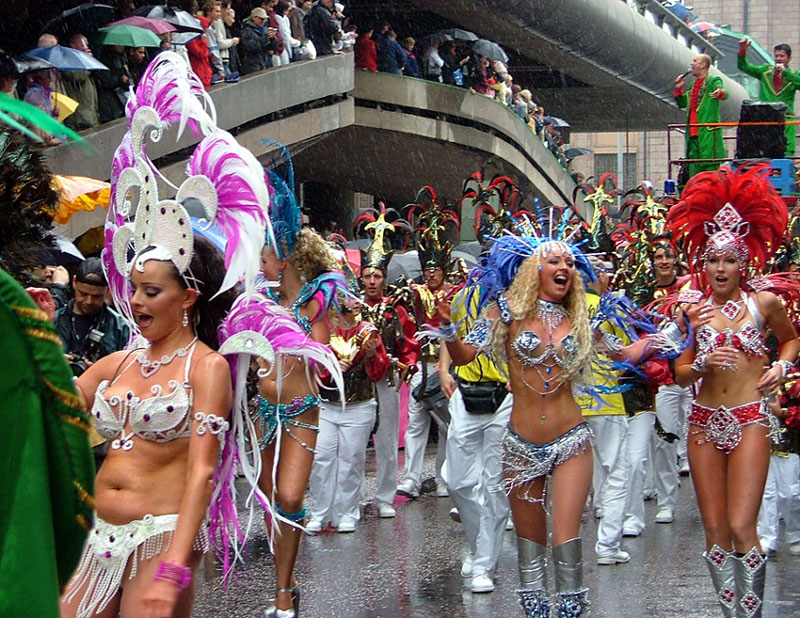 🇧🇷 BrazilSamba
A lively Brazilian dance with fast footwork and syncopated rhythmsFolk dance · Solo · Couple
🇧🇷 BrazilSamba
A lively Brazilian dance with fast footwork and syncopated rhythmsFolk dance · Solo · Couple
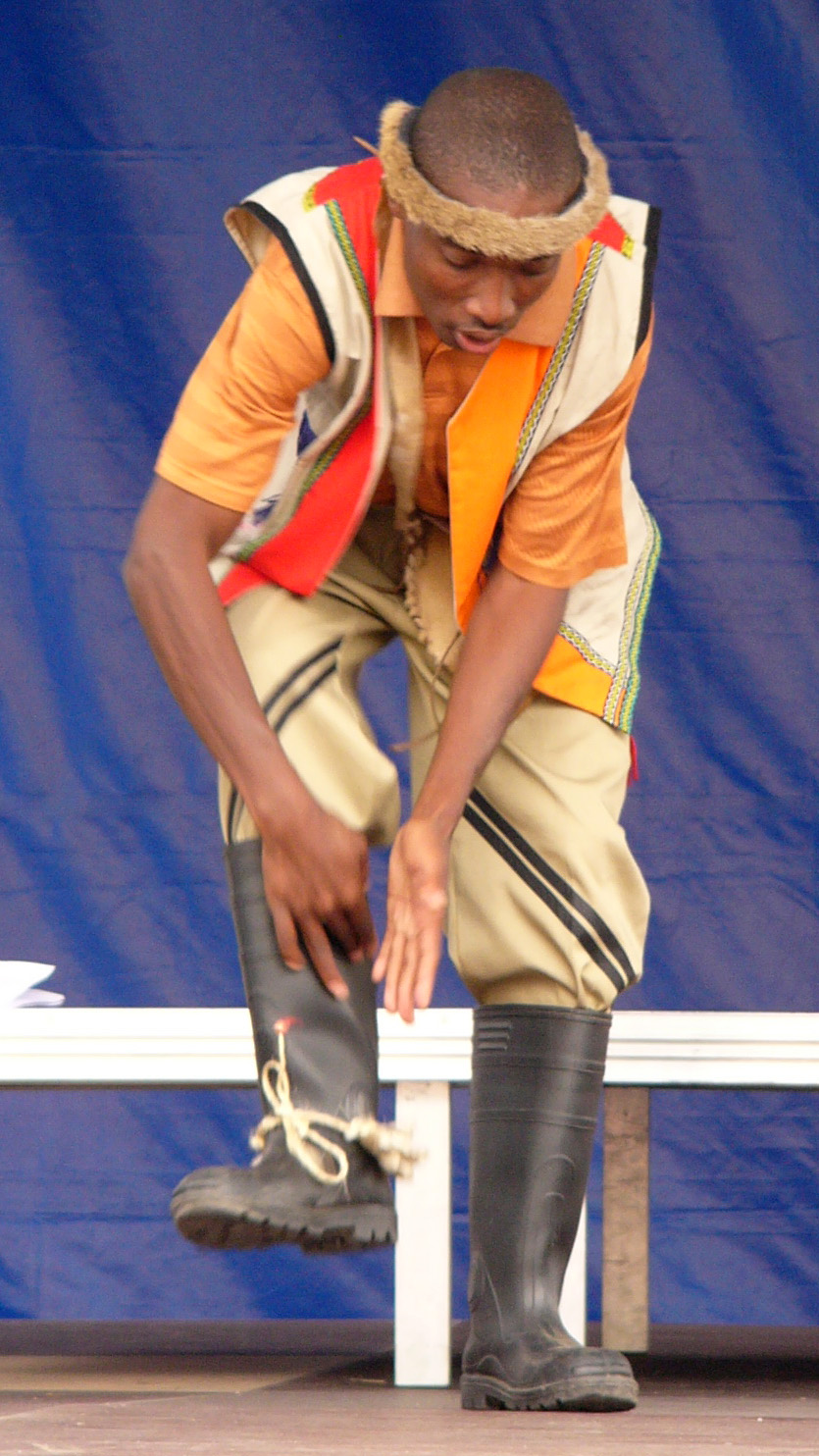 🇿🇦 South AfricaGumboot dance
A South African dance performed in rubber boots, using stamping and slapping for rhythmFolk dance · Group
🇿🇦 South AfricaGumboot dance
A South African dance performed in rubber boots, using stamping and slapping for rhythmFolk dance · Group
 🇨🇴 Colombia and 3 moreMapalé
A fast, energetic Afro-Colombian dance echoing the movements of fish and the seaFolk dance · Couple · Group
🇨🇴 Colombia and 3 moreMapalé
A fast, energetic Afro-Colombian dance echoing the movements of fish and the seaFolk dance · Couple · Group