
Harul
In its own language: हारुल
A storytelling song and line dance of the Jaunsari and Hatee communities
Harul is a narrative song and dance from the hills of Uttarakhand and Himachal Pradesh in India. Men and women dance together during local festivals, linking in long lines or layered semi-circles as they step, bend their knees, and recount tales of history and mountain deities.
Watch it dancedShare on WhatsApp
- Performed by the Jaunsari people in Uttarakhand and the Hatee people in Himachal Pradesh.
- Narrative songs recount tribal history, heroic deeds, and tales of mountain deities.
- Dancers arrange in long lines or concentric semi-circles with men on the outside.
- Footwork combines slow and fast steps, rhythmic tapping, criss-crossing, and knee bends.
What is Harul?
Harul is a traditional singing and dancing practice from the mountainous parts of northern India. It belongs to the Jaunsari people of Uttarakhand and the Hatee people of Himachal Pradesh. Both men and women participate together in a joyful spirit. The performance weaves movement together with sung poetry that recounts tribal history, local legends, and heroic tales of hill deities. In structure, Harul shares qualities with Nati, another regional folk form. Performers link together to execute synchronized stepping patterns, moving along curving rows while trading sung verses that often present a dialogue between a man and a woman.
Where does Harul come from?
The form developed within the mountain communities of Jaunsar-Bawar in Uttarakhand and the Trans-Giri area of Sirmaur district in Himachal Pradesh. Kept alive by the Jaunsari and Hatee tribes, Harul serves as a living record of their collective past. Its songs preserve tribal folklore, ancient community events, and tales honouring mountain deities. Over generations, these sung stories have remained closely linked to hill life, sharing stylistic roots and similarities with neighbouring regional dance traditions such as Nati.
How is Harul danced?
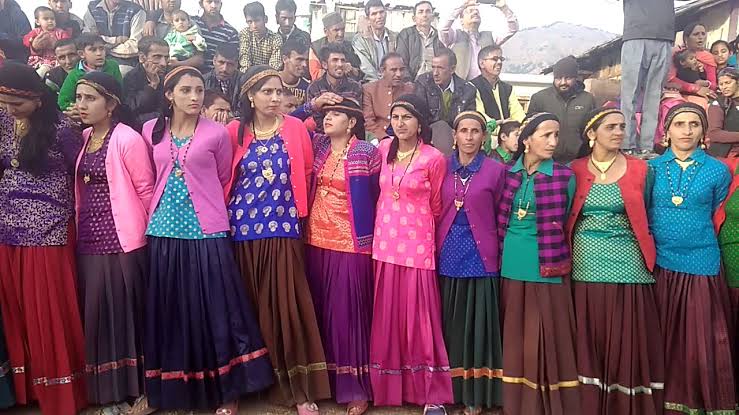
Dancers begin by linking up to make a long continuous chain or two nested curved rows. When arranging in semi-circles, men typically take the outer arc while women form the inner arc. The dancers on the very ends of a line keep one hand raised. Moving in time with the rhythmic pulse, performers combine quick and measured footwork. They tap their feet, cross their steps back and forth, and bend their knees at intervals. The entire group progresses together while maintaining their connected hold in a cheerful mood.
Harul, drawn
The music of Harul
Singing drives the performance, as Harul is fundamentally a combined song and dance tradition. The verses follow a narrative structure that relates historical episodes and divine legends. Many songs take the shape of a sung conversation between a male and a female voice. Dancers coordinate their steps and knee bends directly with the rhythmic timing of the vocal verses.
Costume and what is carried
Participants perform Harul dressed in colourful traditional clothing of their home regions. As they dance in coordinated ranks or concentric semi-circles, the performers hold firmly onto one another. The individuals situated at the terminal ends of the chain raise a single hand as they travel along with the rest of the group.
When and where Harul is danced
Harul is an essential feature of communal life for the Jaunsari and Hatee peoples. It is danced during local celebrations and regional festivals across the Jaunsar-Bawar hills and the Trans-Giri tract of Sirmaur. Communities gather to dance and sing these stories in an upbeat, festive atmosphere where men and women take part side by side.
What Harul means
For the Jaunsari and Hatee communities, Harul serves as a vital way to remember and share their history. Its sung verses carry accounts of past events along with the heroic deeds of mountain gods and goddesses. By bringing men and women together to sing and dance at local festivals, Harul keeps tribal lore and shared memories active across generations.
Questions people ask about Harul
Where does Harul come from?
Harul comes from northern India, specifically the Jaunsar-Bawar area of Uttarakhand and the Trans-Giri tract of Sirmaur district in Himachal Pradesh. It is maintained by the local Jaunsari and Hatee tribes.
When is Harul danced?
Harul is performed during local celebrations and community festivals across the hill districts. It brings villagers together in a cheerful setting to dance, sing, and recount communal history and sacred legends.
Who dances Harul and in what formation?
Both men and women dance Harul together. They either join hands in a single long line or arrange themselves into semi-circles, with men typically forming the outer curve and women forming the inner one.
What stories are told through Harul songs?
The narrative songs describe historical events of the tribe, heroic stories of mountain gods and goddesses, and traditional poetic dialogues between a man and a woman.
Good reading and sources
- Harul on WikipediaEncyclopedia
- Wikidata recordOpen data
- Videos of Harul on YouTubeSearch results, not chosen by EveryGhunghroo
The facts on this page come from the Wikipedia article "Harul", written by its contributors and used under the CC BY-SA 4.0 licence, and from its Wikidata record (CC0). EveryGhunghroo rewrote the text in its own words, with AI assistance, and compares every page with the article to make sure no passage is copied. It may be reused under the same CC BY-SA 4.0 licence with a link back.
It may contain mistakes, and it describes the dance in outline: it is not a lesson. Traditions differ from one teacher, village or family to the next. If something is wrong, tell us. Last refreshed 2026-10-04.
More from India
All the dances of India 🇮🇳 India and 1 moreFolk dance
Traditional group dances rooted in local life and passed down through generationsFolk dance · Group · Circle
🇮🇳 India and 1 moreFolk dance
Traditional group dances rooted in local life and passed down through generationsFolk dance · Group · Circle
 🇮🇳 IndiaRamlilaरामलीला
A folk drama of the Ramayana, staged outdoors during Navaratri and DussehraFolk dance · Group · Procession
🇮🇳 IndiaPaika akhada
A martial dance with swords and shields from Odisha, rooted in warrior trainingWar or martial dance · Group · Line or chain
🇮🇳 IndiaRamlilaरामलीला
A folk drama of the Ramayana, staged outdoors during Navaratri and DussehraFolk dance · Group · Procession
🇮🇳 IndiaPaika akhada
A martial dance with swords and shields from Odisha, rooted in warrior trainingWar or martial dance · Group · Line or chain
 🇮🇳 IndiaDhunuchi nritya
A dance with incense burners during Durga Puja in BengalFolk dance · Solo · Group
🇮🇳 IndiaDhunuchi nritya
A dance with incense burners during Durga Puja in BengalFolk dance · Solo · Group
Its cousins elsewhere
All folk dances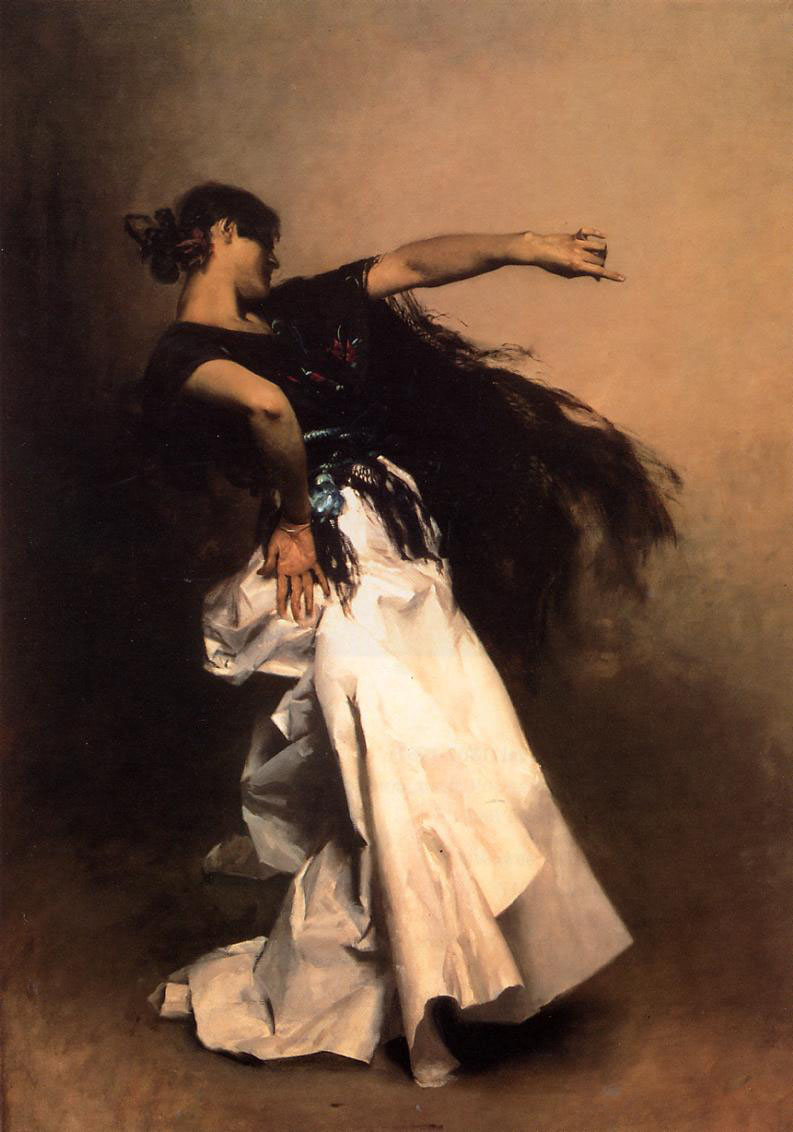 🇪🇸 SpainFlamenco
A southern Spanish art form of rhythmic footwork, singing, and acoustic guitarFolk dance · Solo · Group
🇪🇸 SpainFlamenco
A southern Spanish art form of rhythmic footwork, singing, and acoustic guitarFolk dance · Solo · Group
 🇳🇬 Nigeria and 1 moreEgungunEgúngún
A Yoruba ancestor masquerade where robed dancers embody the spirits of the dead.Ritual dance · Group · Procession
🇳🇬 Nigeria and 1 moreEgungunEgúngún
A Yoruba ancestor masquerade where robed dancers embody the spirits of the dead.Ritual dance · Group · Procession
 🇻🇪 VenezuelaDancing devils of Corpus ChristiDiablos danzantes de Corpus Christi
Masked dancers in red parade and perform on Corpus Christi in Venezuelan townsRitual dance · Procession · Group
🇻🇪 VenezuelaDancing devils of Corpus ChristiDiablos danzantes de Corpus Christi
Masked dancers in red parade and perform on Corpus Christi in Venezuelan townsRitual dance · Procession · Group
 🇭🇺 Hungary and 5 moreCsárdás
A Hungarian folk dance that begins slowly and ends in a fast spin.Folk dance · Couple · Group
🇭🇺 Hungary and 5 moreCsárdás
A Hungarian folk dance that begins slowly and ends in a fast spin.Folk dance · Couple · Group