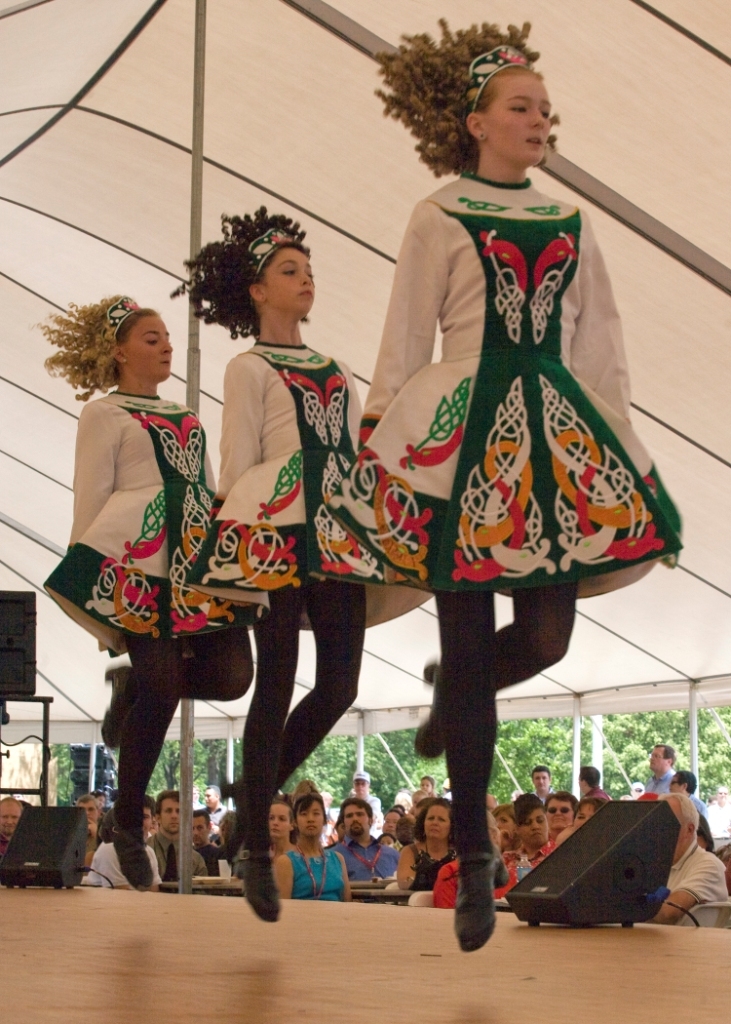
Irish dance
Solo and group dances from Ireland, known for fast footwork and lively formations
Irish dance is a group of traditional and modern dance styles from Ireland, performed solo or in groups for social, competitive, and stage settings. Dancers use precise footwork, with some forms keeping the upper body still, and perform in both soft and hard shoes at festivals, competitions, and social gatherings.
Watch it dancedShare on WhatsApp
- Stepdance is known for fast footwork and a still upper body
- Group dances like ceili use simple steps and set formations
- Hard and soft shoes create different sounds and styles
- Dance masters once taught in villages across Ireland
- Competitions and elaborate costumes are common today
What is Irish dance?
Irish dance covers a range of solo and group dances from Ireland, with both traditional and modern forms. Dancers may perform alone or in formations such as circles, lines, or sets. The most recognisable style, stepdance, features rapid, intricate footwork and a still upper body. Other forms, like sean-nós, are more relaxed and improvised. Group dances, such as ceili and set dances, use simple steps and focus on patterns and teamwork. Performances can involve soft or hard shoes, each producing different sounds and movement styles.
Where does Irish dance come from?
Irish dance has roots in local traditions across Ireland, shaped by travelling dance masters from the 17th and 18th centuries. Early records mention round dances and jigs, with outside influences from English country dance and possibly French quadrille. The tradition grew alongside Irish music and became a symbol of Irish identity, especially during nationalist movements. In the 20th century, organisations began to codify and standardise the dances, leading to the competitive forms seen today.
How is Irish dance danced?
Solo Irish dance is known for fast, precise footwork and, in stepdance, a rigid upper body. Dancers often keep arms at their sides, though some modern styles use more arm movement. Group dances like ceili and set dance use simple steps but focus on coordinated figures and formations. Sean-nós is more relaxed, with improvised steps and a casual posture. Hard shoe dances create percussive rhythms, while soft shoe dances are lighter and more flowing.
Irish dance, drawn
The music of Irish dance
Irish dance is accompanied by traditional instruments such as the fiddle, bagpipe, and jew's harp. Each dance type matches a specific rhythm, like reels, jigs, and hornpipes, with time signatures such as 4/4, 6/8, or 9/8. The music is lively and energetic, supporting both the precise steps of solo dances and the patterns of group dances. Some dances use set tunes, while others allow for variation.
Costume and what is carried
Dancers wear either soft shoes (ghillies for girls, reel shoes for boys) or hard shoes with fiberglass tips and heels. Costumes for performance and competition are often elaborate, with dresses, wigs, and makeup for girls and tailored outfits for boys. The shoes themselves are essential props, contributing to the style and sound of the dance.


When and where Irish dance is danced
Irish dance is performed at social gatherings, festivals, competitions, and stage shows. It is taught in dance schools and passed down through both formal instruction and community events. Competitions are structured by organisations, and performances can range from informal village dances to large-scale productions.
Styles of Irish dance
There are several main styles: stepdance (both modern and old-style), sean-nós (improvised and social), festival Irish dance (which split from stepdance in the mid-20th century), ceili dance (group dances with set figures), and set dance (social dances for four). Each style has its own steps, formations, and traditions, and modern stage shows have further popularised and adapted these forms.
What Irish dance means
Irish dance is closely linked to Irish culture and national identity, especially since the 19th century. It has been promoted as a symbol of Irishness and is practiced by communities in Ireland and abroad. The dance has seen periods of codification, competition, and global popularity, especially after shows like Riverdance brought it to international audiences.
Questions people ask about Irish dance
Where does Irish dance come from?
Irish dance developed in Ireland, shaped by local traditions and influences from English and French dances. It grew alongside Irish music and became widespread by the 17th century.
When is Irish dance performed?
It is danced at social gatherings, festivals, competitions, and stage shows. Some forms are performed at community events, while others are part of formal competitions.
What are the main types of Irish dance?
The main types include stepdance (solo, with fast footwork), sean-nós (improvised), festival Irish dance, ceili dance (group formations), and set dance (social dances for four).
What shoes do Irish dancers wear?
Dancers use soft shoes (ghillies for girls, reel shoes for boys) for light dances and hard shoes with fiberglass tips for percussive dances. The shoes are essential to the dance style.
How has Irish dance changed over time?
Irish dance has evolved from local village traditions to codified, competitive forms. Modern shows and competitions have introduced new styles, costumes, and global popularity.
Good reading and sources
- Irish dance on WikipediaEncyclopedia
- More photos and video on Wikimedia CommonsPhotos and video
- Wikidata recordOpen data
- Videos of Irish dance on YouTubeSearch results, not chosen by Ghungroo
The facts on this page come from the Wikipedia article "Irish dance", written by its contributors and used under the CC BY-SA 4.0 licence, and from its Wikidata record (CC0). Ghungroo rewrote the text in its own words, with AI assistance, and compares every page with the article to make sure no passage is copied. It may be reused under the same CC BY-SA 4.0 licence with a link back.
It may contain mistakes, and it describes the dance in outline: it is not a lesson. Traditions differ from one teacher, village or family to the next. If something is wrong, tell us. Last refreshed 2026-10-03.
More from Ireland
All the dances of Ireland 🇨🇿 Czech Republic and 5 morePolka
A lively partner dance in 2/4 time from 19th-century BohemiaFolk dance · Couple · Circle
🇨🇿 Czech Republic and 5 morePolka
A lively partner dance in 2/4 time from 19th-century BohemiaFolk dance · Couple · Circle
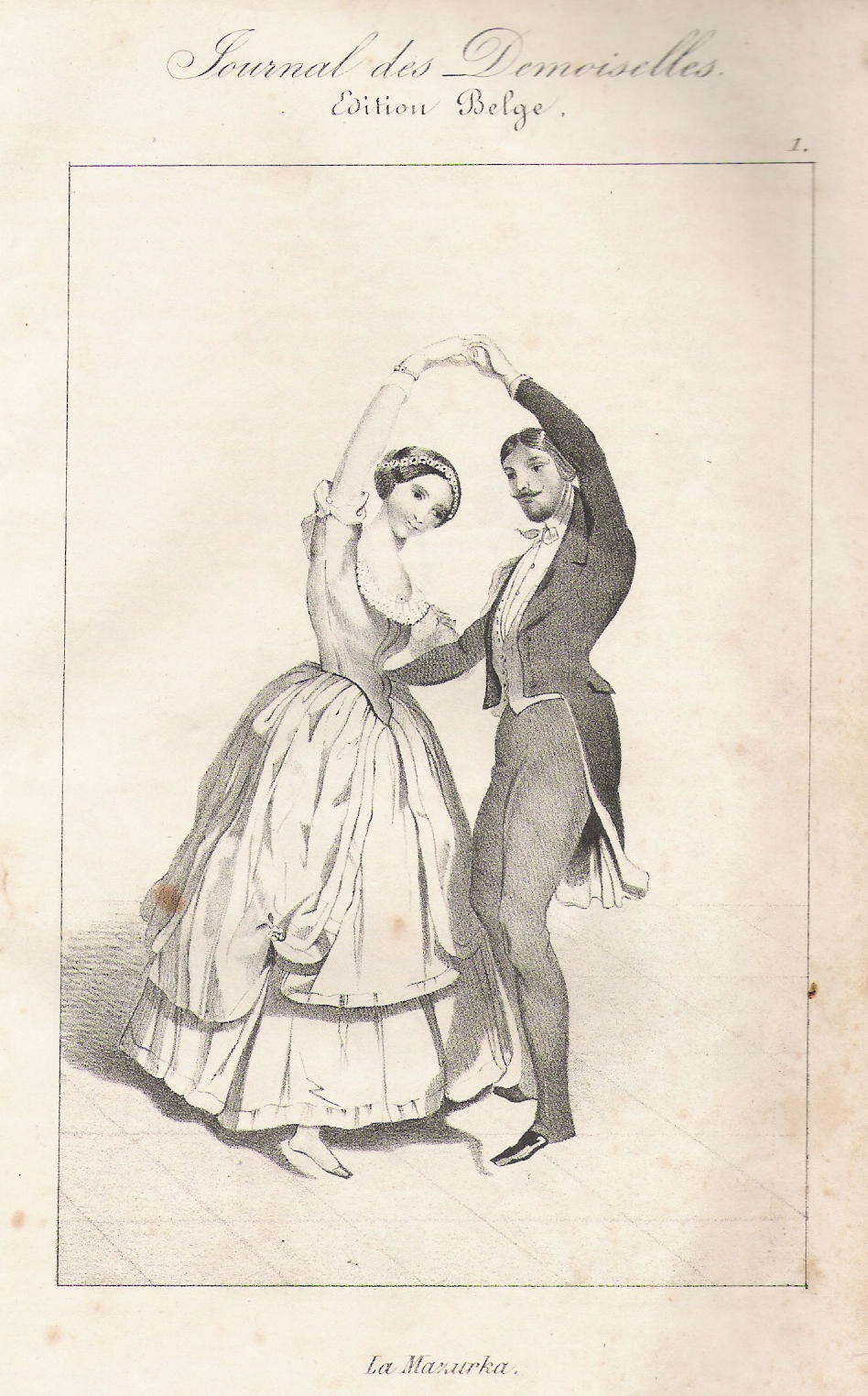 🇵🇱 Poland and 5 moreMazurka
A lively Polish folk dance in triple time, known for its shifting accentsFolk dance · Couple · Group
🇵🇱 Poland and 5 moreMazurka
A lively Polish folk dance in triple time, known for its shifting accentsFolk dance · Couple · Group
 🇮🇪 Ireland and 2 moreJigport
A lively folk dance in compound time, central to Irish and Scottish traditionFolk dance · Solo · Group
🇮🇪 Ireland and 2 moreJigport
A lively folk dance in compound time, central to Irish and Scottish traditionFolk dance · Solo · Group
 🇺🇸 United States and 4 moreSquare dance
A group dance for four couples in a square, led by a caller or set routineFolk dance · Set or square · Group
🇺🇸 United States and 4 moreSquare dance
A group dance for four couples in a square, led by a caller or set routineFolk dance · Set or square · Group
Its cousins elsewhere
All folk dances 🇺🇸 United States and 2 moreContra dance
A social line dance for pairs, led by a caller and set to live folk tunesFolk dance · Couple · Line or chain
🇺🇸 United States and 2 moreContra dance
A social line dance for pairs, led by a caller and set to live folk tunesFolk dance · Couple · Line or chain
 🇷🇺 RussiaKamarinskayaкамаринская
A fast Russian folk dance with squatting steps, played to a repeating tuneFolk dance · Solo · Group
🇷🇺 RussiaKamarinskayaкамаринская
A fast Russian folk dance with squatting steps, played to a repeating tuneFolk dance · Solo · Group
 🇦🇪 United Arab Emirates and 2 moreYowlah
A group stick and weapon dance performed at celebrations in the UAE and OmanFolk dance · Group · Line or chain
🇦🇪 United Arab Emirates and 2 moreYowlah
A group stick and weapon dance performed at celebrations in the UAE and OmanFolk dance · Group · Line or chain