
J-Setting
An energetic Black marching danceline style built on bold thrusts and high kicks
Created in Jackson, Mississippi, by African American collegiate dancelines in the 1970s, J-Setting combines marching drills with sharp body thrusts. Groups perform in unison behind a leader at games, pride events, and club competitions.
Watch it dancedShare on WhatsApp
- Originated at Jackson State University in Mississippi during the 1970s.
- Features "bucking", an energetic body thrust inspired by African dance traditions.
- Dancers organize into three height-based rows when performing off the football field.
- Spread from collegiate marching bands to become a fixture of Black LGBTQ+ club culture.
What is J-Setting?
J-Setting is a high-energy dance form developed by collegiate marching dancelines in the American South. The style revolves around sharp, dynamic body and arm thrusts known as bucking, alongside high-stepping marching steps. Routines follow a lead-and-follow structure where a team leader introduces phrases and the ensemble repeats or mirrors them in synchronized rows. Originally created by women performing with university brass bands, the form expanded into a major expressive tradition within Black LGBTQ+ communities. Dancers perform at halftime field shows, parades, nightclubs, and structured dance battles, moving in precise formations with intense physical power.
Where does J-Setting come from?
The form started at Jackson State University in Mississippi during the 1970s. In 1971, majorette director Shirley Middleton and student performers chose to stop using twirling batons, forming an eighteen-member danceline called the Jaycettes, later named the Prancing J-Settes. Middleton applied formal ballet discipline to the squad's movement. In the early 1970s, former drum major Hollis Pippins worked on choreography with Middleton. When Narah Oatis took charge of the group in 1975, she shaped iconic marching routines such as the J-Sette Walk. Gay male students and fans helped build routines and costumes, soon carrying the style into clubs and pride gatherings across the country.
How is J-Setting danced?
Movement centers on bucking, a forceful pelvic and torso thrust rooted in traditional African dance. Performers execute high-knee marching patterns, including the Salt and Pepper prance, where each bent leg rises until the foot reaches the height of the opposite knee. Other core steps include the Strut, the Tip Toe, and the signature J-Sette Walk. A captain begins the sequence at the front, and the rest of the squad responds in unison. Off the field, dancers organize into three height-ranked rows: Short and Sassy, Magnificent Middle, and Tall and Tough. During field shows, teams transition through expansive geometric arrangements similar to marching band drills.
J-Setting, drawn
The music of J-Setting
Performances are driven by live university marching ensembles playing funk and contemporary popular hits. Early routines featured brass arrangements of funk anthems by artists like James Brown. In club venues, battle spaces, and pride celebrations, dancers perform to upbeat club music, hip-hop, and recorded pop tracks that provide a fast, heavy rhythm suited for continuous bucking and sharp accents.
Costume and what is carried
Dancers typically wear fitted one-piece or two-piece bodysuits that cover the torso and hips, echoing classic collegiate danceline apparel. Performers pair these outfits with tights and knee-high boots, which emphasize leg extensions and knee lifts during high-stepping drills. For televised routines and stage battles, groups design custom variations in striking colors.
When and where J-Setting is danced
J-Setting takes place at university football halftimes, homecoming parades, and athletic exhibitions. Outside collegiate sports, it is performed at Black gay pride rallies, nightlife clubs, and competitive dance-offs. Community groups practice routines through informal mentorship and rigorous team rehearsals, passing down signature steps across generations of performers.
Styles of J-Setting
Collegiate squads maintain strict synchronization across height lines during stadium and court appearances. Independent dance crews, such as Alabama's Prancing Elites, adapt the steps for competitive street battles and television showcases. Mainstream commercial choreographers have also incorporated the technique into music videos, bringing bucking and call-and-response formations to international pop audiences.
What J-Setting means
J-Setting holds deep significance in Black queer culture across the southern United States. Beyond its origins on the football field, the style became a vital medium of visibility and artistic celebration in LGBTQ+ clubs and pride gatherings. Mainstream media has spotlighted the genre through music videos by Beyoncé, reality television programs, and documentary films like When The Beat Drops.
Questions people ask about J-Setting
Where does J-Setting come from?
J-Setting developed in Jackson, Mississippi, during the 1970s. It was created by the Prancing J-Settes danceline at Jackson State University after majorettes gave up their twirling batons to dance purely to marching band music.
When and why is it danced?
It is performed at university football halftimes, parades, and campus celebrations to entertain crowds. In community and nightlife settings, it is danced at Black pride festivals and club battles as an energetic form of social competition and self-expression.
What is bucking in J-Setting?
Bucking is the primary movement in J-Setting, consisting of powerful, rhythmic thrusts of the pelvis, torso, and arms. Derived from traditional African dance, it gives the style its trademark drive and athletic punch.
How is a J-Setting squad arranged?
In floor routines, squads stand behind a lead captain in three rows organized by dancer height: Short and Sassy in front, Magnificent Middle, and Tall and Tough in the back. Dancers match the leader in a call-and-response format.
Good reading and sources
- Prancing Elites spread message of acceptance in Oxygen docu-seriesLos Angeles Times, Article
- 'It's the thrusting of the pelvis': inside the kinetic dance style known as bucking | MoviesThe Guardian, Article
- J-Setting on WikipediaEncyclopedia
- Wikidata recordOpen data
- Videos of J-Setting on YouTubeSearch results, not chosen by EveryGhunghroo
The facts on this page come from the Wikipedia article "J-Setting", written by its contributors and used under the CC BY-SA 4.0 licence, and from its Wikidata record (CC0). EveryGhunghroo rewrote the text in its own words, with AI assistance, and compares every page with the article to make sure no passage is copied. It may be reused under the same CC BY-SA 4.0 licence with a link back.
It may contain mistakes, and it describes the dance in outline: it is not a lesson. Traditions differ from one teacher, village or family to the next. If something is wrong, tell us. Last refreshed 2026-10-04.
More from the United States
All the dances of the United States 🇺🇸 United States and 5 moreBreakdancing
A street dance with acrobatics, floorwork and freezes, born in 1970s New York CityStreet or club dance · Solo · Group
🇺🇸 United States and 5 moreBreakdancing
A street dance with acrobatics, floorwork and freezes, born in 1970s New York CityStreet or club dance · Solo · Group
 🇵🇱 Poland and 3 morePolonaisePolonez, chodzony
A stately walking dance in triple time, opening Polish celebrations and ballsFolk dance · Couple · Procession
🇵🇱 Poland and 3 morePolonaisePolonez, chodzony
A stately walking dance in triple time, opening Polish celebrations and ballsFolk dance · Couple · Procession
 🇨🇺 Cuba and 2 moreSalsa
A lively partner dance with spins and footwork, danced to salsa music worldwideSocial dance · Couple · Solo
🇨🇺 Cuba and 2 moreSalsa
A lively partner dance with spins and footwork, danced to salsa music worldwideSocial dance · Couple · Solo
 🇬🇧 United Kingdom and 5 moreBallroom dance
Partner dances performed socially and in competition, with roots in EuropeSocial dance · Couple · Group
🇬🇧 United Kingdom and 5 moreBallroom dance
Partner dances performed socially and in competition, with roots in EuropeSocial dance · Couple · Group
Its cousins elsewhere
All street and club dances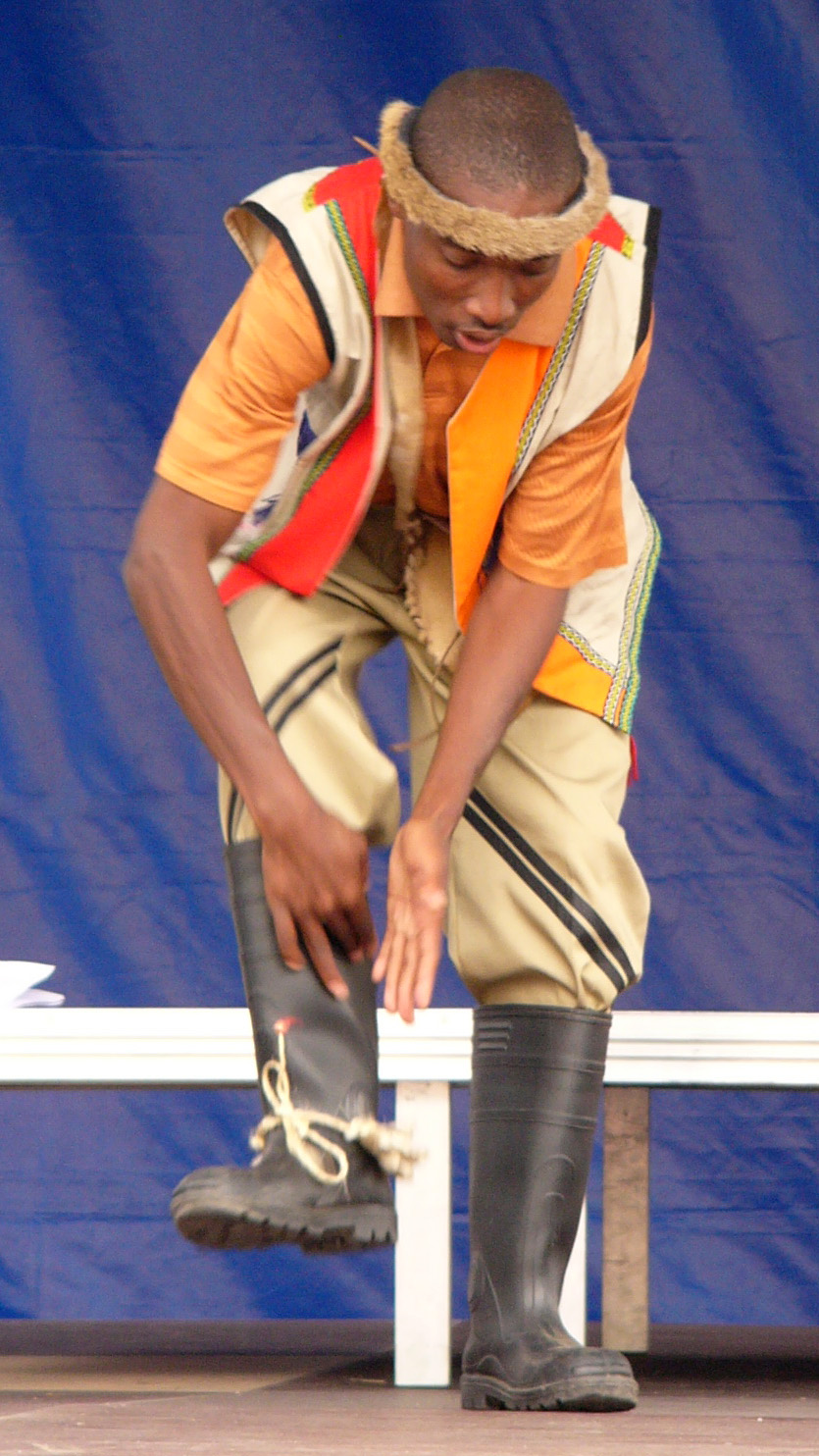 🇿🇦 South AfricaGumboot dance
A South African dance performed in rubber boots, using stamping and slapping for rhythmFolk dance · Group
🇿🇦 South AfricaGumboot dance
A South African dance performed in rubber boots, using stamping and slapping for rhythmFolk dance · Group