
Breakdancing
A street dance with acrobatics, floorwork and freezes, born in 1970s New York City
Breakdancing is a street dance that began among African American and Puerto Rican youth in the Bronx, New York City, in the 1970s. It features upright steps, floor moves, spins, and poses, and is usually danced to funk, soul, or hip-hop tracks with strong drum breaks. Today, breaking is practiced worldwide, with competitions and performances, and became an Olympic sport in 2024.
Watch it dancedShare on WhatsApp
- Started in the Bronx, New York City, in the 1970s
- Includes toprock, footwork, power moves, and freezes
- Battles are danced in a circle called a cipher
- Became an Olympic sport in 2024
- Anyone can take part, regardless of gender
What is Breakdancing?
Breakdancing is a street dance style that mixes upright steps, floorwork, acrobatic spins, and sudden poses called freezes. Dancers, known as b-boys and b-girls, often perform in a circle, taking turns to show their skills. The dance is energetic and athletic, with moves that can include spinning on hands, heads, or backs, and quick footwork close to the ground. Breaking is usually done to funk, soul, or hip-hop music with strong drum breaks, and can be danced solo or in groups, often in friendly battles.
Where does Breakdancing come from?
Breaking began in the Bronx, New York City, during the 1970s, created by African American and Puerto Rican youth. It grew out of local party dances and was shaped by influences like jazz, tap, and the moves of James Brown. The dance was first seen at block parties and community centers, where DJs like Kool Herc played extended drum breaks for dancers. As it spread, breaking became a symbol of individuality and competition, and by the early 1980s, it gained wider attention through movies and international tours.
How is Breakdancing danced?
A typical breaking round starts with toprock, upright steps that show style and rhythm, followed by footwork close to the floor. Dancers then move into power moves—spins and acrobatics using hands, backs, or heads—and finish with a freeze, holding a dramatic pose. Battles are common, with dancers taking turns in the center of a circle, watched and cheered by others. The dance values originality, musicality, and skill, with each performer adding their own flair.
Breakdancing, drawn
The music of Breakdancing
Breaking is danced to tracks with strong, rhythmic drum breaks, often from funk, soul, or early hip-hop. DJs use turntables to loop these sections, creating long passages for dancers. Classic songs like 'Apache' by the Incredible Bongo Band are favorites. The music’s tempo and energy guide the dancers, who respond to the beat and changes in rhythm. Recorded music is standard, and the DJ’s role is central to the dance’s atmosphere.
Costume and what is carried
There is no set costume for breaking. Dancers usually wear comfortable street clothes that allow for movement, such as loose pants, t-shirts, and sneakers with good grip. Some add hats, sweatbands, or jackets for style or protection during spins. Outfits are chosen for both function and personal expression.


When and where Breakdancing is danced
Breaking started at neighborhood parties and community events in New York, then moved to public spaces and competitions. Today, it is performed at dance battles, festivals, and large international contests like Battle of the Year and the Olympics. Anyone can learn and take part, and crews often train together and pass on knowledge informally or through workshops.
Styles of Breakdancing
While breaking began in New York, it quickly spread to other cities and countries, each adding their own style. The West Coast of the U.S. developed more spinning and acrobatic moves. Japan, France, South Korea, and Germany now have strong breaking communities, with local competitions and crews. Some events focus on solo battles, others on group routines or all-female crews.
What Breakdancing means
Breaking is closely tied to hip-hop culture, emphasizing creativity, respect, and friendly competition. It has moved from the streets to the global stage, with major competitions and Olympic recognition. The dance remains a way for people to express themselves and connect, and its history is celebrated in documentaries and films. Many in the community value the original term 'breaking' over 'breakdancing,' seeing it as more authentic.
Questions people ask about Breakdancing
Where did breakdancing come from?
Breakdancing began in the Bronx, New York City, in the 1970s, created by African American and Puerto Rican youth at local parties and community events.
What music is used for breaking?
Dancers use funk, soul, and hip-hop tracks with strong drum breaks, often looped by DJs on turntables to create long sections for dancing.
Who can dance breaking?
Anyone can take part in breaking, regardless of gender or background. Dancers are called b-boys or b-girls, and the dance is open to all.
When is breaking performed?
Breaking is performed at social gatherings, dance battles, competitions, and large events, including international contests and the Olympics.
What are the main moves in breakdancing?
The dance features four main parts: upright steps (toprock), footwork on the floor, acrobatic power moves, and freezes, where the dancer holds a pose.
Good reading and sources
- Encyclopaedia BritannicaArticle
- BBC - Leeds Living - B-girl fireflyBBC, Article
- 'Breaking' news: Breakdancing added as an event for 2024 Paris OlympicsLos Angeles Times, Article
- Breakdancing on WikipediaEncyclopedia
- More photos and video on Wikimedia CommonsPhotos and video
- Wikidata recordOpen data
- Videos of Breakdancing on YouTubeSearch results, not chosen by EveryGhunghroo
The facts on this page come from the Wikipedia article "Breakdancing", written by its contributors and used under the CC BY-SA 4.0 licence, and from its Wikidata record (CC0). EveryGhunghroo rewrote the text in its own words, with AI assistance, and compares every page with the article to make sure no passage is copied. It may be reused under the same CC BY-SA 4.0 licence with a link back.
It may contain mistakes, and it describes the dance in outline: it is not a lesson. Traditions differ from one teacher, village or family to the next. If something is wrong, tell us. Last refreshed 2026-10-03.
More from the United States
All the dances of the United States 🇺🇸 United StatesCharleston
A fast-paced dance with kicks and twists, first popular in 1920s AmericaSocial dance · Solo · Couple
🇺🇸 United StatesPopping
A street dance built on quick muscle contractions, born in California’s funk sceneStreet or club dance · Solo · Group
🇺🇸 United StatesCharleston
A fast-paced dance with kicks and twists, first popular in 1920s AmericaSocial dance · Solo · Couple
🇺🇸 United StatesPopping
A street dance built on quick muscle contractions, born in California’s funk sceneStreet or club dance · Solo · Group
 🇺🇸 United States and 5 moreHip-hop dance
Improvised street dance styles shaped by hip-hop music and cultureStreet or club dance · Solo · Group
🇺🇸 United States and 5 moreHip-hop dance
Improvised street dance styles shaped by hip-hop music and cultureStreet or club dance · Solo · Group
 🇺🇸 United States and 5 moreVogue
A stylized dance of poses and battles from the Harlem ballroom sceneStreet or club dance · Solo · Group
🇺🇸 United States and 5 moreVogue
A stylized dance of poses and battles from the Harlem ballroom sceneStreet or club dance · Solo · Group
Its cousins elsewhere
All street and club dances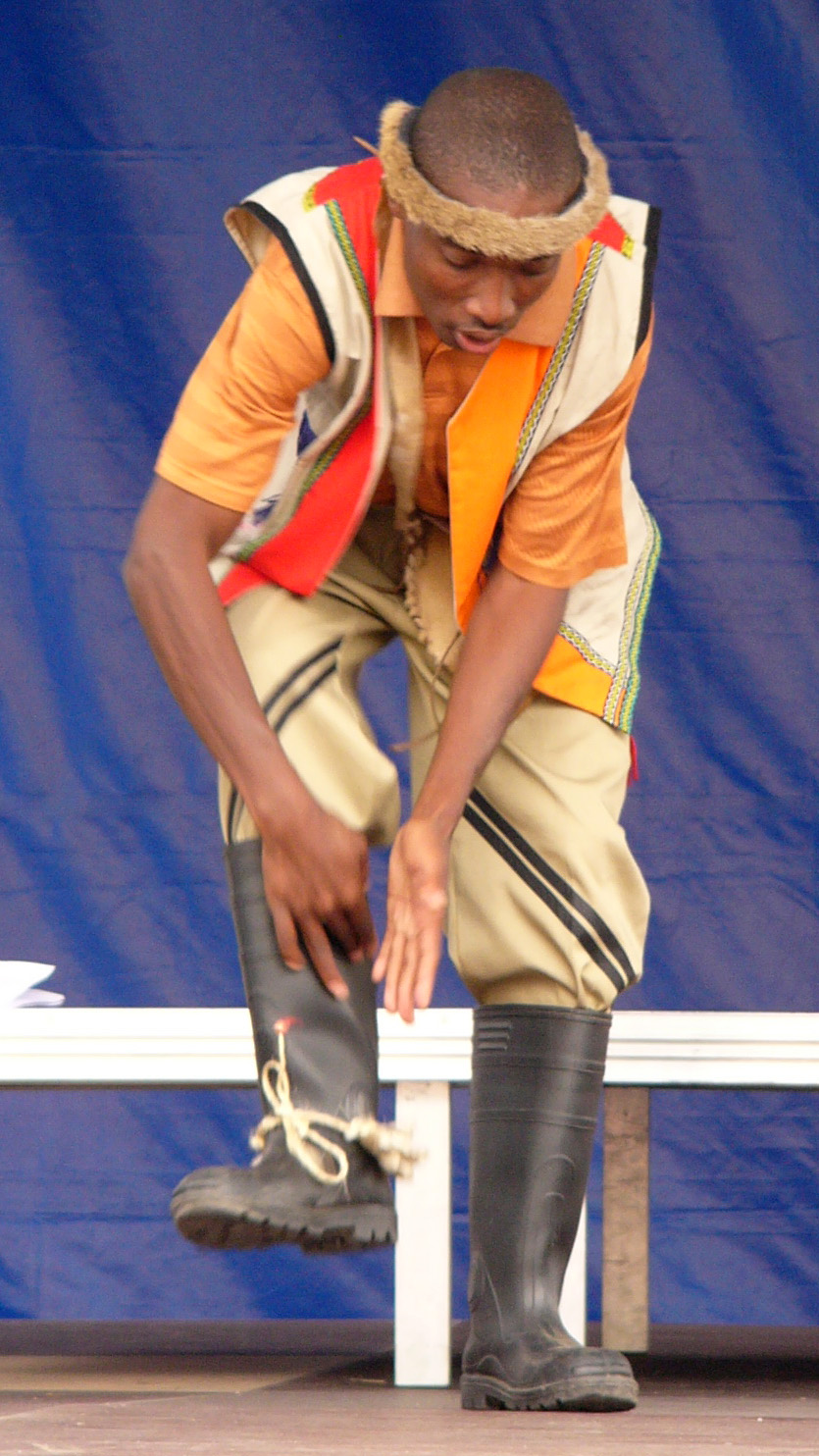 🇿🇦 South AfricaGumboot dance
A South African dance performed in rubber boots, using stamping and slapping for rhythmFolk dance · Group
🇿🇦 South AfricaGumboot dance
A South African dance performed in rubber boots, using stamping and slapping for rhythmFolk dance · Group