
Kurdish dance
Traditional circle and line dances of the Kurdish people, often led by handkerchief twirlers
Kurdish dance is a group of traditional circle and line dances performed by Kurds at festivals, weddings, Newroz (New Year), and other gatherings. Dancers, usually in mixed-gender groups, hold hands or link arms, sometimes led by a handkerchief-waving leader, and are accompanied by drum and zurna.
Watch it dancedShare on WhatsApp
- Dancers often form a circle or line, led by a handkerchief-waving leader
- Both women and men commonly dance together in Kurdish tradition
- Music is played on a drum and zurna, a double-reed wind instrument
- Dances are performed at festivals, weddings, and Newroz (Kurdish New Year)
- There are many regional styles, each with its own name and steps
What is Kurdish dance?
Kurdish dance refers to a variety of traditional group dances practiced by Kurdish communities. The most common formation is a circle or line, with dancers holding hands or linking arms. A leader, often twirling a handkerchief, guides the group, and sometimes one or two dancers perform in the center. The dances are lively and social, accompanied by the beat of a drum and the sound of the zurna, a double-reed wind instrument. Dancers wear traditional Kurdish clothing, and both women and men take part, often together.
Where does Kurdish dance come from?
These dances are rooted in Kurdish culture and have been passed down through generations. Each region and community may have its own variations and names for the dances, reflecting local traditions. The circle and line formations are typical of many Middle Eastern folk dances, but the mixed-gender participation is a distinctive feature among Kurds. Kurdish dances are performed in regions where Kurds live, including parts of Iran and Armenia.
How is Kurdish dance danced?
Dancers usually form a line or circle, holding hands or linking arms. The steps and patterns vary with each dance, but the group moves in unison, often led by a person at one end or in the center who signals changes and adds flair by twirling a handkerchief. The movement can include simple steps, rhythmic stamping, and coordinated turns, with the group following the leader's pace and direction.
Kurdish dance, drawn
The music of Kurdish dance
Music for Kurdish dances is typically provided by live musicians playing a drum and the zurna. The drum sets a steady rhythm, while the zurna adds melody with its piercing, reedy sound. Each dance style has its own melody and tempo, and the music helps guide the dancers' steps and energy.
Costume and what is carried
Dancers wear traditional Kurdish clothing, which may include colorful dresses, vests, and sashes for women, and shirts, trousers, and sometimes vests or jackets for men. The leader or central dancer often carries a handkerchief, which is waved or twirled as a signal and decoration.
When and where Kurdish dance is danced
Kurdish dances are performed at many types of gatherings, including festivals, weddings, birthdays, Newroz (the Kurdish New Year), and other ceremonies. Participation is usually open to both men and women, and the dances are a way for communities to celebrate together. In some places, mixed-gender dancing has faced restrictions.
Styles of Kurdish dance
There are many named styles of Kurdish dance, each with its own steps and music. Some are specific to certain regions or occasions. Examples include Şêxanî, Lorke, Koçerî, and Dim Dime, among others. The dances may differ in tempo, formation, and complexity.
What Kurdish dance means
Kurdish dance is an important part of Kurdish cultural identity and social life. The mixed-gender aspect sets it apart from many neighboring traditions. The dances are a way to express community, celebrate important events, and maintain cultural continuity. In some areas, public performances have faced restrictions, but the tradition remains strong.
Questions people ask about Kurdish dance
Where does Kurdish dance come from?
Kurdish dance is practiced by Kurdish communities, especially in regions of Iran and Armenia, and reflects local traditions passed down through generations.
When is Kurdish dance performed?
It is danced at festivals, weddings, birthdays, the Newroz New Year celebration, and other ceremonies and gatherings.
Who takes part in Kurdish dances?
Both women and men commonly participate together, which is a notable feature of Kurdish dance compared to some neighboring traditions.
What music accompanies Kurdish dance?
The dances are accompanied by musicians playing a drum and the zurna, a double-reed wind instrument.
What is special about the formation of Kurdish dances?
Dancers usually form a circle or line, often led by someone twirling a handkerchief, and sometimes include figure dancers in the center.
Good reading and sources
- Kurdish dance on WikipediaEncyclopedia
- More photos and video on Wikimedia CommonsPhotos and video
- Wikidata recordOpen data
- Videos of Kurdish dance on YouTubeSearch results, not chosen by Ghungroo
The facts on this page come from the Wikipedia article "Kurdish dance", written by its contributors and used under the CC BY-SA 4.0 licence, and from its Wikidata record (CC0). Ghungroo rewrote the text in its own words, with AI assistance, and compares every page with the article to make sure no passage is copied. It may be reused under the same CC BY-SA 4.0 licence with a link back.
It may contain mistakes, and it describes the dance in outline: it is not a lesson. Traditions differ from one teacher, village or family to the next. If something is wrong, tell us. Last refreshed 2026-10-03.
More from Iran
All the dances of Iran 🇹🇷 Turkey and 4 moreHalay
A group dance in lines or circles, led by music or singing at weddings and celebrationsFolk dance · Circle · Line or chain
🇹🇷 Turkey and 4 moreHalay
A group dance in lines or circles, led by music or singing at weddings and celebrationsFolk dance · Circle · Line or chain
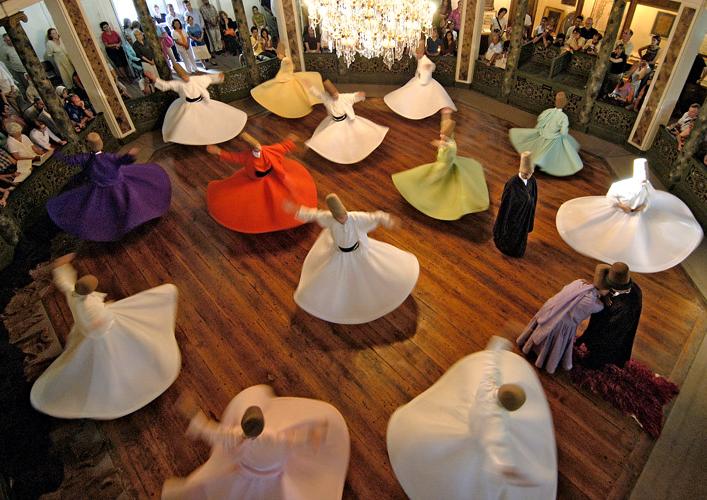 🇹🇷 Turkey and 3 moreSamaسَماع (samā)
A Sufi ritual of listening, prayer, and whirling dance to reach spiritual ecstasyRitual dance · Circle · Group
🇹🇷 Turkey and 3 moreSamaسَماع (samā)
A Sufi ritual of listening, prayer, and whirling dance to reach spiritual ecstasyRitual dance · Circle · Group
Its cousins elsewhere
All folk dances 🇧🇪 Belgium and 5 moreProcessional giant
Huge costumed figures carried and danced in European street processionsFolk dance · Solo · Procession
🇧🇪 Belgium and 5 moreProcessional giant
Huge costumed figures carried and danced in European street processionsFolk dance · Solo · Procession
 🇧🇧 BarbadosBarbados Land-ship
A parade and dance tradition in Barbados, mimicking naval maneuvers on landFolk dance · Group · Procession
🇧🇧 BarbadosBarbados Land-ship
A parade and dance tradition in Barbados, mimicking naval maneuvers on landFolk dance · Group · Procession
 🇫🇷 FranceFarandolefarandola
A long chain dance of Provence, led by a drummer with a tambourine and flute.Folk dance · Group
🇫🇷 FranceFarandolefarandola
A long chain dance of Provence, led by a drummer with a tambourine and flute.Folk dance · Group
 🇬🇧 United Kingdom and 5 moreMorris dance
A group folk dance from England, with bells, sticks or handkerchiefsFolk dance · Group · Procession
🇬🇧 United Kingdom and 5 moreMorris dance
A group folk dance from England, with bells, sticks or handkerchiefsFolk dance · Group · Procession