Paint Dancing
An American art craze combining dancing, paint, brushes, and paper
Paint dancing is an American practice that blends painting with dance at organized gatherings. Participants wear clothing suitable for making art, holding brushes and applying paint to paper or bodies as they move together.
Watch it dancedShare on WhatsApp
- Evangeline Welch of Shreveport, Louisiana, is credited as the creator of paint dancing in the US.
- Gloria M. Buono coined the term paint dancing in 1996 in her work The Painting Ballerina.
- During the Summer of Love, hippies adapted the style to incorporate body painting.
- Seattle artist and activist Matt Jones launched a grassroots movement to popularize it in 2006.
What is Paint Dancing?
Paint dancing is an American creative craze that unites dance movement with visual art making. Participants gather at scheduled events in casual garments suited for getting messy. While moving to rhythms, dancers work with brushes, sheets of paper, and wet pigments to create spontaneous visual pieces. The activity invites anyone to express themselves through both physical motion and mark making simultaneously. In some settings, participants paint on sheets of paper, while in other gatherings, the paint is applied directly to skin. The resulting artwork captures the physical energy, rhythm, and gestures of the dancers in bold color across the surface.
Where does Paint Dancing come from?
The idea of merging physical motion with visual painting began during the later years of the European and American Modern art era, closely tied to action painting. In the United States, Evangeline Welch of Shreveport, Louisiana, is recognized as the originator of the concept. Later, writer and illustrator Gloria M. Buono coined the term paint dancing in 1996 through her publication The Painting Ballerina. In 2006, artist and activist Matt Jones launched a grassroots community campaign in Seattle to bring the form to wider public notice.
How is Paint Dancing danced?
Dancers move freely across the floor while handling brushes and paints, blending physical gestures with the act of mark making. Because the form grew out of action painting traditions, the physical actions focus on expressive, energetic motions rather than strict technical steps. Performers shift between dancing across the space and applying strokes to paper or to fellow participants. The flow of movement dictates the splatter, stroke, and distribution of color, allowing bodily rhythm to determine the final composition of the artwork created during the session.
Paint Dancing, drawn
Costume and what is carried
People taking part in these events wear practical garments prepared for getting stained with wet pigment. The clothing allows full freedom of movement for dancing while withstanding splashes of color. Dancers hold brushes and carry sheets of paper to catch their marks as they move. In body painting styles, dancers use their own skin as the canvas, wearing minimal clothing to accommodate painted patterns directly on the body during the session.
When and where Paint Dancing is danced
Paint dancing takes place at organized communal sessions and social gatherings where people meet specifically to combine visual art and dance. These events offer an informal setting for artistic play rather than rigid theatrical performance. Participants attend community-led functions, including grassroots workshops sparked by modern art activists, where everyone can experiment with color, paper, and physical motion in a relaxed group environment.
Styles of Paint Dancing
Several distinct adaptations have developed since the practice began. During the 1960s Summer of Love, hippie counterculture introduced a variation that combined dance with body painting rather than working solely on paper. Another modern iteration arose in 2006 as a grassroots community movement started by Seattle activist Matt Jones, which aimed to popularize the activity in contemporary American cultural life.
What Paint Dancing means
The form represents an interactive break from traditional artistic methods, drawing inspiration from Modernist action painting. By transforming art creation into an active physical experience, it blurs the line between visual craft and spontaneous performance. The movement gained written recognition in 1996 through Gloria M. Buono's book The Painting Ballerina, cementing its identity as an approachable, expressive outlet within modern American popular culture.
Questions people ask about Paint Dancing
Where does paint dancing come from?
It originated from Modern art experiments in Europe and America, with Evangeline Welch of Shreveport, Louisiana credited as its American creator. The actual name was coined in 1996 by author Gloria M. Buono.
When and why is paint dancing done?
It is practiced at organized social events and grassroots community gatherings. People attend to combine rhythmic dance movement with spontaneous visual art by applying wet pigment to paper or bodies.
What equipment do participants use?
Dancers use paints, brushes, and sheets of paper while attending organized sessions. They dress in clothes suitable for getting stained with color, using their movement to apply paint directly to surfaces or bodies.
What is the Summer of Love variation?
During the 1960s Summer of Love, hippies introduced a style of paint dancing that incorporated body painting, allowing participants to apply wet paint to skin while dancing.
Good reading and sources
- Paint Dancing on WikipediaEncyclopedia
- Wikidata recordOpen data
- Videos of Paint Dancing on YouTubeSearch results, not chosen by EveryGhunghroo
The facts on this page come from the Wikipedia article "Paint Dancing", written by its contributors and used under the CC BY-SA 4.0 licence, and from its Wikidata record (CC0). EveryGhunghroo rewrote the text in its own words, with AI assistance, and compares every page with the article to make sure no passage is copied. It may be reused under the same CC BY-SA 4.0 licence with a link back.
It may contain mistakes, and it describes the dance in outline: it is not a lesson. Traditions differ from one teacher, village or family to the next. If something is wrong, tell us. Last refreshed 2026-10-04.
More from the United States
All the dances of the United States 🇦🇹 Austria and 5 moreWaltzWalzer
A gliding partner dance in triple time, performed in a turning closed embraceBallroom or Latin dance · Couple · Set or square
🇦🇹 Austria and 5 moreWaltzWalzer
A gliding partner dance in triple time, performed in a turning closed embraceBallroom or Latin dance · Couple · Set or square
 🇵🇱 Poland and 3 morePolonaisePolonez, chodzony
A stately walking dance in triple time, opening Polish celebrations and ballsFolk dance · Couple · Procession
🇵🇱 Poland and 3 morePolonaisePolonez, chodzony
A stately walking dance in triple time, opening Polish celebrations and ballsFolk dance · Couple · Procession
 🇨🇺 Cuba and 2 moreSalsa
A lively partner dance with spins and footwork, danced to salsa music worldwideSocial dance · Couple · Solo
🇨🇺 Cuba and 2 moreSalsa
A lively partner dance with spins and footwork, danced to salsa music worldwideSocial dance · Couple · Solo
 🇬🇧 United Kingdom and 5 moreBallroom dance
Partner dances performed socially and in competition, with roots in EuropeSocial dance · Couple · Group
🇬🇧 United Kingdom and 5 moreBallroom dance
Partner dances performed socially and in competition, with roots in EuropeSocial dance · Couple · Group
Its cousins elsewhere
All social dances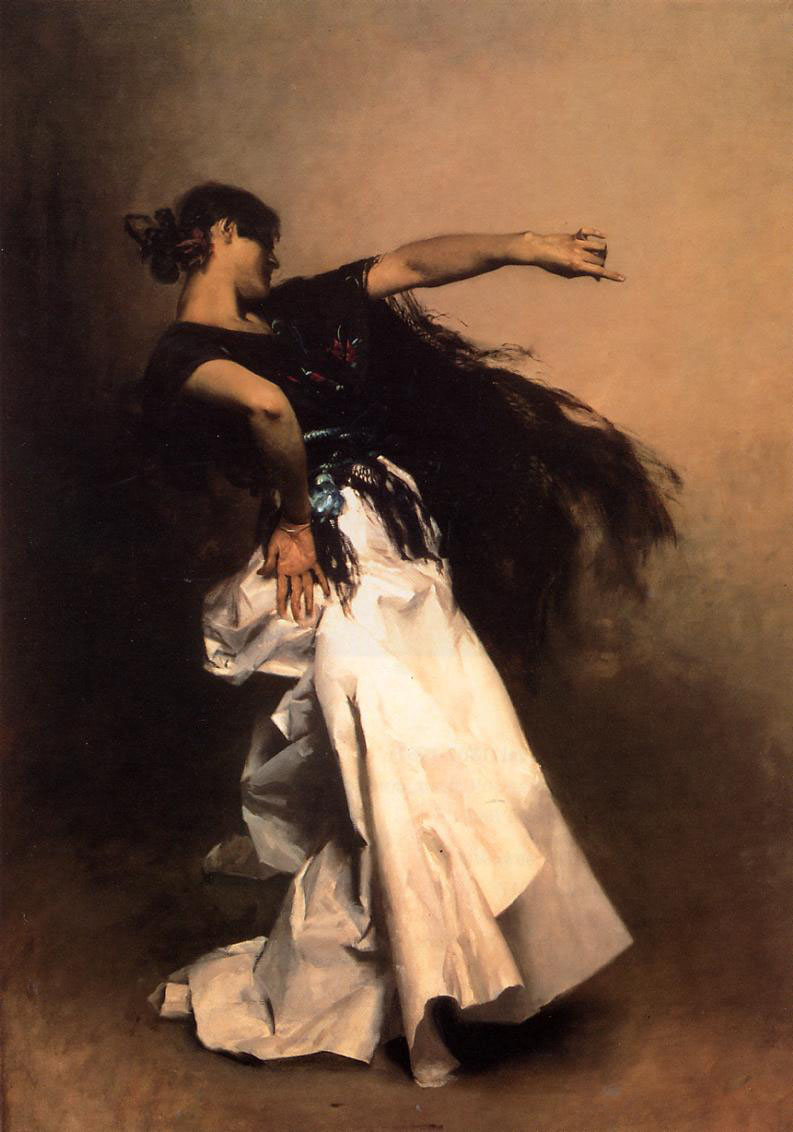 🇪🇸 SpainFlamenco
A southern Spanish art form of rhythmic footwork, singing, and acoustic guitarFolk dance · Solo · Group
🇪🇸 SpainFlamenco
A southern Spanish art form of rhythmic footwork, singing, and acoustic guitarFolk dance · Solo · Group
 🇦🇷 Argentina and 4 moreTango
A dramatic partner dance born in the ports of the Río de la Plata.Social dance · Couple
🇦🇷 Argentina and 4 moreTango
A dramatic partner dance born in the ports of the Río de la Plata.Social dance · Couple
 🇮🇳 India and 1 moreFolk dance
Traditional group dances rooted in local life and passed down through generationsFolk dance · Group · Circle
🇮🇳 India and 1 moreFolk dance
Traditional group dances rooted in local life and passed down through generationsFolk dance · Group · Circle
 🇪🇬 Egypt and 3 moreBelly danceرقص شرقي
A Middle Eastern dance focused on hip and torso articulation.Folk dance · Solo
🇪🇬 Egypt and 3 moreBelly danceرقص شرقي
A Middle Eastern dance focused on hip and torso articulation.Folk dance · Solo