Popping
A street dance built on quick muscle contractions, born in California’s funk scene
Popping is a street dance that grew from the boogaloo movement in California in the late 1970s. Dancers, called poppers, create sharp, rhythmic jerks or 'pops' in their bodies to funk and electronic music, often in dance battles or freestyle sessions. The style mixes with related moves like the robot, waving, and tutting.
Watch it dancedShare on WhatsApp
- Popping began in California in the late 1970s
- Dancers create sharp 'pops' by tensing and relaxing muscles
- Commonly performed to funk, disco, and electronic music
- Often seen in dance battles and freestyle sessions
- Related styles include the robot, waving, and tutting
What is Popping?
Popping is a street dance where the dancer contracts and relaxes muscles to create a sudden jerk or 'pop' in the body, often timed to the beat of funk or electronic music. The dance can focus pops on different body parts—arms, legs, chest, or neck—and is usually performed solo or in groups. Poppers often combine popping with other styles like the robot, waving, and tutting, creating a performance that looks mechanical, animated, or geometric. The dance is seen in freestyle circles, battles, and stage shows.
Where does Popping come from?
Popping developed in California in the late 1970s, growing out of the earlier boogaloo movement in Oakland. As boogaloo spread, local styles emerged: 'robottin'' in Richmond, strutting in San Francisco and San Jose, and strikin' in Sacramento. The dance gained wider attention after groups like Granny & the Robotroids and the Black Messengers appeared on national television in the late 1970s. The Electric Boogaloos later mixed popping with boogaloo, helping to define and popularize the style. Popping influenced the rise of hip hop dance but remains distinct from breaking and locking.
How is Popping danced?
A popper creates sharp, rhythmic movements by quickly tensing and relaxing muscles, producing a visible 'pop' or 'hit.' Pops can be isolated to one part of the body or travel through several parts in sequence. Dancers often pose or freeze between movements, and may use angles, rolls, and geometric shapes with their arms and hands. The dance is mostly upright, with improvisation and interaction with other dancers or the audience, especially during battles.
Popping, drawn
The music of Popping
Popping is most often danced to funk and disco tracks from the late 1970s and 1980s, with a steady 4/4 beat and a tempo between 90 and 120 beats per minute. Artists like Zapp, Dazz Band, and Cameo are favorites. Electro and early hip hop tracks, as well as modern electronic dance music like dubstep, are also used. The dancer usually times pops to the beat or backbeat, but may also follow melodies or other rhythmic elements.
Costume and what is carried
There is no fixed costume for popping. Dancers usually wear comfortable street clothes that allow freedom of movement. Outfits may reflect personal style or the fashion of the funk and hip hop scenes, but there are no specific props or accessories required.
When and where Popping is danced
Popping is performed in street dance battles, stage shows, and social gatherings. It is often improvised, with dancers competing or exchanging moves in front of a crowd. The style is passed on through informal teaching, community events, and dance crews, rather than formal schools.
Styles of Popping
Several related styles are often combined with popping. Animation mimics stop-motion film effects, using rigid, jerky movements. Boogaloo is a looser, rolling style with circular motions of the hips, chest, and limbs. Tutting, inspired by Egyptian art, uses right angles and box shapes, mainly with the arms and hands. Each of these adds its own flavor to popping performances.
What Popping means
Popping helped shape the early hip hop dance scene and remains a core part of street dance culture. It is valued for its creativity, improvisation, and the way it brings dancers together in friendly competition. The style is recognized for its influence on later dance forms and its ongoing presence in music videos, stage shows, and dance battles.
Questions people ask about Popping
Where did popping originate?
Popping developed in California, especially in Oakland and Fresno, during the late 1970s. It grew out of the earlier boogaloo movement and spread through local dance scenes and high school gatherings.
What music is used for popping?
Popping is usually danced to funk and disco music from the 1970s and 1980s, as well as electro, early hip hop, and modern electronic dance music. The music typically has a steady 4/4 beat.
How is popping different from breaking or locking?
Popping is based on quick muscle contractions to create a jerking effect, while breaking involves acrobatic floor moves and locking uses sharp pauses and exaggerated arm movements. Though related, each style has its own technique.
When is popping performed?
Popping is performed at dance battles, social gatherings, and stage shows. It is often improvised and used in friendly competition or freestyle sessions.
Who can dance popping?
Anyone can learn and perform popping. It is open to all genders and ages, with dancers often called 'poppers.'
Good reading and sources
- Popping on WikipediaEncyclopedia
- More photos and video on Wikimedia CommonsPhotos and video
- Wikidata recordOpen data
- Videos of Popping on YouTubeSearch results, not chosen by Ghungroo
The facts on this page come from the Wikipedia article "Popping", written by its contributors and used under the CC BY-SA 4.0 licence, and from its Wikidata record (CC0). Ghungroo rewrote the text in its own words, with AI assistance, and compares every page with the article to make sure no passage is copied. It may be reused under the same CC BY-SA 4.0 licence with a link back.
It may contain mistakes, and it describes the dance in outline: it is not a lesson. Traditions differ from one teacher, village or family to the next. If something is wrong, tell us. Last refreshed 2026-10-03.
More from the United States
All the dances of the United States 🇺🇸 United States and 5 moreBreakdancing
A street dance with acrobatics, floorwork and freezes, born in 1970s New York CityStreet or club dance · Solo · Group
🇺🇸 United States and 5 moreBreakdancing
A street dance with acrobatics, floorwork and freezes, born in 1970s New York CityStreet or club dance · Solo · Group
 🇵🇱 Poland and 3 morePolonaisePolonez, chodzony
A stately walking dance in triple time, opening Polish celebrations and ballsFolk dance · Couple · Procession
🇵🇱 Poland and 3 morePolonaisePolonez, chodzony
A stately walking dance in triple time, opening Polish celebrations and ballsFolk dance · Couple · Procession
 🇨🇺 Cuba and 2 moreSalsa
A lively partner dance with spins and footwork, danced to salsa music worldwideSocial dance · Couple · Solo
🇨🇺 Cuba and 2 moreSalsa
A lively partner dance with spins and footwork, danced to salsa music worldwideSocial dance · Couple · Solo
 🇬🇧 United Kingdom and 5 moreBallroom dance
Partner dances performed socially and in competition, with roots in EuropeSocial dance · Couple · Group
🇬🇧 United Kingdom and 5 moreBallroom dance
Partner dances performed socially and in competition, with roots in EuropeSocial dance · Couple · Group
Its cousins elsewhere
All street and club dances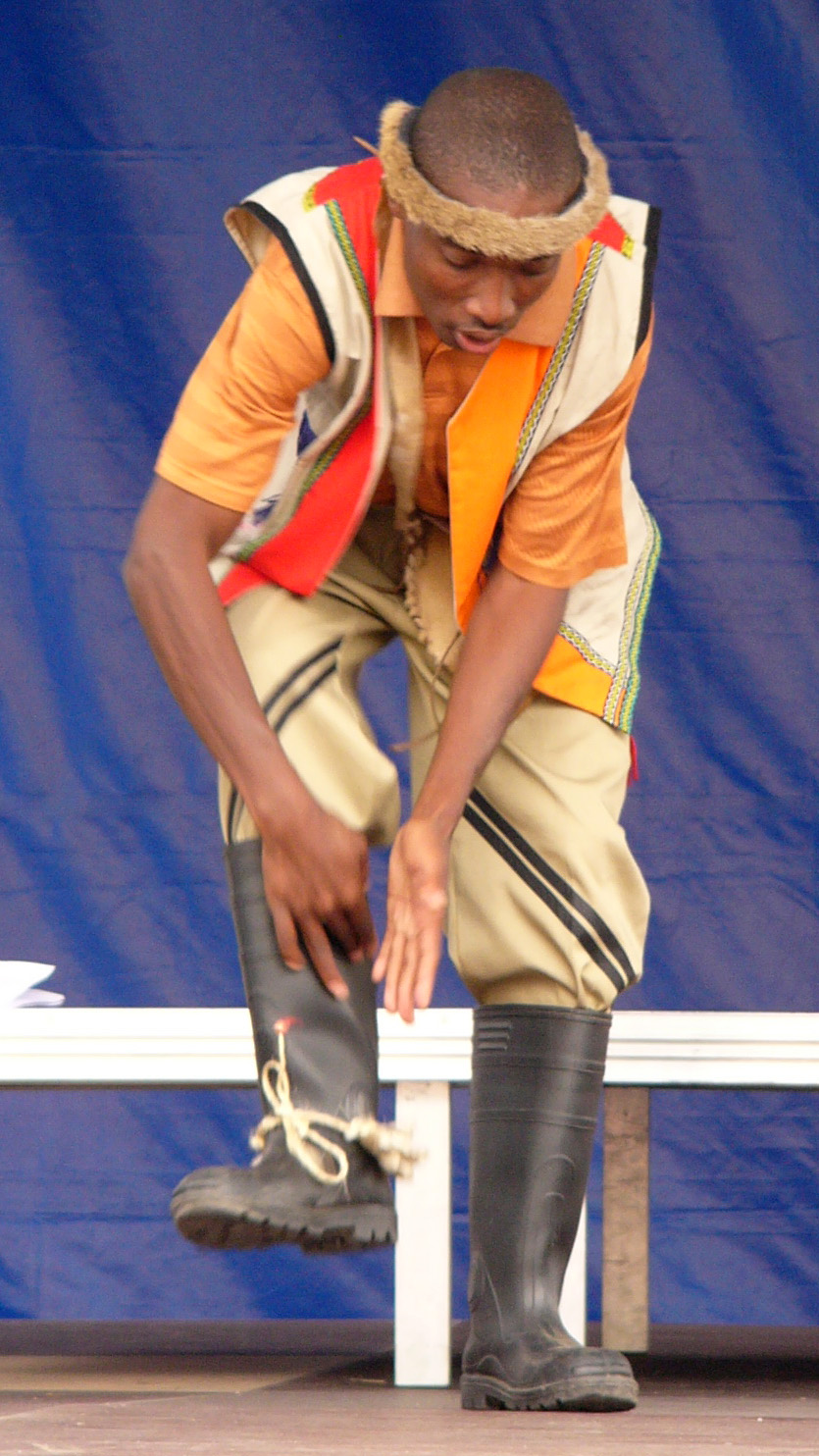 🇿🇦 South AfricaGumboot dance
A South African dance performed in rubber boots, using stamping and slapping for rhythmFolk dance · Group
🇿🇦 South AfricaGumboot dance
A South African dance performed in rubber boots, using stamping and slapping for rhythmFolk dance · Group