Uprock
A competitive street dance of hand gestures and footwork from New York City.
Uprock is a competitive urban street dance that emerged in New York City during the late 1960s. Two dancers face each other to perform mock battles using rhythmic hand gestures called burns and sudden body movements known as jerks.
Watch it dancedShare on WhatsApp
- Uprock emerged in New York City in the late 1960s.
- Dancers use hand gestures called burns to simulate fighting.
- Physical contact is penalized in competitive uprock battles.
- The Apache line allows multiple dancers to face off simultaneously.
- Jimmy Castor's "It's Just Begun" is a classic uprock song.
What is Uprock?
Uprock is a competitive street dance where two opponents face each other to perform a mock battle. Dancers use rhythmic hand gestures called burns to mimic fighting actions and sudden body movements known as jerks. The dance involves foot shuffles, spins, turns, and drops. It is performed to soul, rock, or funk music with a hard driving beat.
Where does Uprock come from?
The dance evolved in New York City in the late 1960s. Its origins are debated, but it likely started within the Puerto Rican community. The terms rock, uprock, and toprock existed before the media coined breakdancing in the early 1980s. The style spread through all boroughs as dancers shared moves at clubs.
How is Uprock danced?
Two men usually face each other while dancing. They use hand gestures like bow and arrow or shotgun motions to undermine their opponent without physical contact. Experienced dancers avoid touching to prevent penalties. The Apache line allows multiple dancers to face off in a row. New members may battle down this line to join a crew.
Uprock, drawn
The music of Uprock
Dancers perform to soul, rock, and funk beats. A specific collection of songs with hard driving rhythms is preferred. Jimmy Castor's "It's Just Begun" is an example track. Dancers use lyrics and sounds to time their burns and jerks. The music guides when to execute freestyle movements.
Costume and what is carried
Dancers often wear crew jackets with insignia. Losing one's shirt in a battle can mean losing a nickname or crew name. This practice mimics gang culture rituals. No special masks or props are used beyond the dancers' own bodies and clothing.
When and where Uprock is danced
The dance was common at block parties, teen dances, and festive gatherings. It became a competitive art form with prize money and bragging rights. Battles occurred at recreation centers and city-wide contests. The style faded in the 1980s but saw revivals in the 1990s and 2000s.
Styles of Uprock
Brooklyn style focuses on burns and jerks. The Bronx style features more freestyle movement. Manhattan and Bronx dancers added floor moves later. Some crews incorporated elements into breaking. Modern groups keep the tradition alive globally through online platforms.
What Uprock means
Uprock reflects socializing and rivalry among youth. It influenced breakdancing culture significantly. The dance faced decline due to disco and breaking but persists in active crews worldwide. It remains a symbol of New York street dance history.
Questions people ask about Uprock
What is Uprock?
Uprock is a competitive street dance from New York City where two dancers face each other to perform mock battles using hand gestures and footwork.
Where did Uprock originate?
It originated in New York City in the late 1960s, likely within the Puerto Rican community, before spreading to all boroughs.
What are the main moves in Uprock?
Key moves include burns (hand gestures mimicking fights), jerks (sudden body movements), shuffles, spins, and drops.
Is physical contact allowed?
No. Physical contact is penalized as it signifies inexperience or dysfunctional behavior in the mock battle context.
What music is used for Uprock?
Dancers typically perform to soul, rock, or funk tracks with hard driving beats, such as Jimmy Castor's "It's Just Begun".
Good reading and sources
- Uprock on WikipediaEncyclopedia
- Wikidata recordOpen data
- Videos of Uprock on YouTubeSearch results, not chosen by Ghungroo
The facts on this page come from the Wikipedia article "Uprock", written by its contributors and used under the CC BY-SA 4.0 licence, and from its Wikidata record (CC0). Ghungroo rewrote the text in its own words, with AI assistance, and compares every page with the article to make sure no passage is copied. It may be reused under the same CC BY-SA 4.0 licence with a link back.
It may contain mistakes, and it describes the dance in outline: it is not a lesson. Traditions differ from one teacher, village or family to the next. If something is wrong, tell us. Last refreshed 2026-10-03.
More from the United States
All the dances of the United States 🇺🇸 United States and 5 moreBreakdancing
A street dance with acrobatics, floorwork and freezes, born in 1970s New York CityStreet or club dance · Solo · Group
🇺🇸 United States and 5 moreBreakdancing
A street dance with acrobatics, floorwork and freezes, born in 1970s New York CityStreet or club dance · Solo · Group
 🇵🇱 Poland and 3 morePolonaisePolonez, chodzony
A stately walking dance in triple time, opening Polish celebrations and ballsFolk dance · Couple · Procession
🇵🇱 Poland and 3 morePolonaisePolonez, chodzony
A stately walking dance in triple time, opening Polish celebrations and ballsFolk dance · Couple · Procession
 🇨🇺 Cuba and 2 moreSalsa
A lively partner dance with spins and footwork, danced to salsa music worldwideSocial dance · Couple · Solo
🇨🇺 Cuba and 2 moreSalsa
A lively partner dance with spins and footwork, danced to salsa music worldwideSocial dance · Couple · Solo
 🇬🇧 United Kingdom and 5 moreBallroom dance
Partner dances performed socially and in competition, with roots in EuropeSocial dance · Couple · Group
🇬🇧 United Kingdom and 5 moreBallroom dance
Partner dances performed socially and in competition, with roots in EuropeSocial dance · Couple · Group
Its cousins elsewhere
All street and club dances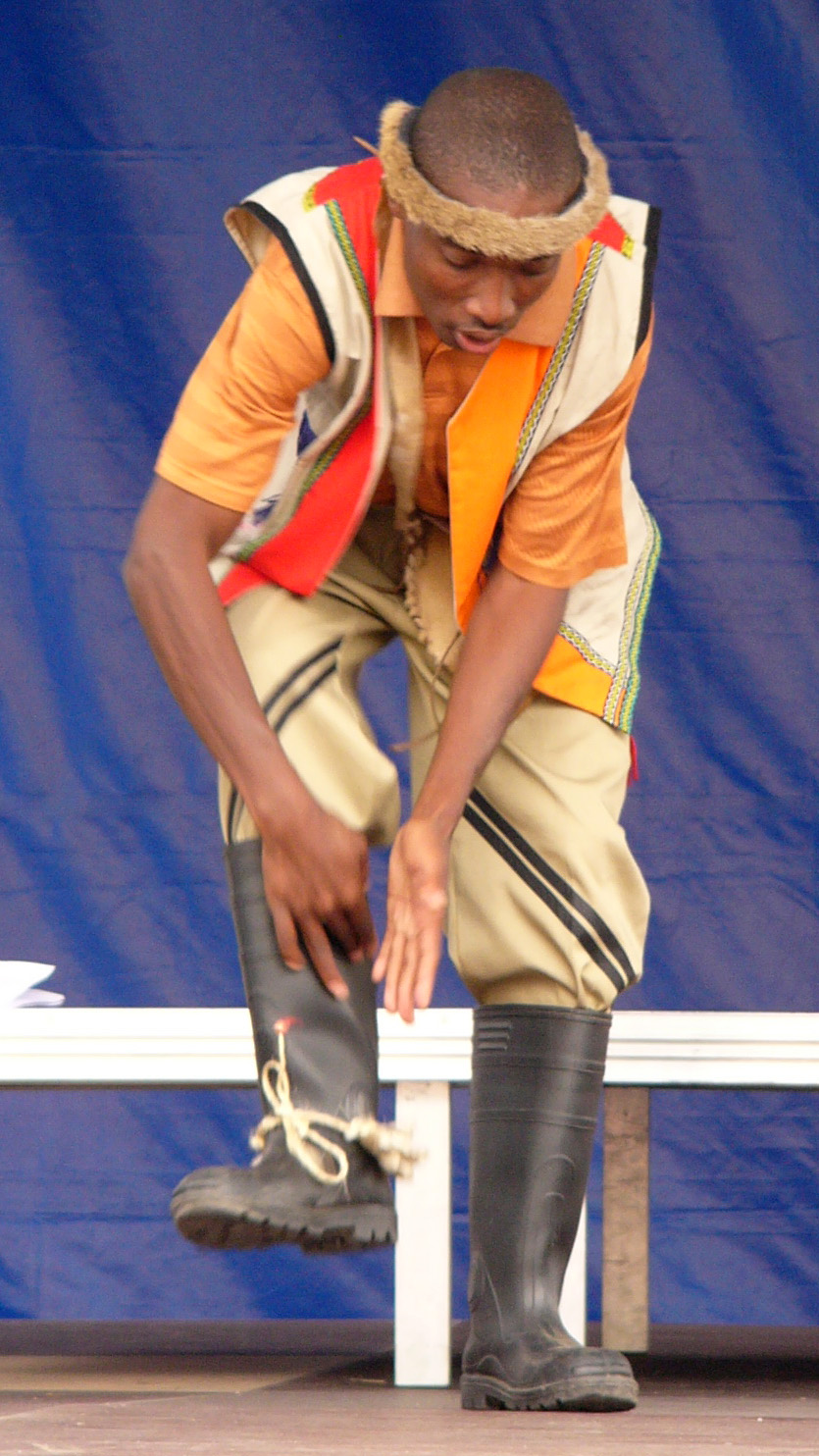 🇿🇦 South AfricaGumboot dance
A South African dance performed in rubber boots, using stamping and slapping for rhythmFolk dance · Group
🇿🇦 South AfricaGumboot dance
A South African dance performed in rubber boots, using stamping and slapping for rhythmFolk dance · Group