Social dance nights
The milonga
A social evening of Argentine tango, danced in sets of songs, with its own codes for asking, accepting and sharing the floor.
Presented by ClearTrust Free for dancers, travellers and the curious.
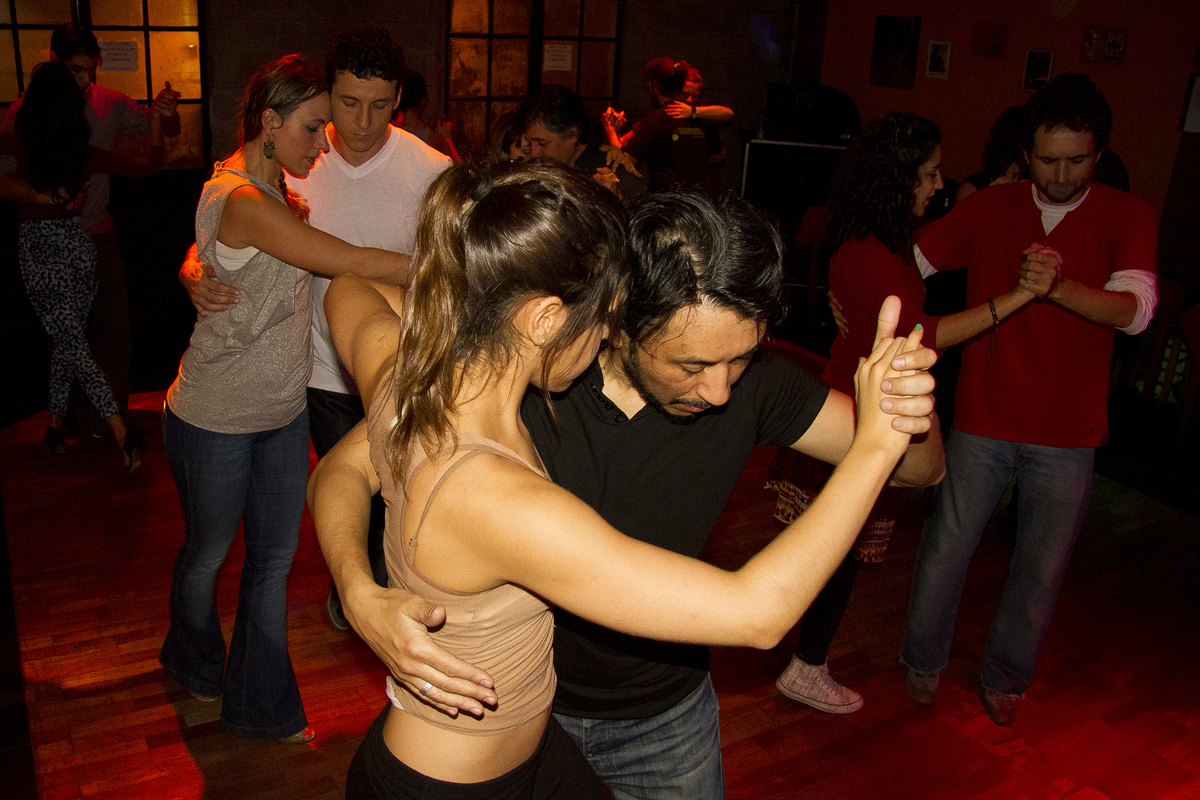
A milonga is a place and a night where people go to dance tango. Nobody performs. Couples form for a few songs, part, and form again with someone else. The word also names a faster, older dance and its music, which is played at the same events. The customs of the room matter as much as the steps, and regulars learn them early.
What it is
The music comes in sets called tandas. A tanda is three or four songs by one orchestra in one mood: tango, the lilting vals, or the quick milonga. Between sets the DJ plays a short piece of unrelated music, the cortina, which means curtain. That is the signal to thank your partner and leave the floor. You dance the whole tanda with one person. Ending it early is understood as a sign that something went wrong.
Where it comes from
Tango grew up in the late nineteenth century in the port districts of Buenos Aires and Montevideo, among European immigrants, the descendants of enslaved Africans and people from the countryside. It was danced in courtyards, cafes and dance halls before it reached the salons. The big orchestras of the 1930s and 1940s recorded most of the music still played today. In 2009 UNESCO listed tango as the shared heritage of Argentina and Uruguay.
How it works
Invitations are made from a distance. A dancer looks across the room at the person they would like to dance with, the mirada. If the look is returned, a small nod, the cabeceo, settles it, and the pair meet at the edge of the floor. A refusal is simply looking away, so no one is turned down in public. On the floor, couples travel anticlockwise in lanes, called the ronda, and do not overtake or step backwards into the couple behind.
If you go
- Take a beginner class first. Many milongas run one in the hour before the dancing starts.
- Sit where you can see the room, and watch a tanda or two before you try.
- Invite with your eyes and a nod, not by walking up and holding out a hand.
- Enter the floor only when the approaching couple has seen you and left a gap.
- When the cortina plays, say thank you and walk your partner back to their seat.
Good manners
- Do not teach or correct your partner on the floor.
- Keep moving with the line of dance and keep your steps small when it is crowded.
- Saying thank you in the middle of a tanda means you want to stop.
- Wear clean shoes with a smooth sole, and arrive freshly washed. The embrace is close.
What is danced


Sources and further reading
Original text by the Ghungroo desk, written with AI assistance and checked against the sources above. Customs vary from place to place. If we have something wrong, tell us.