Milonga
A lively partner dance from Argentina with fast, rhythmic steps
Milonga is a social dance from Argentina, danced to milonga music. It shares steps with Argentine tango but is faster, more relaxed, and often playful, with dancers moving together in rhythmic walking patterns. Milonga was first danced by working-class communities in Buenos Aires in the late 1800s and later spread to Europe and the United States.
Watch it dancedShare on WhatsApp
- Milonga is danced faster and with less pause than Argentine tango.
- It began in Buenos Aires among working-class and Afro-Argentine communities.
- The dance uses rhythmic walking and playful, improvised steps.
- Milonga spread to Europe and the US in the early 1900s.
- Music features syncopated beats and was played on guitar, flute, and violin.
What is Milonga?
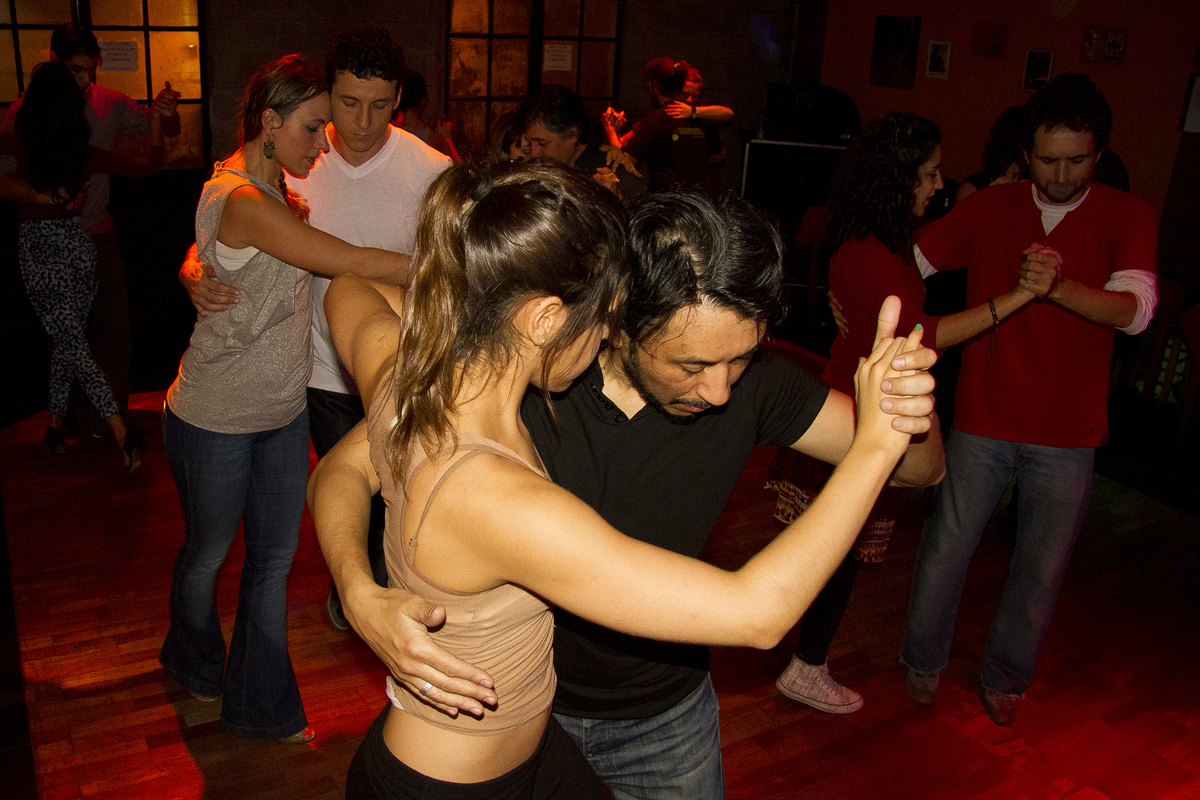
Milonga is a fast-paced partner dance from Argentina, most often danced in couples. It uses the same basic steps as Argentine tango, but the style is more relaxed and lively. Dancers move together in a rhythmic walk, often adding playful or humorous touches. The dance is less dramatic than tango and is known for its rustic and energetic feel. The music has a syncopated beat, and the dance is usually performed at social gatherings or dance halls.
Where does Milonga come from?
Milonga has roots in the working-class neighborhoods of Buenos Aires in the late 1800s, where it was popular among people of African descent, sailors, and laborers. The word 'milonga' comes from African languages, meaning 'argument' or 'lines of dancers.' Early milonga was danced in clubs, markets, and even wakes, and was sometimes associated with marginalized communities. Over time, it spread to Europe and the United States, gaining popularity in Paris and other major cities.
How is Milonga danced?
Milonga is danced in couples, with a relaxed posture and a focus on rhythmic walking. The steps are simple and quick, with fewer pauses than tango. There are two main styles: milonga lisa, where dancers step on every beat, and milonga con traspié, which adds double-time steps or quick changes of weight. Dancers may improvise with small jumps, exaggerated steps, or sudden pauses, often adding humor or playful gestures.
Milonga, drawn
The music of Milonga
The music for milonga is lively and syncopated, with a clear, driving beat. Early performances featured guitars, flutes, harps, violins, organ-grinders, and even paper-combs. The rhythm is usually in 8 counts, with accents on the first and sometimes other beats, giving the dance its energetic feel. The music encourages continuous movement and leaves little room for hesitation.

When and where Milonga is danced
Milonga is danced at social events, dance halls, and performances. In the past, it was common at lower-class gatherings, wakes, and clubs in Buenos Aires. As it spread, it became popular in European and American dance venues. Today, it remains a staple of Argentine social dance culture and is often taught and performed at tango events.
Styles of Milonga
There are different styles of milonga, such as milonga lisa, which is straightforward and steps on every beat, and milonga con traspié, which uses double-time steps. Some versions include dramatic or humorous movements, like tiny steps around a partner or sudden breaks. Regional and personal variations exist, with dancers often improvising to interpret the music.
What Milonga means
Milonga began as a dance of the marginalized in Buenos Aires, with African and European influences. It was sometimes frowned upon by authorities and high society, but its lively style helped it spread internationally. In the early 20th century, it became fashionable in Europe and the United States, despite some controversy. Today, it is recognized as an important part of Argentine dance culture.
Questions people ask about Milonga
Where does milonga come from?
Milonga originated in Buenos Aires, Argentina, in the late 19th century, mainly among working-class and Afro-Argentine communities.
How is milonga different from tango?
Milonga uses the same basic steps as Argentine tango but is danced faster, with a more relaxed and playful style, and fewer pauses.
Who dances milonga?
Milonga is usually danced by couples, with both men and women participating together at social events and dance halls.
When is milonga danced?
Milonga is danced at social gatherings, dance halls, and performances. Historically, it was also present at wakes and clubs in Buenos Aires.
What music is used for milonga?
Milonga is danced to lively, syncopated music, often played on guitar, flute, harp, violin, and sometimes organ-grinders or paper-combs.
Good reading and sources
- Milonga (dance) on WikipediaEncyclopedia
- Wikidata recordOpen data
- Videos of Milonga on YouTubeSearch results, not chosen by Ghungroo
The facts on this page come from the Wikipedia article "Milonga (dance)", written by its contributors and used under the CC BY-SA 4.0 licence, and from its Wikidata record (CC0). Ghungroo rewrote the text in its own words, with AI assistance, and compares every page with the article to make sure no passage is copied. It may be reused under the same CC BY-SA 4.0 licence with a link back.
It may contain mistakes, and it describes the dance in outline: it is not a lesson. Traditions differ from one teacher, village or family to the next. If something is wrong, tell us. Last refreshed 2026-10-03.
More from Argentina
All the dances of Argentina 🇦🇷 Argentina and 1 moreTango
A partner dance from the Río de la Plata, danced in close or open embraceSocial dance · Couple
🇦🇷 Argentina and 1 moreTango
A partner dance from the Río de la Plata, danced in close or open embraceSocial dance · Couple
 🇦🇷 Argentina and 1 moreArgentine tango
A partner dance from Buenos Aires suburbs, defined by the bandoneon and an intimate embrace.Social dance · Couple
🇦🇷 Argentina and 1 moreArgentine tango
A partner dance from Buenos Aires suburbs, defined by the bandoneon and an intimate embrace.Social dance · Couple
 🇦🇷 Argentina and 1 moreChacarera
A partner dance with foot stomping and handkerchiefs from rural ArgentinaFolk dance · Couple · Group
🇦🇷 Argentina and 1 moreChacarera
A partner dance with foot stomping and handkerchiefs from rural ArgentinaFolk dance · Couple · Group
 🇨🇱 Chile and 3 moreCueca
A partner dance with handkerchiefs, tracing circles in Chile, Bolivia, and PeruFolk dance · Couple · Solo
🇨🇱 Chile and 3 moreCueca
A partner dance with handkerchiefs, tracing circles in Chile, Bolivia, and PeruFolk dance · Couple · Solo
Its cousins elsewhere
All social dances 🇲🇽 MexicoJarabe Tapatío
A courtship dance from Jalisco, now Mexico’s national danceFolk dance · Couple · Group
🇲🇽 MexicoJarabe Tapatío
A courtship dance from Jalisco, now Mexico’s national danceFolk dance · Couple · Group
 🇨🇺 Cuba and 5 moreContradanzacontradanza criolla
A Cuban partner dance with African rhythms that influenced jazz and tangoFolk dance · Couple
🇨🇺 Cuba and 5 moreContradanzacontradanza criolla
A Cuban partner dance with African rhythms that influenced jazz and tangoFolk dance · Couple
 🇵🇱 Poland and 5 moreMazurka
A lively Polish folk dance in triple time, known for its shifting accentsFolk dance · Couple · Group
🇵🇱 Poland and 5 moreMazurka
A lively Polish folk dance in triple time, known for its shifting accentsFolk dance · Couple · Group
 🇺🇸 United States and 2 moreContra dance
A social line dance for pairs, led by a caller and set to live folk tunesFolk dance · Couple · Line or chain
🇺🇸 United States and 2 moreContra dance
A social line dance for pairs, led by a caller and set to live folk tunesFolk dance · Couple · Line or chain