
Branle
A French chain dance of linked couples moving side to side, popular from the 1500s.
The branle is a social circle and line dance that originated in France around the year 1500. Couples hold hands or link arms to perform a swaying step pattern that moves the group sideways. It was adopted by European courts and remains part of French folk tradition today.
Watch it dancedShare on WhatsApp
- Couples link arms to move sideways in a chain or circle.
- Popularized in French courts during the 16th century.
- Arbeau recorded eight specific regional variations.
- Influenced the structure of the classical dance suite.
- Adapted by Stravinsky and Poulenc in the 20th century.
What is Branle?
The branle is a type of social dance where dancers form a long chain or a large circle. Participants hold hands or link arms while performing a rhythmic side-to-side movement. The name comes from a French verb meaning to sway or wobble. This simple motion allows the entire group to travel gradually across the floor. The dance involves both music and a specific stepping pattern known as the characteristic step. It serves as a communal activity for gatherings and court events alike.
Where does Branle come from?
The dance emerged in France around the year 1500. Its roots lie in rustic peasant traditions before being embraced by the aristocracy. Printed books from the era allow historians to reconstruct these early steps. The term originally described a swaying step in the basse danse before becoming a distinct genre. By the mid-1500s, it had become a standard feature of courtly entertainment across Europe.
How is Branle danced?
Dancers stand in a line or circle with linked arms. The basic figure alternates larger steps to the left with smaller steps to the right. This pattern shifts the whole chain sideways over time. Depending on the music's speed, participants may walk, run, glide, or skip. Some versions include pantomime gestures or athletic leaps. The double branle features two phrases of two bars each, creating a structured yet fluid flow.
Branle, drawn
The music of Branle
The music generally follows common time, similar to the gavotte. Some variants use triple time. Early accompaniment relied on vocal singing by the dancers themselves. Later arrangements utilized lutes and violins. Composers like Stravinsky and Poulenc later adapted these rhythms for modern orchestral works. The rhythm supports the steady lateral progression of the dancers.
Costume and what is carried
Sources do not specify unique costumes for the branle. Dancers wore the general attire of their respective periods and regions. Court versions likely involved formal wear suitable for palace balls. Folk iterations would have used everyday village clothing. No masks or special props are required beyond the linking of arms.


When and where Branle is danced
The branle was danced at social gatherings and royal courts. It often opened formal balls in France. Specific versions were reserved for certain age groups, such as the youngest dancers. The dance traveled to England, Italy, and Spain, adapting to local customs. It continues to be performed in French folk festivals today.
Styles of Branle
Many regional styles exist, including the Burgundian, Poitou, and Maltese branles. Arbeau documented eight specific types associated with different areas. Suites of up to ten dances were common, ending with a gavotte. The dance evolved into forms like the brando in Italy and the bran in Spain. Modern revivals include adaptations by 20th-century composers.
What Branle means
The branle represents a bridge between peasant folk culture and aristocratic court life. It influenced the development of the classical dance suite. References appear in Shakespeare and other literary works of the period. Its structure provided a model for organized dance sequences. The dance maintains its status as a key element of French historical heritage.
Questions people ask about Branle
What is a branle?
It is a French social dance where dancers link arms in a line or circle. They perform a swaying step pattern that moves the group sideways. The dance originated around 1500 and was adopted by European courts.
How is the branle danced?
Dancers hold hands or link arms. They alternate larger steps to the left with smaller steps to the right. This pattern shifts the entire chain sideways. Speed varies from walking to skipping depending on the music.
Where did the branle originate?
It originated in France around the year 1500. It began as a rustic peasant dance before being adopted by the aristocracy. It spread to England, Italy, and Spain during the Renaissance.
What music accompanies the branle?
Early versions used singer-dancers. Later music featured lutes and violins. The rhythm is typically in common time, though some variants use triple time. It supports the steady lateral movement of the dancers.
Good reading and sources
- Branle on WikipediaEncyclopedia
- More photos and video on Wikimedia CommonsPhotos and video
- Wikidata recordOpen data
- Videos of Branle on YouTubeSearch results, not chosen by Ghungroo
The facts on this page come from the Wikipedia article "Branle", written by its contributors and used under the CC BY-SA 4.0 licence, and from its Wikidata record (CC0). Ghungroo rewrote the text in its own words, with AI assistance, and compares every page with the article to make sure no passage is copied. It may be reused under the same CC BY-SA 4.0 licence with a link back.
It may contain mistakes, and it describes the dance in outline: it is not a lesson. Traditions differ from one teacher, village or family to the next. If something is wrong, tell us. Last refreshed 2026-10-03.
More from France
All the dances of France 🇦🇹 Austria and 4 moreWaltz
A turning couple dance in triple time, first popular in 18th-century EuropeBallroom or Latin dance · Couple
🇦🇹 Austria and 4 moreWaltz
A turning couple dance in triple time, first popular in 18th-century EuropeBallroom or Latin dance · Couple
 🇧🇪 Belgium and 5 moreProcessional giant
Huge costumed figures carried and danced in European street processionsFolk dance · Solo · Procession
🇧🇪 Belgium and 5 moreProcessional giant
Huge costumed figures carried and danced in European street processionsFolk dance · Solo · Procession
 🇵🇱 Poland and 3 morePolonaisePolonez, chodzony
A stately walking dance in triple time, opening Polish celebrations and ballsFolk dance · Couple · Procession
🇵🇱 Poland and 3 morePolonaisePolonez, chodzony
A stately walking dance in triple time, opening Polish celebrations and ballsFolk dance · Couple · Procession
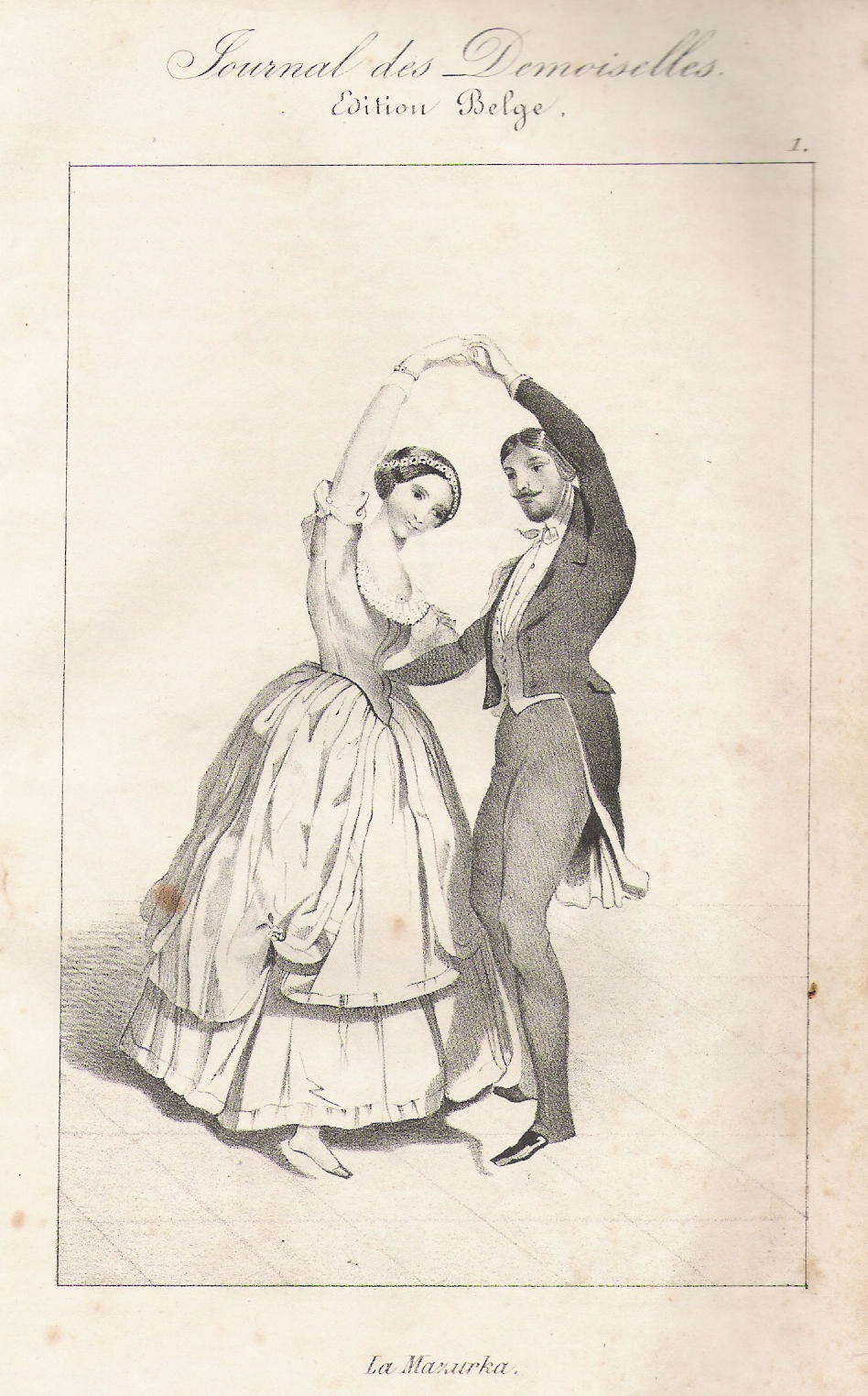 🇵🇱 Poland and 5 moreMazurka
A lively Polish folk dance in triple time, known for its shifting accentsFolk dance · Couple · Group
🇵🇱 Poland and 5 moreMazurka
A lively Polish folk dance in triple time, known for its shifting accentsFolk dance · Couple · Group
Its cousins elsewhere
All folk dances 🇵🇪 Peru and 3 moreHuayno
A lively Andean partner dance with stamping steps and bright melodiesFolk dance · Couple · Group
🇵🇪 Peru and 3 moreHuayno
A lively Andean partner dance with stamping steps and bright melodiesFolk dance · Couple · Group
 🇹🇷 Turkey and 4 moreHalay
A group dance in lines or circles, led by music or singing at weddings and celebrationsFolk dance · Circle · Line or chain
🇹🇷 Turkey and 4 moreHalay
A group dance in lines or circles, led by music or singing at weddings and celebrationsFolk dance · Circle · Line or chain
 🇮🇳 IndiaGotipuaଗୋଟିପୁଅ
A group dance by boys dressed as women, honouring Krishna in OdishaFolk dance · Group
🇲🇾 Malaysia and 2 moreJogetTarian Joget
A couple's folk dance from Malacca with Portuguese roots and quick duple beats.Folk dance · Couple · Group
🇮🇳 IndiaGotipuaଗୋଟିପୁଅ
A group dance by boys dressed as women, honouring Krishna in OdishaFolk dance · Group
🇲🇾 Malaysia and 2 moreJogetTarian Joget
A couple's folk dance from Malacca with Portuguese roots and quick duple beats.Folk dance · Couple · Group