🇯🇵 The dances of Japan
17 dances from Japan, best known first, across 14 cities and regions.
Two words shape Japanese traditional dance: mai, a restrained style, and odori, which is livelier. Around them sit shrine dances, rice-planting and fishing dances, Noh, kabuki, and the stage form nihon buyō. The umbrella word buyō was made in modern times by joining the two.
- Mai and odori are the two main families of Japanese traditional dance.
- The word buyō was coined in modern times by joining mai and odori.
- Kabuki began in 1603 with Izumo no Okuni performing in the dry riverbeds of Kyoto.
- Bon odori dancers circle a yagura, a high wooden scaffold.
- Noh masks are worn only by main characters and have neutral expressions.
Dance in Japan
Japanese dance traditions mostly divide into two families. Mai is reserved, with the body held low and movements that circle. Odori is bigger and more energetic, with stronger steps. Many older dances carry the endings -odori, -asobi or -mai, and plenty belong to one village or district only. The oldest strands come through kagura, shrine transmission, and through work in the fields and at sea: dengaku for rice planting, dances for fishing, dances asking for rain. In modern times the compound buyō was created to name dance in general, and Western forms arriving after the Meiji Restoration began to shape some traditions.
Classical, court and temple dance 3 dances
Noh mai dates from the fourteenth century and is danced to flute and small hand drums known as tsuzumi. Its movement is built from forms, elegant set patterns, and its types run from the moderate chu no mai, often danced by a woman, to the swift kami mai, a male dancer portraying a deity. Kabuki is a dance-drama that began in 1603 when Izumo no Okuni performed in the dry riverbeds of Kyoto. Genroku-era conventions and character types still hold. Nihon buyō is stage entertainment refined over four centuries, taking in kabuki repertoire, Noh's circling, folk jumping and spinning, and later Western ideas. Jiuta mai, also called kamigata mai, comes from the Kyoto and Osaka pleasure quarters and is danced by women.
Folk and regional dances 7 dances
Folk dances are numerous and often sit behind the other forms. Bon odori, danced at the Obon festival, was once a welcome for the spirits of the dead; people circle a yagura, a tall wooden scaffold, moving toward it and away, sometimes reversing direction. The gestures often picture the local work or landscape. Tankō bushi, a coal miners' song from Miike Mine in Kyushu, is answered with digging, cart pushing and lantern hanging; Soran Bushi, a sea shanty, with net dragging. In Sendai, the sparrow dance copies the fluttering of the Eurasian tree sparrow and was first improvised by stonemasons building Sendai Castle.
Ritual and ceremonial dance 3 dances
Some of the oldest Japanese dances come through kagura, the shrine tradition, where dance is offered rather than staged. Dances tied to food production belong here too: dengaku for rice planting, dances for fishing, and dances asking for rain. In Noh, a female counterpart called kagura can be performed in several ways, and kami mai has the dancer move as a deity. Bon odori began as a way of welcoming back the spirits of the dead, and that intention still underlies the festival.
Ballet and contemporary dance 3 dances
There is little in the article on a separate modern or contemporary scene. Ballet arrived during the Meiji Restoration, when Western dance forms were first introduced, and it left marks on traditional work. The clearest example is Sagi Musume, 'The Heron Maiden', in which the dancer plays a heron's spirit. Classical versions close with the spirit striking a strong, handsome pose. Later versions, drawing on Anna Pavlova's performance of The Dying Swan, changed that ending: the spirit loses life by degrees and sinks to the floor.
Music and dress
Noh mai is danced to flutes and small hand drums called tsuzumi, with sections of vocal and percussion music known as kuse or kiri. Bon dance music differs from region to region, carried by work songs such as tankō bushi and the sea shanty Soran Bushi. Dancers may hold fans, small towels or wooden clappers; in hanagasa odori they wear straw hats trimmed with flowers. Noh costumes matter greatly, and the masks, worn only by main characters and carved with neutral expressions, are counted among Japan's most artistic. A bamboo hat can signal country life.
From region to region
Traditional dances often belong to one place. Many carry the endings -odori, -asobi or -mai and are known only in a particular village or district. Bon odori is the clearest example of local variation: the steps and the music change from one region to the next. Kyomai, or Kyoto-style dance, took shape in the seventeenth century and leans on the manners of the Imperial Court in Kyoto. Jiuta mai belongs to the pleasure quarters of Kyoto and Osaka, where it is also called kamigata mai. The sparrow dance is kept in Sendai, Miyagi Prefecture.
Dance today
Bon odori is still danced at Obon, and the sparrow dance is performed each year in Sendai at the Aoba festival in mid-May. Schoolchildren in Miyagi Prefecture learn it, most often around the Obon season. Kabuki plays written in the Genroku era remain in the repertoire, and nihon buyō has kept the shape it settled into during the Meiji Restoration. Ballet continues to be part of the dance world, and traditional forms are taught alongside it.
The facts in this overview come from the Wikipedia article "Japanese traditional dance", written by its contributors and used under the CC BY-SA 4.0 licence. Ghungroo rewrote the text in its own words, with AI assistance, and compares every page with the article to make sure no passage is copied. It may be reused under the same CC BY-SA 4.0 licence with a link back.
 🇺🇸 United States and 5 moreBreakdancing
A street dance with acrobatics, floorwork and freezes, born in 1970s New York CityStreet or club dance · Solo · Group
🇺🇸 United States and 5 moreBreakdancing
A street dance with acrobatics, floorwork and freezes, born in 1970s New York CityStreet or club dance · Solo · Group
 🇯🇵 JapanAwa Dance Festival阿波踊り
A street dance festival held during Obon in Tokushima, JapanFolk dance · Group · Procession
🇯🇵 JapanAwa Dance Festival阿波踊り
A street dance festival held during Obon in Tokushima, JapanFolk dance · Group · Procession
 🇯🇵 JapanKabuki歌舞伎
A stylised Japanese theatre form using dance, drama and elaborate makeup.Classical dance · Group
🇯🇵 JapanKabuki歌舞伎
A stylised Japanese theatre form using dance, drama and elaborate makeup.Classical dance · Group
 🇯🇵 JapanTankō Bushi炭坑節
A Bon dance from Japan with gestures of coal miningFolk dance · Circle · Group
🇯🇵 JapanTankō Bushi炭坑節
A Bon dance from Japan with gestures of coal miningFolk dance · Circle · Group
 🇨🇳 China and 5 moreLion dance舞獅
A costumed dance that mimics a lion to bring luck and drive away evilFolk dance · Group · Procession
🇨🇳 China and 5 moreLion dance舞獅
A costumed dance that mimics a lion to bring luck and drive away evilFolk dance · Group · Procession
 🇯🇵 Japan and 2 moreButoh舞踏 (Butō)
A Japanese dance theatre form known for slow, controlled movement and white body makeup.Dance-drama · Solo · Group
🇯🇵 Japan and 2 moreButoh舞踏 (Butō)
A Japanese dance theatre form known for slow, controlled movement and white body makeup.Dance-drama · Solo · Group
 🇯🇵 JapanKagura神楽
A Shinto ritual dance where performers channel deities through slow circling and energetic leaping.Ritual dance · Group · Procession
🇯🇵 JapanKagura神楽
A Shinto ritual dance where performers channel deities through slow circling and energetic leaping.Ritual dance · Group · Procession
 🇺🇸 United States and 5 moreHip-hop dance
Improvised street dance styles shaped by hip-hop music and cultureStreet or club dance · Solo · Group
🇺🇸 United States and 5 moreHip-hop dance
Improvised street dance styles shaped by hip-hop music and cultureStreet or club dance · Solo · Group
 🇺🇸 United States and 5 moreVogue
A stylized dance of poses and battles from the Harlem ballroom sceneStreet or club dance · Solo · Group
🇺🇸 United States and 5 moreVogue
A stylized dance of poses and battles from the Harlem ballroom sceneStreet or club dance · Solo · Group
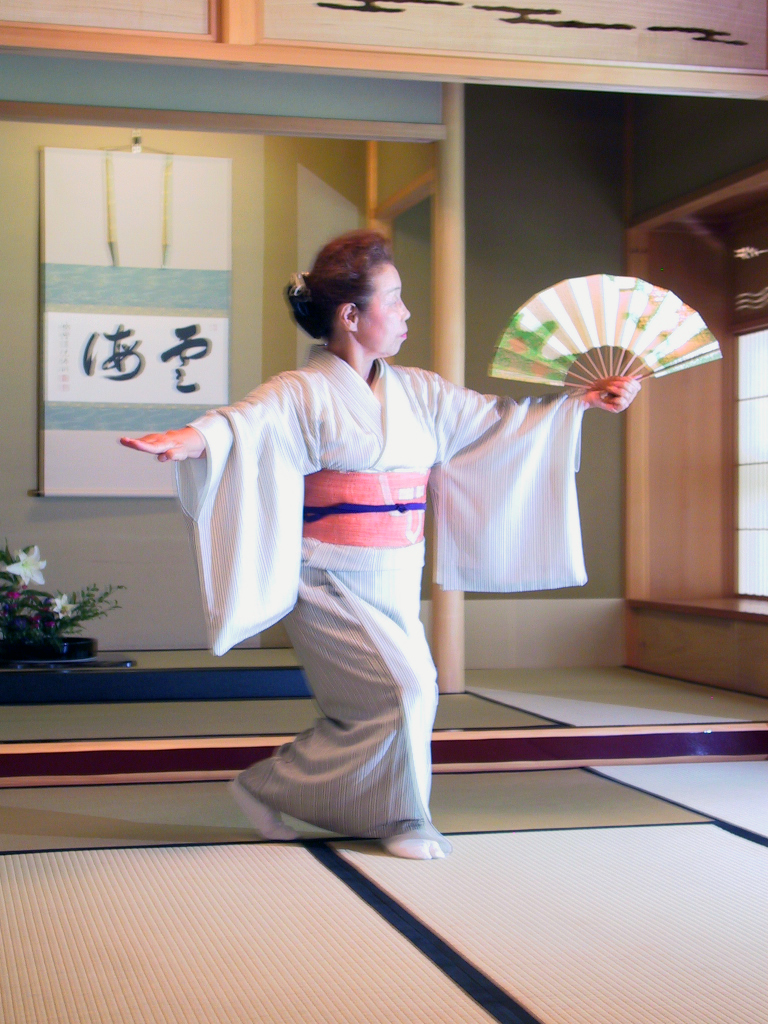 🇯🇵 JapanNihon-buyō日本舞踊
A classical Japanese stage dance refined from kabuki and older traditions.Classical dance · Solo · Group
🇯🇵 JapanNihon-buyō日本舞踊
A classical Japanese stage dance refined from kabuki and older traditions.Classical dance · Solo · Group
 🇺🇸 United States and 5 moreContact Improvisation
A partner dance built on touch and shared weight, created in the United States during the early 1970s.Social dance · Couple
🇺🇸 United States and 5 moreContact Improvisation
A partner dance built on touch and shared weight, created in the United States during the early 1970s.Social dance · Couple
 🇯🇵 Japan and 1 moreEisaエイサー
A drumming and dance procession for Obon, led by Okinawan youth in lines or circlesFolk dance · Line or chain · Circle
🇯🇵 Japan and 1 moreEisaエイサー
A drumming and dance procession for Obon, led by Okinawan youth in lines or circlesFolk dance · Line or chain · Circle
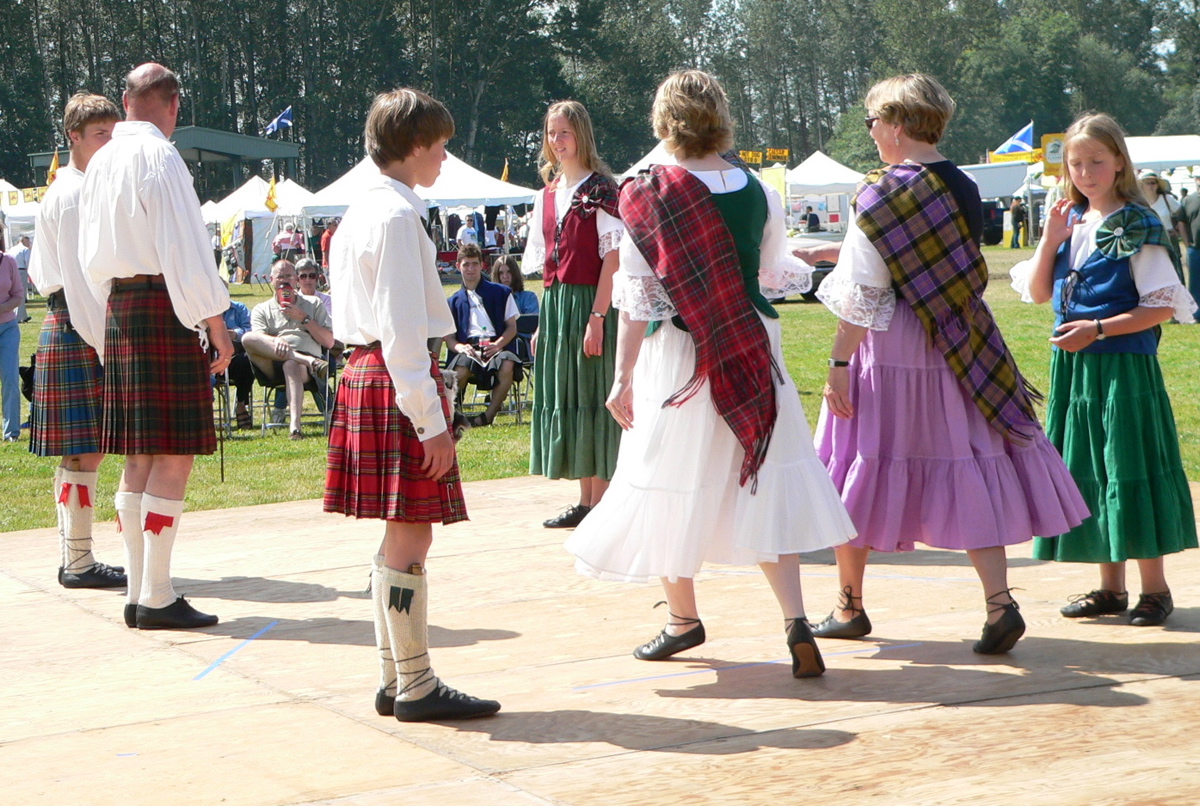 🇬🇧 United Kingdom and 5 moreScottish country dance
A social dance for sets of couples, using Scottish steps and figuresFolk dance · Set or square · Line or chain
🇬🇧 United Kingdom and 5 moreScottish country dance
A social dance for sets of couples, using Scottish steps and figuresFolk dance · Set or square · Line or chain
 🇯🇵 JapanGujō Odori郡上おどり
A summer circle dance festival open to all in Gujō, JapanFolk dance · Circle · Group
🇯🇵 JapanGujō Odori郡上おどり
A summer circle dance festival open to all in Gujō, JapanFolk dance · Circle · Group
 🇯🇵 JapanNoh能
A masked dance-drama of Japan, performed since the fourteenth century.Classical dance · Group
🇯🇵 Japan and 5 morePara Paraパラパラ
A Japanese club dance with upper-body choreography set to EurobeatSocial dance · Group
🇫🇮 Finland and 5 moreLetkajenkka
A Finnish novelty line dance featuring a distinctive hopping rhythm and left-foot lead.Folk dance · Line or chain
🇯🇵 JapanNoh能
A masked dance-drama of Japan, performed since the fourteenth century.Classical dance · Group
🇯🇵 Japan and 5 morePara Paraパラパラ
A Japanese club dance with upper-body choreography set to EurobeatSocial dance · Group
🇫🇮 Finland and 5 moreLetkajenkka
A Finnish novelty line dance featuring a distinctive hopping rhythm and left-foot lead.Folk dance · Line or chain
Photo credits on this page
The small pictures above come from Wikimedia Commons under free licences. Some are cropped to fit.
- Scottish country dance: © James F. Perry, CC BY-SA 3.0, source
- Contact Improvisation: Romain Bigé, CC BY-SA 4.0, source
- Awa Dance Festival: Rosino, CC BY-SA 2.0, source
- Tankō Bushi: Akiyoshi's Room, Public domain, source
- Eisa: HaeB, CC BY-SA 4.0, source
- Lion dance: Alfresco24, CC BY 3.0, source
- Gujō Odori: 郡上市観光課, CC BY-SA 3.0, source
- Breakdancing: Jose Fernando tenorio rivero, CC BY-SA 4.0, source
- Vogue: S Pakhrin, CC BY 2.0, source
- Hip-hop dance: E. Başak, CC BY-SA 2.0, source
- Butoh: Carlos de las Piedras, CC BY 2.0, source
- Kagura: Elstner Hilton, Public domain, source
- Nihon-buyō: Rdsmith4, CC BY-SA 2.5, source
- Kabuki: Unknown author, Public domain, source
- Noh: Yoshiyuki Ito, CC BY-SA 3.0, source