
Chacarera
A partner dance with foot stomping and handkerchiefs from rural Argentina
Chacarera is a folk dance and music style from Santiago del Estero, Argentina, often seen as a rural counterpart to tango. Danced in pairs, it features circling, foot stomping, and waving of handkerchiefs, accompanied by guitar, violin, and bombo drum, and is popular at gatherings and folkloric clubs across Argentina.
Watch it dancedShare on WhatsApp
- Originated in Santiago del Estero, Argentina
- Danced in pairs with foot stomping and handkerchief waving
- Music shifts between 6/8 and 3/4 meters
- Popular at peñas, or folkloric clubs, across Argentina
- Earliest records date to the early 20th century
What is Chacarera?
Chacarera is a traditional partner dance and music style from rural Argentina, especially linked to Santiago del Estero. It is danced by pairs, with men and women facing each other and moving in coordinated patterns. The dance is lively, with dancers circling, stomping their feet (a move called zapateo), and waving handkerchiefs. Groups often gather in social clubs or festivals to perform it, accompanied by guitar, violin, and bombo drum. The music features a distinctive syncopated rhythm and is widely recognized across Argentina.
Where does Chacarera come from?
The chacarera traces its roots to Santiago del Estero and is thought to have developed from Ibero-American dances influenced by the baroque Contradance. Its earliest documentation appears in the early 20th century, especially in the work of Andrés Chazarreta, who published sheet music and organized folk dance performances. The dance became more widely known through recordings and radio broadcasts, and its form was shaped by musicians and researchers who collected and standardized regional traditions. Today, it is a symbol of rural Argentine identity.
How is Chacarera danced?
Chacarera is danced in pairs, with the man circling around his female partner. The dance features zapateo, where dancers stomp their feet rhythmically, and the waving of handkerchiefs, especially during the A sections of the music. In the final section, partners approach and embrace briefly, a move known as 'coronating.' The choreography is influenced by contradance patterns, with dancers facing each other and moving in coordinated steps, often as part of a larger group.
Chacarera, drawn
The music of Chacarera
The music of chacarera is marked by a unique syncopation called hemiola, shifting between 6/8 and 3/4 meters. Melodies are usually in a minor key and move within an octave, with simple harmonies based on tonic and dominant chords. Traditional ensembles include guitar, violin, bombo drum, and voice, sometimes joined by piano or bandoneón. The structure is binary, with repeating sections and a lively, danceable feel.
Costume and what is carried
Dancers often use a handkerchief as a prop, waving it during key moments of the dance. While the sources do not specify detailed costumes, chacarera is typically performed in everyday or folk attire suitable for rural or festival settings. The focus is on the coordinated movement and use of the handkerchief rather than elaborate dress.


When and where Chacarera is danced
Chacarera is performed at social gatherings, festivals, and in folkloric clubs known as peñas. It is popular throughout Argentina and has spread to neighboring countries, where it is sometimes included in local repertoires. Both men and women participate, and the dance is passed on through community events, performances, and recordings.
Styles of Chacarera
There are regional styles of chacarera, especially in Santiago del Estero and Salta. The 'chacarera trunca' is a notable variant, distinguished by its cadence on the third beat. While the basic structure remains, local musicians and dancers add their own flair. The style has also been adapted for concert performance and art music by composers such as Alberto Ginastera.
What Chacarera means
Chacarera is closely tied to Argentine national identity, especially as a symbol of rural tradition in contrast to urban tango. It gained prominence during a period of musical nationalism and 'nativism,' which sought to celebrate local roots. The dance remains a living tradition, performed at gatherings and featured in recordings, and is recognized as an important part of Argentine folk culture.
Questions people ask about Chacarera
Where does the chacarera come from?
Chacarera originated in the rural province of Santiago del Estero, Argentina, and is now danced throughout the country and in some neighboring regions.
When is the chacarera danced?
It is performed at festivals, social gatherings, and folkloric clubs, and is a regular feature of Argentine folk events.
Who dances the chacarera?
Chacarera is danced by men and women in pairs, often as part of a larger group at social or festival occasions.
What music is used for chacarera?
The dance is accompanied by guitar, violin, bombo drum, and sometimes piano or bandoneón, playing syncopated rhythms in 6/8 and 3/4 meters.
What are the main features of the dance?
Chacarera features circling, foot stomping (zapateo), and waving of handkerchiefs, with partners embracing briefly at the end.
Good reading and sources
- Chacarera on WikipediaEncyclopedia
- Wikidata recordOpen data
- Videos of Chacarera on YouTubeSearch results, not chosen by Ghungroo
The facts on this page come from the Wikipedia article "Chacarera", written by its contributors and used under the CC BY-SA 4.0 licence, and from its Wikidata record (CC0). Ghungroo rewrote the text in its own words, with AI assistance, and compares every page with the article to make sure no passage is copied. It may be reused under the same CC BY-SA 4.0 licence with a link back.
It may contain mistakes, and it describes the dance in outline: it is not a lesson. Traditions differ from one teacher, village or family to the next. If something is wrong, tell us. Last refreshed 2026-10-03.
More from Argentina
All the dances of Argentina 🇦🇷 Argentina and 1 moreTango
A partner dance from the Río de la Plata, danced in close or open embraceSocial dance · Couple
🇦🇷 Argentina and 1 moreTango
A partner dance from the Río de la Plata, danced in close or open embraceSocial dance · Couple
 🇦🇷 Argentina and 1 moreArgentine tango
A partner dance from Buenos Aires suburbs, defined by the bandoneon and an intimate embrace.Social dance · Couple
🇦🇷 Argentina and 1 moreArgentine tango
A partner dance from Buenos Aires suburbs, defined by the bandoneon and an intimate embrace.Social dance · Couple
 🇨🇱 Chile and 3 moreCueca
A partner dance with handkerchiefs, tracing circles in Chile, Bolivia, and PeruFolk dance · Couple · Solo
🇦🇷 Argentina and 3 moreZamba
A slow partner dance from Argentina, with couples circling and waving white handkerchiefsFolk dance · Couple · Circle
🇨🇱 Chile and 3 moreCueca
A partner dance with handkerchiefs, tracing circles in Chile, Bolivia, and PeruFolk dance · Couple · Solo
🇦🇷 Argentina and 3 moreZamba
A slow partner dance from Argentina, with couples circling and waving white handkerchiefsFolk dance · Couple · Circle
Its cousins elsewhere
All folk dances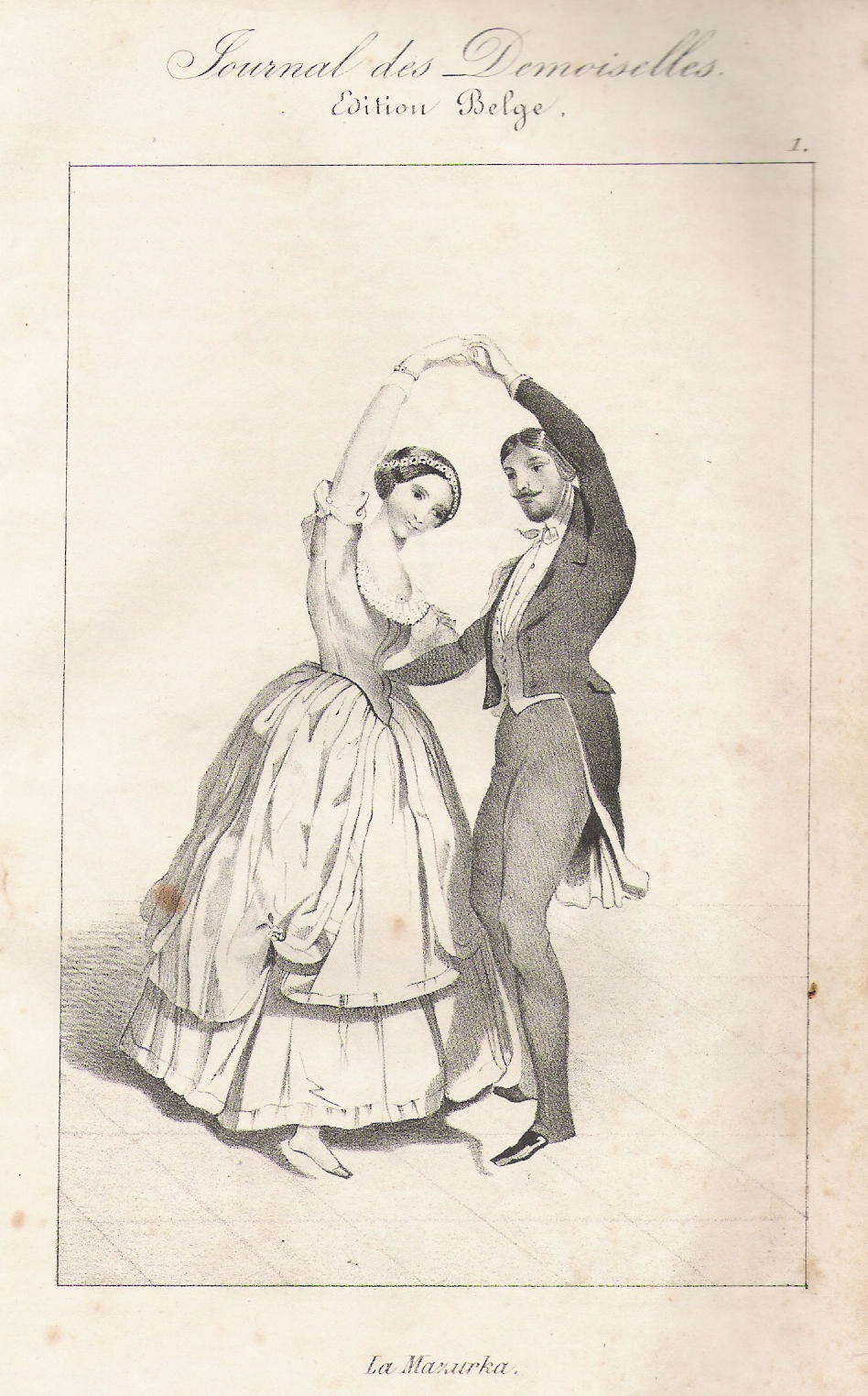 🇵🇱 Poland and 5 moreMazurka
A lively Polish folk dance in triple time, known for its shifting accentsFolk dance · Couple · Group
🇵🇱 Poland and 5 moreMazurka
A lively Polish folk dance in triple time, known for its shifting accentsFolk dance · Couple · Group
 🇨🇺 Cuba and 5 moreContradanzacontradanza criolla
A Cuban partner dance with African rhythms that influenced jazz and tangoFolk dance · Couple
🇨🇺 Cuba and 5 moreContradanzacontradanza criolla
A Cuban partner dance with African rhythms that influenced jazz and tangoFolk dance · Couple
 🇪🇸 Spain and 5 morePasodoble
A dramatic Spanish partner dance set to march-like music, echoing the bullfightFolk dance · Couple · Group
🇪🇸 Spain and 5 morePasodoble
A dramatic Spanish partner dance set to march-like music, echoing the bullfightFolk dance · Couple · Group
 🇭🇺 Hungary and 5 moreCsárdás
A Hungarian folk dance that begins slowly and ends in a fast spin.Folk dance · Couple · Group
🇭🇺 Hungary and 5 moreCsárdás
A Hungarian folk dance that begins slowly and ends in a fast spin.Folk dance · Couple · Group