
Condong
In its own language: ᬘᭀᬦ᭄ᬤᭀᬂ
A crisp Balinese court dance depicting a royal maidservant
Condong is a classical Balinese dance from Indonesia, traditionally performed by young girls as an energetic palace curtain-raiser. Portraying a loyal royal attendant, the solo dancer executes sharp, precise movements before introducing the main drama.
Watch it dancedShare on WhatsApp
- Created in 19th-century Balinese palaces, linked by legend to a prince's vision in Sukawati.
- Functions as an introductory routine for legong, arja, and gambuh theatrical forms.
- Serves as a fundamental training piece taught to young children learning Balinese dance.
- Accompanied by 16-beat melodies played by a semar pegulingan gamelan ensemble.
What is Condong?
Condong is a classical Balinese dance from the island of Bali in Indonesia. Usually performed by a young girl, it portrays a loyal palace attendant who serves the royal court. The solo presentation lasts around fifteen minutes and often serves as an opening piece before a longer legong dance drama begins. The name also designates a classic character type seen across other Balinese dramatic arts, including arja and gambuh. Onstage, the dancer expresses deep reverence for the king alongside admiration for royal majesty through sharp, energetic physical expressions.
Where does Condong come from?
This tradition began during the middle of the nineteenth century within royal courts on Bali. According to local lore, an ailing prince from Sukawati experienced a vision during severe illness, seeing two celestial maidens named Supraba and Wilotama dancing gracefully. After regaining his health, he staged a performance based on his dream. While early versions depicted these heavenly nymphs, the narrative shifted during the 1930s to focus on a court servant attending to a ruler. Its creator remains anonymous, but the choreography became an enduring pillar of the island's theatrical heritage.
How is Condong danced?
The choreography features crisp, dynamic, and sharp gestures that demand intense concentration. Dancers use simplified versions of classic legong motions, making the piece an essential training exercise for beginners. The dancer starts alone on the stage, executing precise footwork, expressive eyes, and articulated arm positions. When used to introduce a legong performance, she eventually meets the main performers, offers each of them a fan, and exits. In the specific story of King Lasem, the performer returns later wearing dark raven wings to foreshadow the monarch's impending death.
Condong, drawn
The music of Condong
Musical backing comes from a semar pegulingan gamelan orchestra. The ensemble plays sequences of concise sixteen-beat melodic cycles arranged in the gegaboran metre. During dances that open the legong kraton, the music shifts into batel metre as the opening section draws to a close, marking a rhythmic transition before the main drama unfolds.
Costume and what is carried
The performer wears traditional Balinese dance dress suited for a court attendant role. While presenting the opening choreography, she handles props such as hand fans, which she later distributes to the arriving legong dancers. For specific dramatic variations, particularly the tale of King Lasem, she dons artificial raven wings to embody an omen of misfortune.


When and where Condong is danced
Danced on stage, condong functions primarily as a curtain-raiser for theatrical forms such as legong, gambuh, and arja. Because it contains basic movement techniques, instructors teach it to young girls early in their dance education. In modern Bali, community contests regularly feature children executing the routine to earn scores from adjudicators, helping sustain interest in the tradition.
Styles of Condong
The central figure remains consistent across varied repertoires, introducing classic Balinese princesses like Rangkesari as well as foreign stage heroines like Miranda and Ophelia. In the dramatic variant legong lasem, the dancer takes on the role of a mythical bird carrying ill omens. Elements of the choreography were also integrated into newer creations, such as the 1971 greeting dance panyembrama by choreographer I Wayan Berata.
What Condong means
As an introductory dance and foundational study piece, condong holds a vital place in Balinese performing arts. The stock character embodies the ideal court attendant, balancing duty with awe toward royal authority. Community efforts and youth competitions continue to safeguard the practice, ensuring that successive generations master its precise physical language before progressing to more complex court dance dramas.
Questions people ask about Condong
Where does the condong dance come from?
Condong originated in the mid-19th century in the royal palaces of Bali, Indonesia. A local legend links its creation to an ailing prince of Sukawati who sought to recreate a vision of dancing celestial nymphs.
When and why is condong performed?
It is performed on stage as a standard opening routine before longer dance dramas like legong, gambuh, or arja. The dancer sets the scene by portraying a palace maidservant who introduces the main royal characters.
Who typically dances condong?
Young Balinese girls usually dance the solo role. Because the choreography uses simplified legong movements, teachers use it as a basic training piece, and children frequently perform it in competitive festivals.
What props are used in the dance?
The dancer often carries hand fans that she presents to the incoming legong performers. In the dramatic story of King Lasem, she wears raven wings to symbolize an omen of death.
Good reading and sources
- Condong on WikipediaEncyclopedia
- More photos and video on Wikimedia CommonsPhotos and video
- Wikidata recordOpen data
- Videos of Condong on YouTubeSearch results, not chosen by Ghungroo
The facts on this page come from the Wikipedia article "Condong", written by its contributors and used under the CC BY-SA 4.0 licence, and from its Wikidata record (CC0). Ghungroo rewrote the text in its own words, with AI assistance, and compares every page with the article to make sure no passage is copied. It may be reused under the same CC BY-SA 4.0 licence with a link back.
It may contain mistakes, and it describes the dance in outline: it is not a lesson. Traditions differ from one teacher, village or family to the next. If something is wrong, tell us. Last refreshed 2026-10-04.
More from Indonesia
All the dances of Indonesia 🇮🇩 IndonesiaLegongᬮᬾᬕᭀᬂ
A Balinese dance with intricate finger, foot and facial movementsFolk dance · Group
🇮🇩 IndonesiaLegongᬮᬾᬕᭀᬂ
A Balinese dance with intricate finger, foot and facial movementsFolk dance · Group
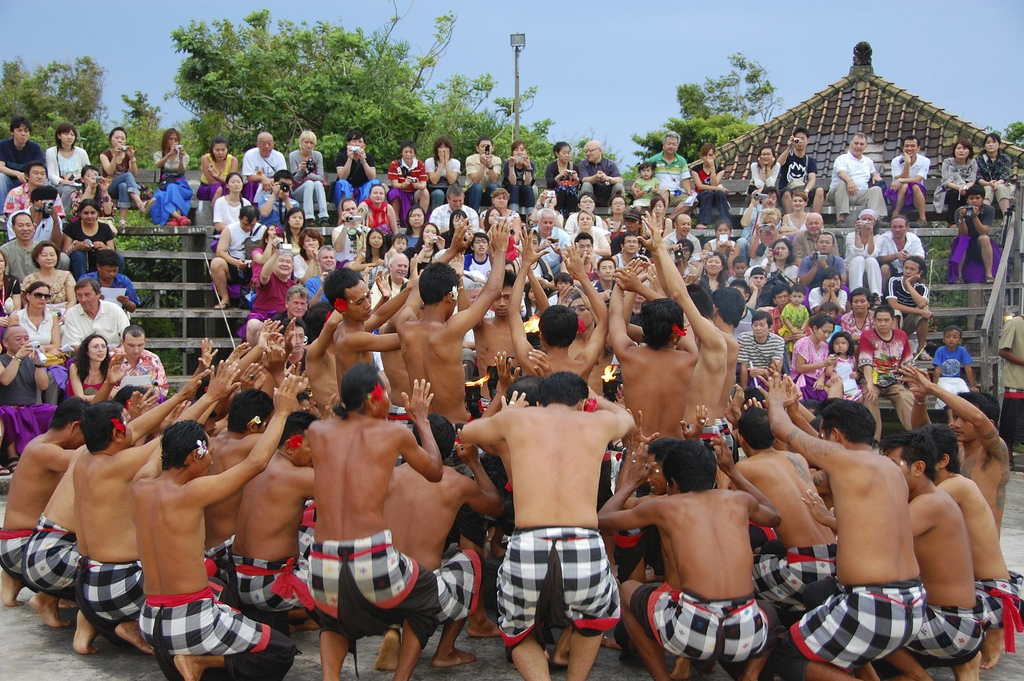 🇮🇩 IndonesiaKecakᬓᬾᬘᬓ᭄
A massed chant and dance-drama from Bali, performed in a circle at duskFolk dance · Circle · Group
🇮🇩 IndonesiaKecakᬓᬾᬘᬓ᭄
A massed chant and dance-drama from Bali, performed in a circle at duskFolk dance · Circle · Group
 🇮🇩 IndonesiaBarong danceᬩᬅᬭᬑᬂ
A Balinese dance-drama of Barong and Rangda, showing the struggle of good and evilFolk dance · Group · Procession
🇮🇩 IndonesiaBarong danceᬩᬅᬭᬑᬂ
A Balinese dance-drama of Barong and Rangda, showing the struggle of good and evilFolk dance · Group · Procession
 🇮🇩 IndonesiaBalinese dancetarian Bali / igélan Bali
A dynamic and angular dance tradition from the Indonesian island of Bali.Ritual dance · Group · Solo
🇮🇩 IndonesiaBalinese dancetarian Bali / igélan Bali
A dynamic and angular dance tradition from the Indonesian island of Bali.Ritual dance · Group · Solo
Its cousins elsewhere
All classical dances 🇮🇹 Italy and 2 moreBallet
A highly technical stage dance with its own steps and styles, shaped in France and RussiaClassical dance · Solo · Group
🇫🇷 FranceMinuetmenuet
A French social dance for two people in triple time, known for its graceful and controlled steps.Social dance · Couple
🇮🇹 Italy and 2 moreBallet
A highly technical stage dance with its own steps and styles, shaped in France and RussiaClassical dance · Solo · Group
🇫🇷 FranceMinuetmenuet
A French social dance for two people in triple time, known for its graceful and controlled steps.Social dance · Couple
 🇫🇷 FranceBourrée
A lively French dance in double or triple time, once found in both villages and courtsFolk dance · Couple · Circle
🇫🇷 FranceBourrée
A lively French dance in double or triple time, once found in both villages and courtsFolk dance · Couple · Circle
 🇮🇹 Italy and 3 moreClassical ballet
A formal stage dance using turnout, pointe work and precise, flowing movementClassical dance · Solo · Group
🇮🇹 Italy and 3 moreClassical ballet
A formal stage dance using turnout, pointe work and precise, flowing movementClassical dance · Solo · Group