Minuet
In its own language: menuet
A French social dance for two people in triple time, known for its graceful and controlled steps.
The minuet is a social dance from France designed for a pair of partners. It moves to music in three-four time with short, measured steps. The form became a standard movement in classical symphonies.
Watch it dancedShare on WhatsApp
- A French social dance for two people in triple time.
- Steps were originally called pas menus meaning small steps.
- Became a standard movement in classical symphonies.
- Middle section often scored for three instruments called a trio.
- Lively versions evolved into the scherzo form.
What is Minuet?
This is a partnered dance that originated in France. Two people move together using short, careful steps called pas menus. The style is controlled and ceremonial. Partners hold each other in a formal embrace while gliding across the floor. The dance relies on grace and precision rather than speed or acrobatics. It was a staple of European social gatherings during the Baroque era.
Where does Minuet come from?
The name likely comes from the small steps used by dancers or from older group dances like the branle. Some sources link it to the bransle de Poitou, but this connection lacks proof. The dance rose to fashion in the late seventeenth century. Jean-Baptiste Lully helped spread it through his theatrical works. It moved from social halls into concert music as composers refined the structure.
How is Minuet danced?
Dancers take short, measured steps in time with the triple meter. The posture is upright and dignified. Arms are held in specific positions to maintain balance and elegance. Couples face each other and mirror movements. The pattern involves simple turns and changes of direction. The focus is on smooth transitions and maintaining a steady, moderate pace throughout the performance.
Minuet, drawn
The music of Minuet
The music is written in three-four time. Early versions used binary form with repeated sections. Later, a middle section provided contrast, creating a ternary structure. This middle part was often scored for fewer instruments, leading to the term trio. Composers like Bach and Handel included minuets in their suites. The tempo varied, sometimes becoming faster in instrumental versions.
Costume and what is carried
Dancers wear formal attire suitable for courtly settings. Men typically wear coats, waistcoats, and breeches. Women wear long dresses with structured bodices. Hair is styled neatly, often with wigs for men. The clothing allows for freedom of movement while maintaining a polished appearance. No masks or special props are used in the traditional dance.
When and where Minuet is danced
The minuet was danced at balls and social gatherings. It served as a greeting between partners before a larger event. It also appeared in operas and stage productions. As a musical form, it became the third movement in classical symphonies. Dancers learned the steps through formal training in dance academies. The tradition declined as newer, faster dances replaced it in social venues.
Styles of Minuet
Italian composers often wrote livelier versions in faster tempos. Some pieces used three-eight or six-eight time signatures. The minuet and trio structure influenced later forms like the scherzo. Beethoven and Haydn adapted the concept for their compositions. Modern performances may stylize the steps to suit contemporary tastes while keeping the original character.
What Minuet means
The minuet represents the elegance of the Baroque period. It reflects the social hierarchy and etiquette of its time. The dance was a marker of refinement and education. Its musical form remains a key element in Western classical music history. Scholars study treatises from the era to understand the original steps and styling.
Questions people ask about Minuet
Where did the minuet originate?
It originated in France during the seventeenth century. It emerged from earlier folk dances and became popular in courts. The name may refer to the small steps taken by dancers or older group dances.
What is the rhythm of the minuet?
The minuet is written in three-four time. This creates a gentle, swaying rhythm suitable for paired dancing. The tempo could vary, but it generally maintained a moderate pace for social events.
How is the minuet structured musically?
It often uses a ternary form known as minuet and trio. The first section repeats, followed by a contrasting middle section. The middle part was historically played by three instruments, giving it the name trio.
Who typically danced the minuet?
It was a social dance performed by couples. Both men and women participated together in formal settings. It was common at balls and court gatherings where partners greeted each other before dancing.
Good reading and sources
- Minuet on WikipediaEncyclopedia
- More photos and video on Wikimedia CommonsPhotos and video
- Wikidata recordOpen data
- Videos of Minuet on YouTubeSearch results, not chosen by Ghungroo
The facts on this page come from the Wikipedia article "Minuet", written by its contributors and used under the CC BY-SA 4.0 licence, and from its Wikidata record (CC0). Ghungroo rewrote the text in its own words, with AI assistance, and compares every page with the article to make sure no passage is copied. It may be reused under the same CC BY-SA 4.0 licence with a link back.
It may contain mistakes, and it describes the dance in outline: it is not a lesson. Traditions differ from one teacher, village or family to the next. If something is wrong, tell us. Last refreshed 2026-10-03.
More from France
All the dances of France 🇮🇹 Italy and 2 moreBallet
A highly technical stage dance with its own steps and styles, shaped in France and RussiaClassical dance · Solo · Group
🇮🇹 Italy and 2 moreBallet
A highly technical stage dance with its own steps and styles, shaped in France and RussiaClassical dance · Solo · Group
 🇦🇹 Austria and 4 moreWaltz
A turning couple dance in triple time, first popular in 18th-century EuropeBallroom or Latin dance · Couple
🇦🇹 Austria and 4 moreWaltz
A turning couple dance in triple time, first popular in 18th-century EuropeBallroom or Latin dance · Couple
 🇵🇱 Poland and 3 morePolonaisePolonez, chodzony
A stately walking dance in triple time, opening Polish celebrations and ballsFolk dance · Couple · Procession
🇵🇱 Poland and 3 morePolonaisePolonez, chodzony
A stately walking dance in triple time, opening Polish celebrations and ballsFolk dance · Couple · Procession
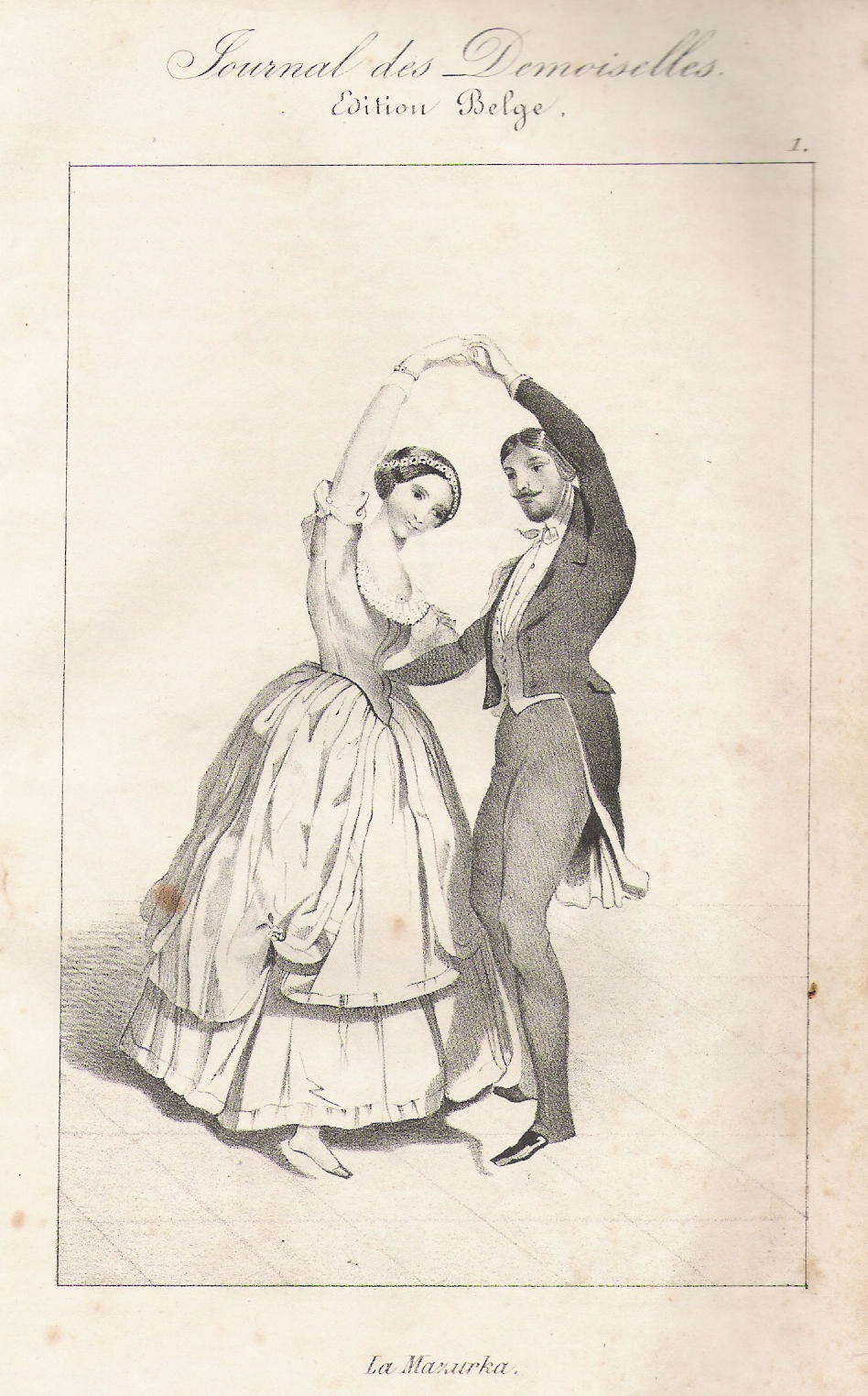 🇵🇱 Poland and 5 moreMazurka
A lively Polish folk dance in triple time, known for its shifting accentsFolk dance · Couple · Group
🇵🇱 Poland and 5 moreMazurka
A lively Polish folk dance in triple time, known for its shifting accentsFolk dance · Couple · Group
Its cousins elsewhere
All social dances 🇦🇷 Argentina and 1 moreTango
A partner dance from the Río de la Plata, danced in close or open embraceSocial dance · Couple
🇦🇷 Argentina and 1 moreTango
A partner dance from the Río de la Plata, danced in close or open embraceSocial dance · Couple
 🇮🇳 India and 1 moreFolk dance
Traditional group dances rooted in local life and passed down through generationsFolk dance · Group · Circle
🇮🇳 India and 1 moreFolk dance
Traditional group dances rooted in local life and passed down through generationsFolk dance · Group · Circle
 🇪🇬 Egypt and 3 moreBelly danceرقص شرقي
A Middle Eastern dance focused on hip and torso articulation.Folk dance · Solo
🇪🇬 Egypt and 3 moreBelly danceرقص شرقي
A Middle Eastern dance focused on hip and torso articulation.Folk dance · Solo