Écossaise
A French contradanse in a Scottish style, danced in two lines during the late eighteenth century.
The écossaise is a contradanse styled after Scottish country dancing that originated in France. It was popular in France and Great Britain from the late 1700s to the early 1800s, performed by couples progressing through lines of men facing women.
Watch it dancedShare on WhatsApp
- Originated in France despite mimicking Scottish style
- Popular in France and Britain from late 1700s to early 1800s
- Danced in 2/4 time with men facing women in two lines
- Couples progressed to the head of the line
- Mainly composed for solo piano by classical composers
What is Écossaise?
The écossaise is a social dance that mimics the style of Scottish country dancing. Despite its name, which means 'Scottish' in French, the form actually began in France. It gained popularity in both France and Great Britain between the late eighteenth and early nineteenth centuries. The dance involves couples moving through lines, creating a structured yet lively social atmosphere for participants.
Where does Écossaise come from?
Although the dance imitates Scottish traditions, it is French in origin. It emerged as a type of contradanse during a period when European courts and social gatherings favored stylized folk-inspired movements. The form spread to Great Britain, where it was embraced alongside other fashionable dances of the era before fading from common practice.
How is Écossaise danced?
Dancers arrange themselves in two long lines with men facing women. Couples progress toward the head of the line as the dance unfolds. The movement follows a 2/4 time signature, providing a steady rhythm for the partners to navigate the formation. The structure requires coordination between the lines to maintain the flow of progression.
Écossaise, drawn
The music of Écossaise
Compositions for the écossaise were primarily written for solo piano, allowing couples to dance directly to the instrument. Some classical composers also arranged the form for military bands, though many of these larger versions are now lost. Notable settings include works by Beethoven, Schubert, Chopin, and Cécile Chaminade.
Costume and what is carried
The sources do not specify particular costumes or props associated with the écossaise. Participants likely wore the standard formal attire of the late eighteenth and early nineteenth centuries appropriate for social dancing in France and Britain.
When and where Écossaise is danced
The dance was performed at social gatherings in France and Great Britain. It served as entertainment for couples during the late 1700s and early 1800s. The music was often played on the piano in private homes or public venues, facilitating immediate participation by guests.
Styles of Écossaise
While the core form remained a contradanse in 2/4 time, composers adapted it for different ensembles. Solo piano versions were most common, but arrangements for military bands also existed. These variations allowed the dance to be performed in various settings, from intimate salons to larger public events.
What Écossaise means
The écossaise reflects the cultural fascination with Scottish styles in France during the late eighteenth century. Its adoption by major classical composers highlights its significance in the musical landscape of the time. Although no longer widely danced, it remains a historical example of cross-cultural musical influence.
Questions people ask about Écossaise
Where did the écossaise originate?
The écossaise originated in France. Although it mimics a Scottish country dance and carries a name meaning 'Scottish,' it is actually a French invention that became popular in France and Great Britain during the late eighteenth and early nineteenth centuries.
How is the écossaise danced?
It is danced in two lines with men facing women. Couples progress toward the head of the line as they move. The dance follows a 2/4 time signature, providing a steady rhythm for the partners to coordinate their steps within the structured formation.
What instruments accompany the écossaise?
Most écossaise compositions were written for solo piano, allowing couples to dance directly to the instrument. Some classical composers also created versions for military bands, although many of these larger arrangements are now lost.
Who composed music for the écossaise?
Several famous classical composers wrote écossaises, including Ludwig van Beethoven, Franz Schubert, Frédéric Chopin, and Cécile Chaminade. Their works range from solo piano pieces to lost military band arrangements, showcasing the form's versatility.
Good reading and sources
- Écossaise on WikipediaEncyclopedia
- Wikidata recordOpen data
- Videos of Écossaise on YouTubeSearch results, not chosen by Ghungroo
The facts on this page come from the Wikipedia article "Écossaise", written by its contributors and used under the CC BY-SA 4.0 licence, and from its Wikidata record (CC0). Ghungroo rewrote the text in its own words, with AI assistance, and compares every page with the article to make sure no passage is copied. It may be reused under the same CC BY-SA 4.0 licence with a link back.
It may contain mistakes, and it describes the dance in outline: it is not a lesson. Traditions differ from one teacher, village or family to the next. If something is wrong, tell us. Last refreshed 2026-10-04.
More from France
All the dances of France 🇵🇱 Poland and 3 morePolonaisePolonez, chodzony
A stately walking dance in triple time, opening Polish celebrations and ballsFolk dance · Couple · Procession
🇵🇱 Poland and 3 morePolonaisePolonez, chodzony
A stately walking dance in triple time, opening Polish celebrations and ballsFolk dance · Couple · Procession
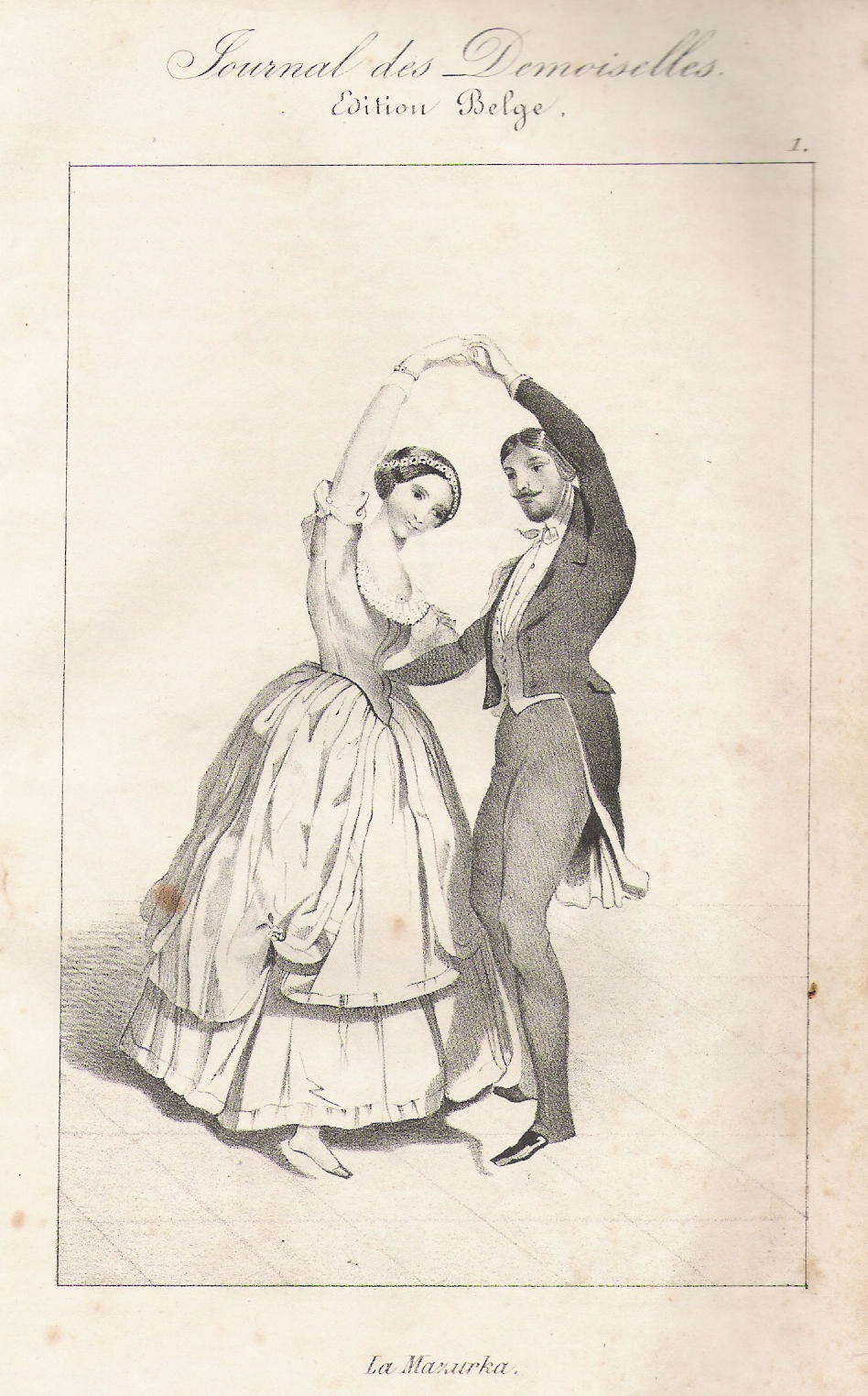 🇵🇱 Poland and 5 moreMazurka
A lively Polish folk dance in triple time, known for its shifting accentsFolk dance · Couple · Group
🇫🇷 FranceMinuetmenuet
A French social dance for two people in triple time, known for its graceful and controlled steps.Social dance · Couple
🇵🇱 Poland and 5 moreMazurka
A lively Polish folk dance in triple time, known for its shifting accentsFolk dance · Couple · Group
🇫🇷 FranceMinuetmenuet
A French social dance for two people in triple time, known for its graceful and controlled steps.Social dance · Couple
 🇫🇷 France and 1 moreCan-can
A high-energy French dance featuring vigorous kicks and skirt manipulation.Social dance · Couple · Group
🇫🇷 France and 1 moreCan-can
A high-energy French dance featuring vigorous kicks and skirt manipulation.Social dance · Couple · Group
Its cousins elsewhere
All social dances 🇦🇷 Argentina and 1 moreArgentine tango
A partner dance from Buenos Aires suburbs, defined by the bandoneon and an intimate embrace.Social dance · Couple
🇦🇷 Argentina and 1 moreArgentine tango
A partner dance from Buenos Aires suburbs, defined by the bandoneon and an intimate embrace.Social dance · Couple
 🇺🇸 United States and 2 moreContra dance
A social line dance for pairs, led by a caller and set to live folk tunesFolk dance · Couple · Line or chain
🇺🇸 United States and 2 moreContra dance
A social line dance for pairs, led by a caller and set to live folk tunesFolk dance · Couple · Line or chain
 🇸🇳 Senegal and 2 moreMbalax
Urban dance from Senegal built on Wolof sabar drumming and modern pop soundsFolk dance · Group
🇸🇳 Senegal and 2 moreMbalax
Urban dance from Senegal built on Wolof sabar drumming and modern pop soundsFolk dance · Group
 🇦🇷 Argentina and 1 moreChacarera
A partner dance with foot stomping and handkerchiefs from rural ArgentinaFolk dance · Couple · Group
🇦🇷 Argentina and 1 moreChacarera
A partner dance with foot stomping and handkerchiefs from rural ArgentinaFolk dance · Couple · Group