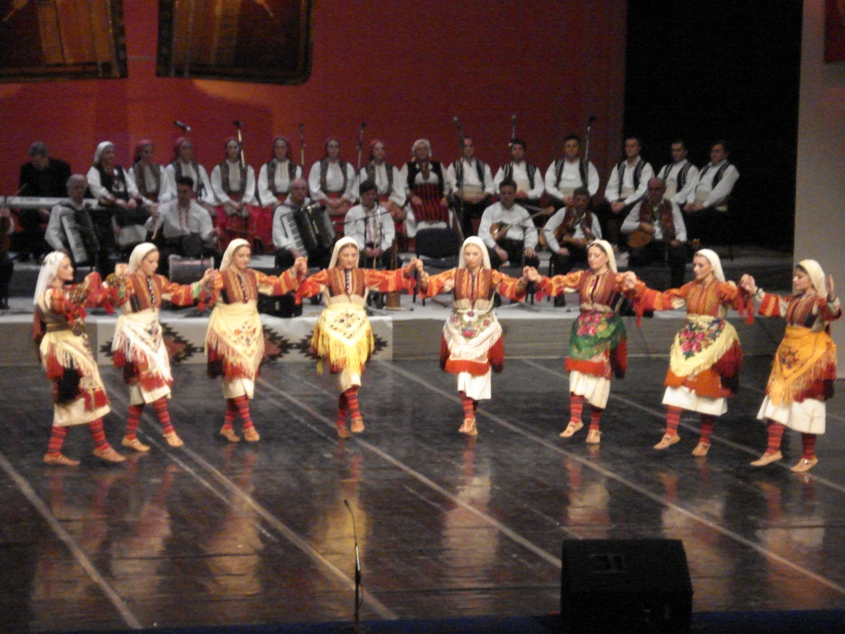
Hora
A group circle dance found across Southeast Europe and in Jewish communities
Hora is a group dance where people join hands and move together in a circle, common in Romania, Bulgaria, North Macedonia, Moldova, and among Jewish communities. It is danced at weddings, festivals, and social gatherings, with steps and music that vary by region and occasion.
Watch it dancedShare on WhatsApp
- Dancers join hands and move in a circle or curved line
- Hora is central to weddings and festivals in Romania and Moldova
- Jewish communities dance hora at weddings, often lifting the couple on chairs
- Bulgarian horo includes over a hundred regional variations
- Hora became a symbol of unity in early Israeli culture
What is Hora?
Hora is a group dance where people join hands or link arms and move together in a circle or curved line. It is widely danced in Southeast Europe and by Jewish communities, often at celebrations. The steps and pace can change with the region or the event, but the dance is always communal and lively. Sometimes, the group forms several circles or spirals if there are many participants. At Jewish weddings, the bride and groom may be lifted on chairs during the dance.
Where does Hora come from?
The name 'hora' comes from a Greek word for dance and is related to similar terms in several Balkan languages. The dance has roots in the folk traditions of Romania, Bulgaria, Moldova, North Macedonia, and neighboring areas. Over time, it spread to Jewish communities, where it became a symbol of togetherness and celebration. In Israel, the hora became closely linked to the early Zionist movement and was adapted for modern folk dancing.
How is Hora danced?
Dancers usually hold hands or link arms and move in a circle, often to the left. The steps can be simple, such as three steps forward and one back, or more complex, depending on the local style. In Bulgaria, the dance may be done in a line as well as a circle, with many regional variations in steps and rhythm. In Jewish versions, the group may move quickly, and large gatherings can create multiple circles or a spiral.
Hora, drawn
The music of Hora
The music for hora varies by region. In Romania and Moldova, traditional bands may use pan pipes and other local instruments. Jewish hora is often danced to folk songs, including 'Hava Nagila.' The rhythm and tempo can shift from slow and steady to fast and energetic, matching the mood of the event.
Costume and what is carried
There is no single costume for hora, as it is danced by many groups. Participants often wear everyday or festive clothing. At Jewish celebrations, a handkerchief may be held by the couple, and the bride and groom are sometimes lifted on chairs during the dance. In some regions, dancers may wear traditional folk dress for special occasions.

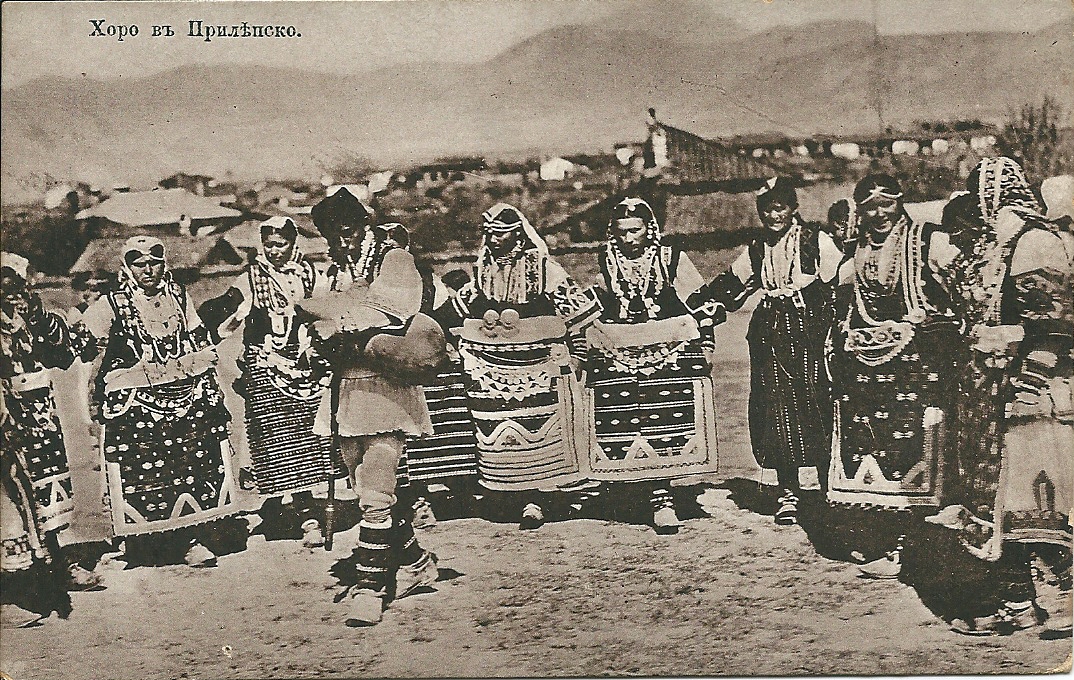
When and where Hora is danced
Hora is danced at weddings, festivals, religious holidays, and social gatherings. In Romania and Moldova, it is a highlight of village celebrations. In Jewish communities, it is a central part of weddings and bar or bat mitzvahs. The dance can last for hours in some settings, especially in communal celebrations.
Styles of Hora
Each country and region has its own way of dancing hora. In Bulgaria, there are many types of horo, each with unique steps and rhythms. North Macedonia's oro includes dances for special occasions and even for men before battle. Jewish hora has its own style, influenced by Eastern European and local traditions, and is now a key part of Israeli folk dance.
What Hora means
Hora is more than just a dance; it is a symbol of unity and shared joy in many cultures. In Romania, it has marked important national events. For Jewish communities, it represents togetherness and is a highlight of major life celebrations. The dance has been adapted and kept alive by both rural and urban communities, and remains a living tradition.
Questions people ask about Hora
Where does the hora come from?
Hora began in Southeast Europe, especially in Romania, Bulgaria, Moldova, and North Macedonia, and spread to Jewish communities who made it their own.
When is the hora danced?
Hora is danced at weddings, festivals, religious holidays, and social gatherings, depending on the country and community.
How do people dance the hora?
Dancers hold hands or link arms and move together in a circle or line, following steps that can be simple or complex, depending on the local tradition.
Who can join the hora?
Hora is usually open to everyone, with men and women dancing together in most traditions.
What music is used for the hora?
The music changes by region; in Jewish celebrations, folk songs like 'Hava Nagila' are common, while in Romania and Moldova, local instruments play traditional tunes.
Good reading and sources
- Hora (dance) on WikipediaEncyclopedia
- More photos and video on Wikimedia CommonsPhotos and video
- Wikidata recordOpen data
- Videos of Hora on YouTubeSearch results, not chosen by EveryGhunghroo
The facts on this page come from the Wikipedia article "Hora (dance)", written by its contributors and used under the CC BY-SA 4.0 licence, and from its Wikidata record (CC0). EveryGhunghroo rewrote the text in its own words, with AI assistance, and compares every page with the article to make sure no passage is copied. It may be reused under the same CC BY-SA 4.0 licence with a link back.
It may contain mistakes, and it describes the dance in outline: it is not a lesson. Traditions differ from one teacher, village or family to the next. If something is wrong, tell us. Last refreshed 2026-10-03.
More from Romania
All the dances of Romania 🇷🇴 Romania and 3 moreCălușari
A springtime men's ritual dance with acrobatics and sticks from RomaniaFolk dance · Group · Circle
🇷🇴 Romania and 3 moreCălușari
A springtime men's ritual dance with acrobatics and sticks from RomaniaFolk dance · Group · Circle
 🇷🇸 Serbia and 4 moreČoček
A Balkan folk dance with shifting rhythms, often played by Romani brass bandsFolk dance · Group
🇷🇸 Serbia and 4 moreČoček
A Balkan folk dance with shifting rhythms, often played by Romani brass bandsFolk dance · Group
 🇮🇱 Israel and 5 moreJewish dance
Dances and dance traditions across Jewish communities and celebrationsFolk dance · Circle · Group
🇷🇴 RomaniaPerinița
A Romanian circle dance with a handkerchief or pillow, done before a weddingFolk dance · Circle · Solo
🇮🇱 Israel and 5 moreJewish dance
Dances and dance traditions across Jewish communities and celebrationsFolk dance · Circle · Group
🇷🇴 RomaniaPerinița
A Romanian circle dance with a handkerchief or pillow, done before a weddingFolk dance · Circle · Solo
Its cousins elsewhere
All folk dances 🇦🇷 Argentina and 1 moreTango
A partner dance from the Río de la Plata, danced in close or open embraceSocial dance · Couple
🇦🇷 Argentina and 1 moreTango
A partner dance from the Río de la Plata, danced in close or open embraceSocial dance · Couple
 🇮🇳 India and 1 moreFolk dance
Traditional group dances rooted in local life and passed down through generationsFolk dance · Group · Circle
🇮🇳 India and 1 moreFolk dance
Traditional group dances rooted in local life and passed down through generationsFolk dance · Group · Circle
 🇧🇷 BrazilCapoeira
A Brazilian martial art that blends dance, acrobatics, and music in a circle gameWar or martial dance · Circle · Solo
🇧🇷 BrazilCapoeira
A Brazilian martial art that blends dance, acrobatics, and music in a circle gameWar or martial dance · Circle · Solo
 🇪🇬 Egypt and 3 moreBelly danceرقص شرقي
A Middle Eastern dance focused on hip and torso articulation.Folk dance · Solo
🇪🇬 Egypt and 3 moreBelly danceرقص شرقي
A Middle Eastern dance focused on hip and torso articulation.Folk dance · Solo