
Krishnanattam
A temple dance-drama telling Krishna’s story in eight plays at Guruvayur, Kerala
Krishnanattam is a dance-drama tradition from Kerala, India, performed mainly at the Guruvayur Sri Krishna temple. It presents the life of Krishna through eight Sanskrit plays, using elaborate costumes, makeup, and music. Created in the 17th century by Manaveda, Zamorin Raja of Kozhikode, it is staged as an offering by devotees and is considered the forerunner of Kathakali.
Watch it dancedShare on WhatsApp
- Tells Krishna’s story in eight Sanskrit plays
- Created by Zamorin Raja Manaveda in 17th-century Kerala
- Performed mainly at Guruvayur Sri Krishna temple
- Dancers wear peacock feather headgear as a sacred symbol
- Direct ancestor of the Kathakali dance-drama
What is Krishnanattam?
Krishnanattam is a dance-drama performed mainly by men at the Guruvayur Sri Krishna temple in Kerala. The performance tells the story of Krishna through eight connected plays, each focusing on a different episode from his life. Dancers wear striking costumes with ornate headgear, colorful makeup, and peacock feathers, moving in stylized patterns to music and Sanskrit verse. The plays are staged at night as a religious offering, with the temple setting lending a sacred atmosphere.
Where does Krishnanattam come from?
Krishnanattam was created in the 17th century by Manaveda, Zamorin Raja of Kozhikode, who wrote the Sanskrit text Krishnagiti. The dance-drama is rooted in a legend where Manaveda had a vision of Krishna, who gifted him a peacock feather. This feather became a symbol of the art form, worn by the dancer portraying Krishna. Krishnanattam was first performed near the sanctum of Guruvayur temple and has been maintained there ever since. It is also recognized as the direct ancestor of Kathakali.
How is Krishnanattam danced?
The dance uses expressive gestures, stylized hand movements, and facial expressions to convey the story. Dancers move in coordinated group patterns, with each character’s role marked by distinct postures and steps. The choreography follows classical principles, integrating acting, singing, and dance. The use of mudras (hand gestures) and dramatic facial makeup helps define each character, while the group formation allows for dynamic storytelling.
Krishnanattam, drawn
The music of Krishnanattam
Krishnanattam is performed to Sanskrit verses from the Krishnagiti, with additional songs from works like Gita Govinda. The music is integral to the drama, guiding the rhythm and mood of each scene. While the article does not specify the instruments, the singing and recitation of slokas and padyageethams (lyric songs) are central, creating an atmosphere suited to the temple setting.
Costume and what is carried
Costumes are elaborate and differ for male and female roles. Male dancers wear a starched petticoat, a white skirt with colored stripes, a breastplate, and a headdress, along with arm and chest ornaments and a shawl with mirrors. Female roles use a long white skirt with a red border, a blouse, a girdle, and a wooden breastplate. Both use ankle bells (chilanka). Makeup uses bright colors, with green for Krishna and special white borders (chutti) for some characters. The peacock feather headgear is especially sacred.


When and where Krishnanattam is danced
Krishnanattam is performed as a religious offering at the Guruvayur temple, especially at night. Each play is associated with specific wishes, such as blessings for childbirth or peace for a departed soul. The tradition is maintained by a dedicated troupe under the Guruvayur Devaswom, and performances can be booked as temple offerings. Training for dancers begins at a young age, ensuring the art is passed down through generations.
Styles of Krishnanattam
The core tradition remains centered at Guruvayur, with the eight-play cycle performed in sequence. The plays are sometimes repeated for auspicious reasons, such as repeating the first play at the end. While Krishnanattam has been performed in other parts of India and abroad, the main style and ritual context are preserved at the temple. The form is distinct from but related to Kathakali, which developed later.
What Krishnanattam means
Krishnanattam holds a special place in Kerala’s temple culture, seen as both a sacred offering and a dramatic art. Each play is believed to bring specific blessings, and the performance is deeply tied to the worship of Krishna at Guruvayur. The tradition has survived through centuries, supported by the temple administration, and is recognized as a forerunner of Kathakali. Its continued practice reflects the community’s devotion and commitment to preserving ritual arts.
Questions people ask about Krishnanattam
Where does Krishnanattam come from?
Krishnanattam originated in Kerala, India, specifically at the Guruvayur Sri Krishna temple, and was created by Manaveda, Zamorin Raja of Kozhikode, in the 17th century.
When and why is Krishnanattam performed?
It is performed mainly at night as a religious offering by devotees at the Guruvayur temple. Each play in the cycle is associated with specific blessings, such as for childbirth, marriage, or peace for departed souls.
Who performs Krishnanattam?
The dance-drama is performed by a dedicated troupe of artists, mainly men, maintained by the Guruvayur Devaswom. Training for dancers begins at a young age.
What makes Krishnanattam unique?
Krishnanattam uses elaborate costumes, peacock feather headgear, and stylized makeup. It tells Krishna’s story through eight Sanskrit plays and is performed as a sacred temple offering.
How is Krishnanattam connected to Kathakali?
Krishnanattam is considered the direct progenitor of Kathakali, another classical dance-drama of Kerala, sharing elements of costume, makeup, and storytelling.
Good reading and sources
- Krishnanattam on WikipediaEncyclopedia
- More photos and video on Wikimedia CommonsPhotos and video
- Wikidata recordOpen data
- Videos of Krishnanattam on YouTubeSearch results, not chosen by Ghungroo
The facts on this page come from the Wikipedia article "Krishnanattam", written by its contributors and used under the CC BY-SA 4.0 licence, and from its Wikidata record (CC0). Ghungroo rewrote the text in its own words, with AI assistance, and compares every page with the article to make sure no passage is copied. It may be reused under the same CC BY-SA 4.0 licence with a link back.
It may contain mistakes, and it describes the dance in outline: it is not a lesson. Traditions differ from one teacher, village or family to the next. If something is wrong, tell us. Last refreshed 2026-10-03.
More from India
All the dances of India 🇮🇳 IndiaBharatanatyamபரதநாட்டியம்
A South Indian classical dance from Tamil Nadu, performed solo in temples and on stages.Classical dance · Solo
🇮🇳 IndiaBharatanatyamபரதநாட்டியம்
A South Indian classical dance from Tamil Nadu, performed solo in temples and on stages.Classical dance · Solo
 🇮🇳 IndiaDhunuchi nritya
A dance with incense burners during Durga Puja in BengalFolk dance · Solo · Group
🇮🇳 IndiaDhunuchi nritya
A dance with incense burners during Durga Puja in BengalFolk dance · Solo · Group
 🇮🇳 IndiaRamlilaरामलीला
A folk drama of the Ramayana, staged outdoors during Navaratri and DussehraFolk dance · Group · Procession
🇮🇳 IndiaRamlilaरामलीला
A folk drama of the Ramayana, staged outdoors during Navaratri and DussehraFolk dance · Group · Procession
 🇳🇵 Nepal and 3 moreDeusi-Bhailoदेउसी-भैलो
A house-to-house singing and dancing tradition during Tihar in NepalFolk dance · Group · Procession
🇳🇵 Nepal and 3 moreDeusi-Bhailoदेउसी-भैलो
A house-to-house singing and dancing tradition during Tihar in NepalFolk dance · Group · Procession
Its cousins elsewhere
All dance-dramas 🇮🇹 Italy and 2 moreBallet
A highly technical stage dance with its own steps and styles, shaped in France and RussiaClassical dance · Solo · Group
🇮🇹 Italy and 2 moreBallet
A highly technical stage dance with its own steps and styles, shaped in France and RussiaClassical dance · Solo · Group
 🇧🇴 Bolivia and 2 moreDiablada
A masked devil dance from the Andes, led by Saint Michael at CarnivalFolk dance · Procession · Group
🇧🇴 Bolivia and 2 moreDiablada
A masked devil dance from the Andes, led by Saint Michael at CarnivalFolk dance · Procession · Group
 🇪🇸 SpainSoleá
A solemn flamenco song and dance in 12-beat rhythm from AndalusiaFolk dance · Solo · Group
🇪🇸 SpainSoleá
A solemn flamenco song and dance in 12-beat rhythm from AndalusiaFolk dance · Solo · Group
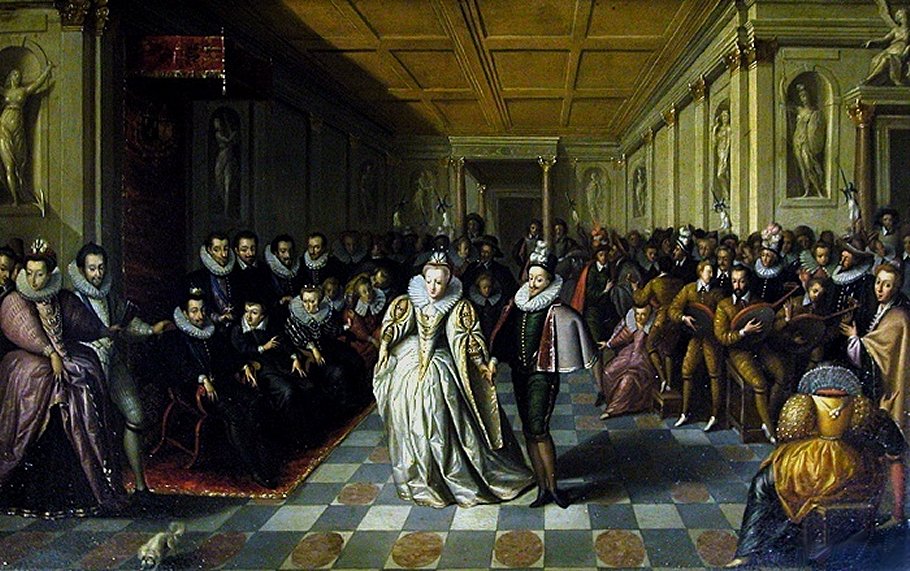 🇫🇷 FranceBallet de cour
A 16th and 17th century French court dance form blending spectacle, politics, and geometry.Court dance · Group
🇫🇷 FranceBallet de cour
A 16th and 17th century French court dance form blending spectacle, politics, and geometry.Court dance · Group