
Maxixe
A fast couple dance from Rio de Janeiro that blends African and European steps.
The maxixe is a Brazilian partner dance born in Rio de Janeiro during the late nineteenth century. It mixes Afro-Brazilian lundu rhythms with European polka movements, creating a lively social dance that spread to Europe and North America.
Watch it dancedShare on WhatsApp
- Originated in Rio de Janeiro around 1868.
- Blends Afro-Brazilian lundu with European polka.
- Danced to a rapid 2/4 time signature.
- Influenced samba de gafieira and lambada.
- Popular in Europe and the US in the early 1900s.
What is Maxixe?
The maxixe is a lively partner dance that emerged in Brazil during the late nineteenth century. Dancers move together in close contact, following a rapid rhythm set by accompanying music. The style blends African-derived steps with European figures, creating a unique social dance form. It gained popularity across the Atlantic, reaching audiences in Europe and the United States in the early twentieth century.
Where does Maxixe come from?
This dance originated in Rio de Janeiro around 1868. It developed from a fusion of Afro-Brazilian dances, particularly the lundu, and European forms like the polka. Its rise coincided with the development of the tango in neighboring Argentina and Uruguay. The genre became known as the Brazilian tango, though composers often resisted this label.
How is Maxixe danced?
Dancers adopt a bent-over posture while executing specific footwork. A key feature involves resting the heel on the floor with the foot pointed upward. This technique differs from the traditional tango touch-and-turn-in movement. The steps are described as simple yet difficult to execute well, requiring precise control over body alignment and rhythm.
Maxixe, drawn
The music of Maxixe
The dance is performed to a rapid 2/4 time signature. The music often falls under the choro subgenre, featuring piano-led arrangements. Composer Ernesto Nazareth wrote many pieces for this dance, blending folk influences into his compositions. He preferred calling these works Brazilian tangos rather than maxixes.
Costume and what is carried
The sources do not specify particular costumes or attire for dancers. Historical accounts focus on the physical posture and step mechanics rather than clothing details.

When and where Maxixe is danced
The maxixe was primarily a social dance enjoyed in urban settings. It traveled internationally, becoming popular in European and American ballrooms during the early 1900s. It served as a precursor to later Brazilian styles like samba de gafieira and lambada.
Styles of Maxixe
The dance influenced subsequent Brazilian styles, including samba de gafieira and lambada. Different composers interpreted the rhythm, with some emphasizing its tango-like qualities. Regional variations likely existed as the dance spread through different social circles in Brazil.
What Maxixe means
The maxixe represents an important fusion of African and European cultural elements in Brazilian history. It contributed significantly to the evolution of national dance traditions. Despite its international fame, it eventually gave way to newer styles like samba.
Questions people ask about Maxixe
Where did the maxixe originate?
It originated in Rio de Janeiro, Brazil, around 1868, developing alongside the tango in neighboring countries.
What kind of music accompanies the maxixe?
It is danced to a rapid 2/4 rhythm, often played as part of the choro genre, frequently featuring piano.
Is the maxixe related to the tango?
Yes, it is sometimes called the Brazilian tango and shares historical roots and stylistic similarities with Argentine tango.
Who were notable composers for this dance?
Ernesto Nazareth composed many pieces for the maxixe, blending folk influences into his Brazilian tango works.
Good reading and sources
- Maxixe (dance) on WikipediaEncyclopedia
- More photos and video on Wikimedia CommonsPhotos and video
- Wikidata recordOpen data
- Videos of Maxixe on YouTubeSearch results, not chosen by Ghungroo
The facts on this page come from the Wikipedia article "Maxixe (dance)", written by its contributors and used under the CC BY-SA 4.0 licence, and from its Wikidata record (CC0). Ghungroo rewrote the text in its own words, with AI assistance, and compares every page with the article to make sure no passage is copied. It may be reused under the same CC BY-SA 4.0 licence with a link back.
It may contain mistakes, and it describes the dance in outline: it is not a lesson. Traditions differ from one teacher, village or family to the next. If something is wrong, tell us. Last refreshed 2026-10-03.
More from Brazil
All the dances of Brazil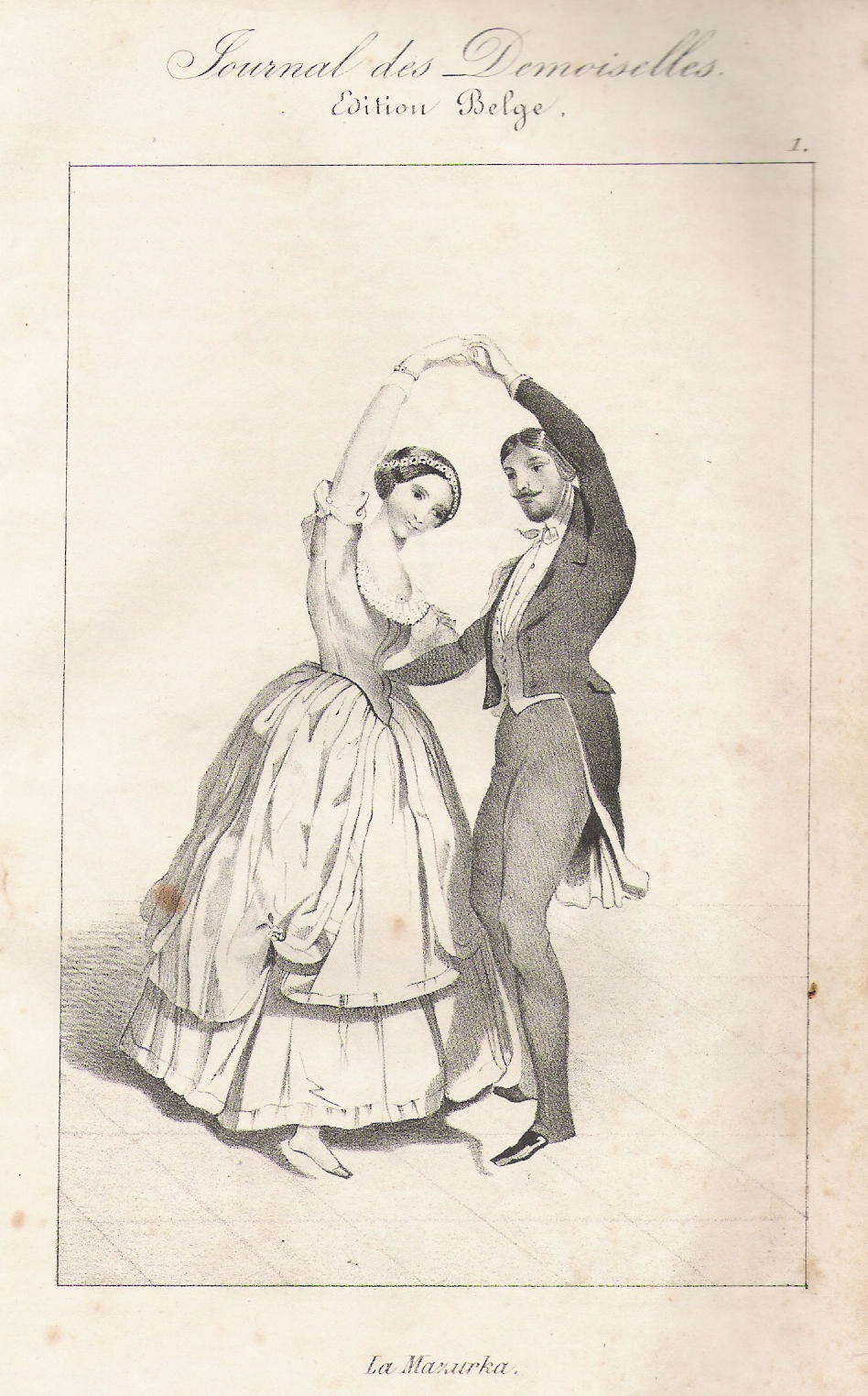 🇵🇱 Poland and 5 moreMazurka
A lively Polish folk dance in triple time, known for its shifting accentsFolk dance · Couple · Group
🇵🇱 Poland and 5 moreMazurka
A lively Polish folk dance in triple time, known for its shifting accentsFolk dance · Couple · Group
 🇬🇧 United Kingdom and 5 moreBallroom dance
Partner dances performed socially and in competition, with roots in EuropeSocial dance · Couple · Group
🇬🇧 United Kingdom and 5 moreBallroom dance
Partner dances performed socially and in competition, with roots in EuropeSocial dance · Couple · Group
 🇪🇸 Spain and 4 moreFandango
A lively Spanish partner dance in triple meter, accompanied by guitars and castanets.Folk dance · Couple · Group
🇪🇸 Spain and 4 moreFandango
A lively Spanish partner dance in triple meter, accompanied by guitars and castanets.Folk dance · Couple · Group
 🇦🇴 Angola and 4 moreKizomba
A slow partner dance from Angola, blending Semba steps with Zouk rhythms for social gatherings.Social dance · Couple
🇦🇴 Angola and 4 moreKizomba
A slow partner dance from Angola, blending Semba steps with Zouk rhythms for social gatherings.Social dance · Couple
Its cousins elsewhere
All social dances 🇵🇱 PolandKrakowiak
A fast Polish partner dance from Kraków, known for its syncopated rhythm and circle formation.Folk dance · Couple · Circle
🇵🇱 PolandKrakowiak
A fast Polish partner dance from Kraków, known for its syncopated rhythm and circle formation.Folk dance · Couple · Circle
 🇺🇸 United States and 2 moreContra dance
A social line dance for pairs, led by a caller and set to live folk tunesFolk dance · Couple · Line or chain
🇺🇸 United States and 2 moreContra dance
A social line dance for pairs, led by a caller and set to live folk tunesFolk dance · Couple · Line or chain
 🇸🇳 Senegal and 2 moreMbalax
Urban dance from Senegal built on Wolof sabar drumming and modern pop soundsFolk dance · Group
🇸🇳 Senegal and 2 moreMbalax
Urban dance from Senegal built on Wolof sabar drumming and modern pop soundsFolk dance · Group
 🇨🇺 Cuba and 1 moreDanzón
A slow, formal partner dance from Cuba, danced in set patterns with elegant pauses.Social dance · Couple · Group
🇨🇺 Cuba and 1 moreDanzón
A slow, formal partner dance from Cuba, danced in set patterns with elegant pauses.Social dance · Couple · Group