
Fandango
A lively Spanish partner dance in triple meter, accompanied by guitars and castanets.
The fandango is a traditional partner dance from Spain, usually performed in triple meter with guitars and castanets. It spread to Portugal, Mexico, and the Philippines, where local communities adapted its steps and music into distinct regional styles.
Watch it dancedShare on WhatsApp
- First described in a 1712 letter by a Spanish priest.
- Danced in triple meter, typically 3/4 time.
- Accompanied by guitars, castanets, and tambourines.
- Adapted into Pandanggo sa Ilaw in the Philippines.
- Mexican version features dancing on a wooden Tarima platform.
What is Fandango?
The fandango is a lively partner dance that originated in Spain. It is typically performed in a triple meter rhythm, often starting slowly before increasing in speed. Dancers use guitars, castanets, tambourines, or hand-clapping for accompaniment. The dance can be sung as well as performed physically, featuring octosyllabic verses known as coplas. Couples move together in a structured pattern, while other variations allow for solo footwork displays within a group setting.
Where does Fandango come from?
The earliest known melody appears in a 1705 guitar book, with the first written description of the dance coming from a priest in 1712. By the 1720s, it was appearing in theatrical works in Seville. The dance gained popularity among European aristocracy in the late 18th century, appearing in operas and ballets. Its exact roots are debated, with claims linking it to various Andalusian dances like the soleá and malagueña, as well as gitano traditions. Church authorities initially condemned it as godless, but dancers proved its appeal, leading to its acceptance.
How is Fandango danced?
In the Spanish tradition, couples begin slowly and gradually increase their tempo. The choreography follows a specific harmonic progression. In Portugal, the dance often features two male dancers facing each other, taking turns to perform intricate tap-dancing footwork to show off lightness and skill. While one dancer performs, the other accompanies the rhythm. The Philippine adaptation, Pandanggo sa Ilaw, involves balancing oil lamps on the head and hands, adding a layer of physical balance to the rhythmic stepping.
Fandango, drawn
The music of Fandango
The music is characterized by a triple meter, originally notated in 6/8 time but later shifting to 3/4. Sung versions follow a structure of instrumental introductions followed by variations on four or five verse phrases. Guitars provide the primary harmonic support, often joined by castanets or tambourines. The rhythm is distinctively Spanish, influencing classical composers like Mozart and Gluck, who incorporated fandango themes into their operas and ballets.
Costume and what is carried
Specific costume details are not described in the sources. However, the dance is traditionally accompanied by the use of castanets held in the hands. In the Mexican Veracruz tradition, dancers perform atop a large wooden platform called a Tarima, which serves as both a stage and a percussive instrument through their footwork. The Portuguese Campinos wear traditional rural attire when performing the Ribatejo variant.

When and where Fandango is danced
The fandango is danced at social gatherings, festivals, and religious celebrations. In Mexico, it is central to community parties where musicians play Son Jarocho music. In the Philippines, it appears in devotional dances honoring saints, such as the Obando Fertility Rites. Historically, it was performed in theaters and aristocratic salons. The dance is passed down through community participation and local adaptation, evolving into distinct regional styles across different countries.
Styles of Fandango
Many varieties exist, including the fandangos grandes, which are danced by couples, and the livelier fandanguillos. Regional Spanish styles include those from Huelva and Málaga (Verdiales). Northern Spain preserves a more relaxed version. In Portugal, the Ribatejo form is prominent, often performed by Campinos. The Philippines developed the Pandanggo sa Ilaw and used the fandango rhythm for dances like Cariñosa. Each region has adapted the core structure to local musical and cultural preferences.
What Fandango means
The word fandango has entered common usage to describe a quarrel or a foolish act, reflecting its historically extravagant nature. It holds significant cultural status in Spain and Portugal as a folk heritage dance. In the Philippines, it represents a key element of colonial-era dance history, adapted by both upper classes and rural masses. Classical composers have frequently used its form, cementing its place in Western music history beyond its folk origins.
Questions people ask about Fandango
Where did the fandango originate?
It originated in Spain, with the earliest melodies appearing in the early 1700s. It quickly spread to Portugal, Latin America, and the Philippines, where local cultures adapted its steps and music.
How is the fandango danced?
It is primarily a partner dance in triple meter. Couples start slowly and increase tempo. In some regions, like Portugal, it features competitive solo footwork between partners facing each other.
What instruments accompany the dance?
Guitars are the main instrument, often joined by castanets, tambourines, or hand-clapping. The rhythm is distinctively Spanish and influenced many classical composers.
Is there a Filipino version of the fandango?
Yes, it evolved into the Pandanggo style. The most famous variation is Pandanggo sa Ilaw, where dancers balance oil lamps on their heads and hands while performing rhythmic steps.
Why was the fandango once banned?
Spanish church authorities initially condemned it as a 'godless dance.' However, after dancers performed it for the judges, who enjoyed it so much they began dancing themselves, the ban was lifted.
Good reading and sources
- Fandango on WikipediaEncyclopedia
- More photos and video on Wikimedia CommonsPhotos and video
- Wikidata recordOpen data
- Videos of Fandango on YouTubeSearch results, not chosen by Ghungroo
The facts on this page come from the Wikipedia article "Fandango", written by its contributors and used under the CC BY-SA 4.0 licence, and from its Wikidata record (CC0). Ghungroo rewrote the text in its own words, with AI assistance, and compares every page with the article to make sure no passage is copied. It may be reused under the same CC BY-SA 4.0 licence with a link back.
It may contain mistakes, and it describes the dance in outline: it is not a lesson. Traditions differ from one teacher, village or family to the next. If something is wrong, tell us. Last refreshed 2026-10-03.
More from Spain
All the dances of Spain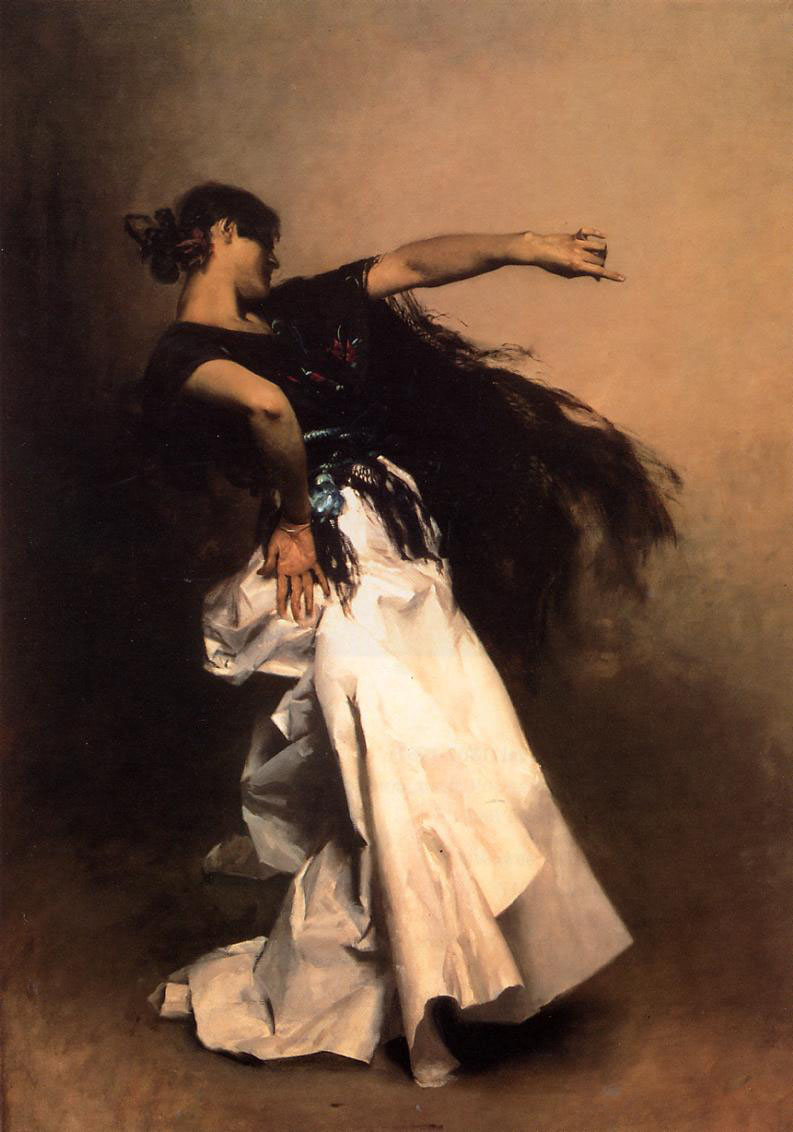 🇪🇸 SpainFlamenco
A dramatic dance and music tradition rooted in Andalusia's gitano and folk culturesFolk dance · Solo · Group
🇪🇸 SpainFlamenco
A dramatic dance and music tradition rooted in Andalusia's gitano and folk culturesFolk dance · Solo · Group
 🇧🇪 Belgium and 5 moreProcessional giant
Huge costumed figures carried and danced in European street processionsFolk dance · Solo · Procession
🇧🇪 Belgium and 5 moreProcessional giant
Huge costumed figures carried and danced in European street processionsFolk dance · Solo · Procession
 🇪🇸 Spain and 5 morePasodoble
A dramatic Spanish partner dance set to march-like music, echoing the bullfightFolk dance · Couple · Group
🇪🇸 Spain and 5 morePasodoble
A dramatic Spanish partner dance set to march-like music, echoing the bullfightFolk dance · Couple · Group
 🇮🇹 Italy and 3 morePavanepavana
A slow, processional couple dance of the European Renaissance.Court dance · Procession · Couple
🇮🇹 Italy and 3 morePavanepavana
A slow, processional couple dance of the European Renaissance.Court dance · Procession · Couple
Its cousins elsewhere
All folk dances 🇨🇱 Chile and 3 moreCueca
A partner dance with handkerchiefs, tracing circles in Chile, Bolivia, and PeruFolk dance · Couple · Solo
🇨🇱 Chile and 3 moreCueca
A partner dance with handkerchiefs, tracing circles in Chile, Bolivia, and PeruFolk dance · Couple · Solo
 🇳🇿 New ZealandHaka
A ceremonial group dance from New Zealand featuring vigorous movement and chanted words.Folk dance · Group
🇳🇿 New ZealandHaka
A ceremonial group dance from New Zealand featuring vigorous movement and chanted words.Folk dance · Group
 🇪🇨 EcuadorSanjuanito
A circle dance and music from Ecuador’s Andean highlands, often for Inti RaymiFolk dance · Circle · Group
🇪🇨 EcuadorSanjuanito
A circle dance and music from Ecuador’s Andean highlands, often for Inti RaymiFolk dance · Circle · Group
 🇺🇸 United States and 2 moreContra dance
A social line dance for pairs, led by a caller and set to live folk tunesFolk dance · Couple · Line or chain
🇺🇸 United States and 2 moreContra dance
A social line dance for pairs, led by a caller and set to live folk tunesFolk dance · Couple · Line or chain