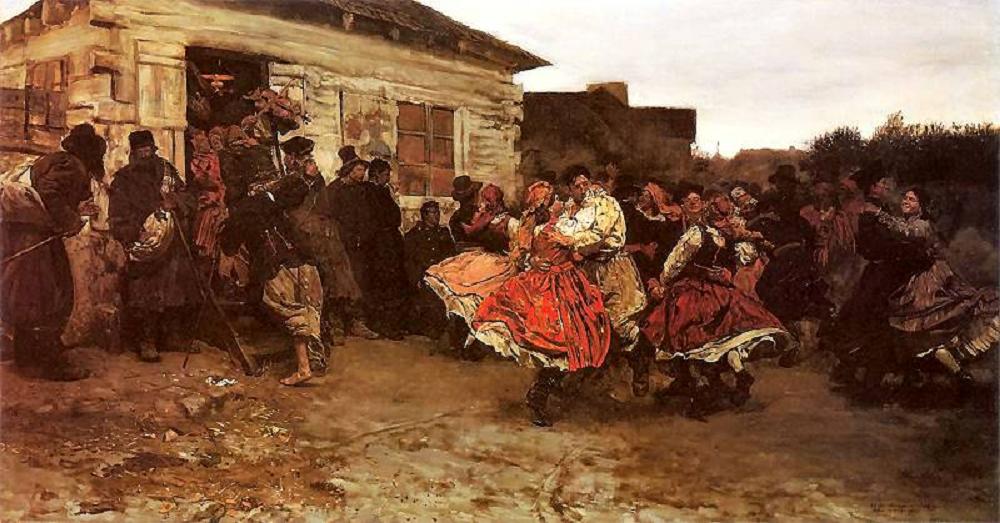
Oberek
A fast Polish folk dance in triple metre, defined by spinning and jumps.
The oberek is a lively Polish folk dance performed in triple time. It features rapid steps, constant turns, and lifts, making it the fastest of Poland's five national dances. Immigrants brought this tradition to the United States, where it evolved into a social dance accompanied by polka bands.
Watch it dancedShare on WhatsApp
- Fastest of Poland's Five National Dances
- Name means 'to spin' in Polish
- Features jumps and lifts
- Played by violin-led village bands
- Popular in Polish-American culture
What is Oberek?
The oberek is a spirited dance from Poland, also called obertas or ober. Its name comes from the word for spinning. The dance moves quickly, using many jumps and lifts. It is faster than the Polish waltz and stands as one of the country's main national dances. Dancers show off their skill by turning rapidly at a high speed. The steps share some similarities with the mazur, but the pace sets it apart.
Where does Oberek come from?
This dance belongs to the group of Five National Dances of Poland, which includes the polonaise, mazurka, kujawiak, and cracovienne. In its original form, it is a folk dance. The music was traditionally played by small village bands known as kapela. These groups were led by the violin, especially in central Poland. Later, Polish immigrants carried the dance to America in the late nineteenth and early twentieth centuries.
How is Oberek danced?
The core of the oberek involves quick steps and continuous turning. Dancers must maintain balance while spinning at a fast tempo. The performance includes several lifts and jumps. The visual appeal relies heavily on the dancer's ability to spin gracefully. The footwork is energetic, requiring agility and coordination to keep up with the rhythm.
Oberek, drawn
The music of Oberek
The rhythm is set in triple metre. Traditional accompaniment came from a kapela, a small village band. The violin was the dominant instrument, particularly in central Poland. In the American version, the music differs slightly. Polka bands now play the tunes, providing a distinct sound for the social dance style.
Costume and what is carried
The sources do not provide details about specific costumes, makeup, or props used in the oberek.

When and where Oberek is danced
In Poland, the oberek is a national dance performed at cultural events. In the United States, it serves as a social dance. Polish-American communities dance it to polka music. It remains the second most popular dance in this genre, following only the polka. It is danced for pleasure and community gathering.
Styles of Oberek
There are two main versions: the original Polish folk dance and the Polish-American social dance. The American version has altered steps and different music. While the folk dance uses a village band, the social dance is played by polka bands. This adaptation reflects the changing musical landscape of immigrant communities.
What Oberek means
The oberek holds a place among the Five National Dances of Poland. It represents a key part of the country's folk heritage. In the United States, it preserves cultural identity for Polish immigrants. The dance continues to be popular in Polish-American music scenes, maintaining its status after the polka.
Questions people ask about Oberek
What does the name oberek mean?
The name derives from the Polish verb obracać się, which translates directly to 'to spin'. This reflects the dance's focus on rapid turning movements.
Where did the oberek originate?
It originated in Poland as a folk dance. It is one of the Five National Dances, alongside the polonaise and mazurka, representing traditional Polish culture.
How is the oberek danced?
Dancers perform quick steps, constant turns, jumps, and lifts. The beauty lies in the individual's ability to spin gracefully at a very fast tempo.
What instruments play the oberek?
Traditionally, a small village band called a kapela plays the music. The violin is the dominant instrument, especially in central Poland.
Good reading and sources
- Oberek on WikipediaEncyclopedia
- More photos and video on Wikimedia CommonsPhotos and video
- Wikidata recordOpen data
- Videos of Oberek on YouTubeSearch results, not chosen by Ghungroo
The facts on this page come from the Wikipedia article "Oberek", written by its contributors and used under the CC BY-SA 4.0 licence, and from its Wikidata record (CC0). Ghungroo rewrote the text in its own words, with AI assistance, and compares every page with the article to make sure no passage is copied. It may be reused under the same CC BY-SA 4.0 licence with a link back.
It may contain mistakes, and it describes the dance in outline: it is not a lesson. Traditions differ from one teacher, village or family to the next. If something is wrong, tell us. Last refreshed 2026-10-03.
More from Poland
All the dances of Poland 🇨🇿 Czech Republic and 5 morePolka
A lively partner dance in 2/4 time from 19th-century BohemiaFolk dance · Couple · Circle
🇨🇿 Czech Republic and 5 morePolka
A lively partner dance in 2/4 time from 19th-century BohemiaFolk dance · Couple · Circle
 🇵🇱 Poland and 3 morePolonaisePolonez, chodzony
A stately walking dance in triple time, opening Polish celebrations and ballsFolk dance · Couple · Procession
🇵🇱 Poland and 3 morePolonaisePolonez, chodzony
A stately walking dance in triple time, opening Polish celebrations and ballsFolk dance · Couple · Procession
 🇵🇱 Poland and 5 moreMazurka
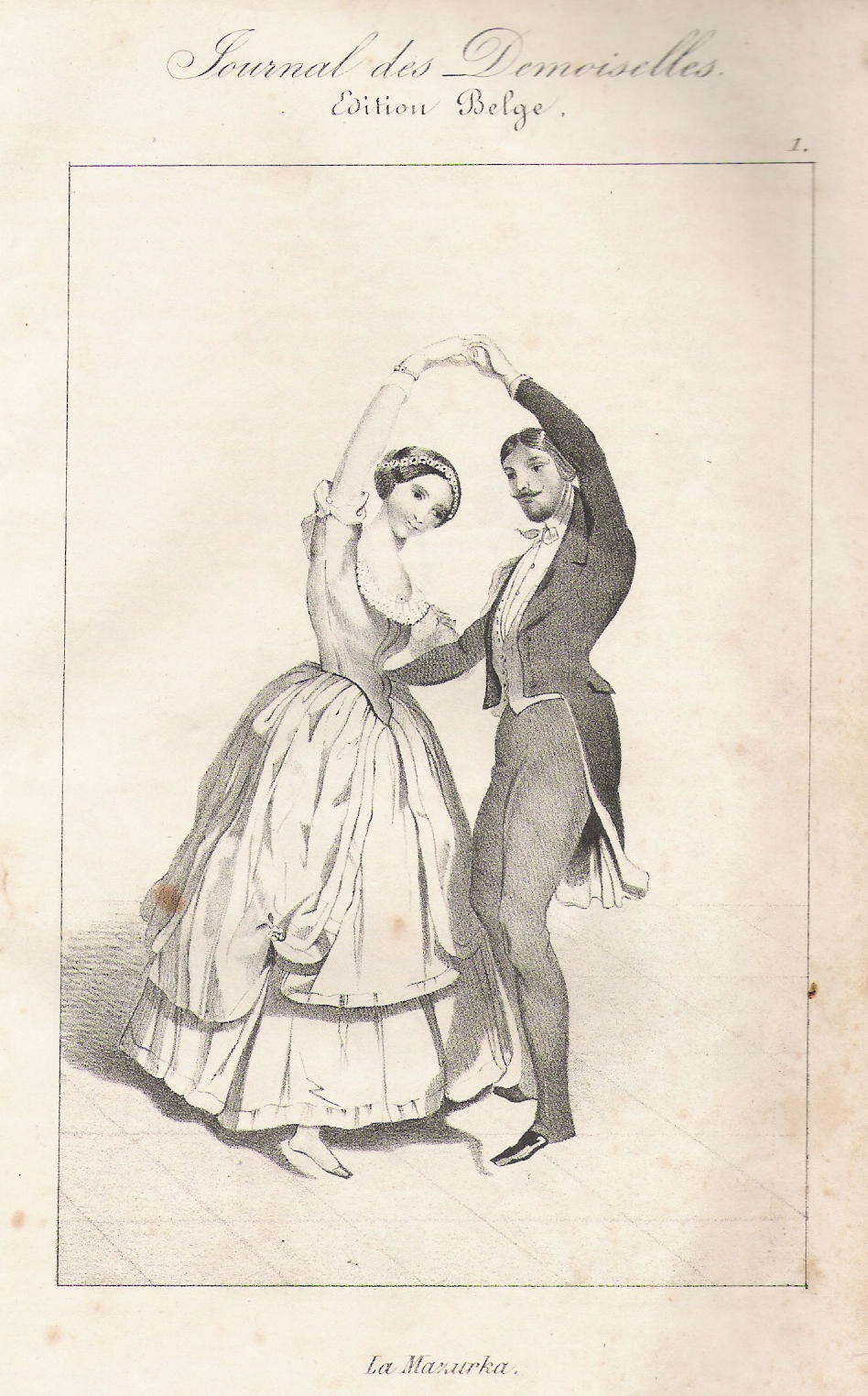
A lively Polish folk dance in triple time, known for its shifting accentsFolk dance · Couple · Group
🇵🇱 Poland and 5 moreMazurka
A lively Polish folk dance in triple time, known for its shifting accentsFolk dance · Couple · Group
 🇭🇺 Hungary and 5 moreCsárdás
A Hungarian folk dance that begins slowly and ends in a fast spin.Folk dance · Couple · Group
🇭🇺 Hungary and 5 moreCsárdás
A Hungarian folk dance that begins slowly and ends in a fast spin.Folk dance · Couple · Group
Its cousins elsewhere
All folk dances 🇦🇷 Argentina and 1 moreChacarera
A partner dance with foot stomping and handkerchiefs from rural ArgentinaFolk dance · Couple · Group
🇦🇷 Argentina and 1 moreChacarera
A partner dance with foot stomping and handkerchiefs from rural ArgentinaFolk dance · Couple · Group
 🇨🇺 Cuba and 1 moreDanzón
A slow, formal partner dance from Cuba, danced in set patterns with elegant pauses.Social dance · Couple · Group
🇨🇺 Cuba and 1 moreDanzón
A slow, formal partner dance from Cuba, danced in set patterns with elegant pauses.Social dance · Couple · Group
 🇻🇪 Venezuela and 1 moreJoropo
A fast-paced partner dance of the plains, featuring vigorous footwork and string instruments.Folk dance · Couple
🇻🇪 Venezuela and 1 moreJoropo
A fast-paced partner dance of the plains, featuring vigorous footwork and string instruments.Folk dance · Couple
 🇵🇪 Peru and 3 moreHuayno
A lively Andean partner dance with stamping steps and bright melodiesFolk dance · Couple · Group
🇵🇪 Peru and 3 moreHuayno
A lively Andean partner dance with stamping steps and bright melodiesFolk dance · Couple · Group