Para Para
In its own language: パラパラ
A Japanese club dance with upper-body choreography set to Eurobeat
Para Para is a synchronized group dance that emerged in Japan during the late 1980s. Dancers perform specific arm and hand routines to fast-paced Eurobeat tracks while standing in place or stepping lightly.
Watch it dancedShare on WhatsApp
- Dancers focus on upper body movements while staying mostly stationary.
- Routines are specific to each Eurobeat track played.
- The dance originated in Japanese nightclubs in the late 1980s.
- Fans are known as paralists and form organized teams.
- Variants include TechPara and TraPara for different music genres.
What is Para Para?
This style involves groups of people dancing together in unison. Participants focus on their arms and hands, creating intricate patterns that match the beat of the music. The lower body remains mostly still, with only small steps or hip movements. Fans call themselves paralists and often form teams to learn these routines.
Where does Para Para come from?
The dance likely began in Japanese nightclubs in the late 1980s. Some say VIP room staff created it to entertain guests, while others link it to street dancers in Harajuku. It grew alongside the import of European disco and synth-pop records into Japan, eventually becoming the standard way to move to Eurobeat music.
How is Para Para danced?
Dancers stand in lines or clusters, facing forward. They execute precise arm waves, claps, and pointing gestures that change with each song. Footwork is minimal, usually just shifting weight side-to-side or tapping feet. The routine requires strict timing to keep everyone moving as one unit.
Para Para, drawn
The music of Para Para
The dance is tied to Eurobeat, a high-energy electronic genre. Tracks are very fast, driving the rapid arm movements. Some variations use hyper techno or trance music, but the core identity remains linked to the upbeat, synthetic sounds popular in Japanese clubs.
Costume and what is carried
There is no single uniform, but dancers often wear stylish, casual club attire. Bright colors and flashy accessories are common. Some teams adopt matching outfits for competitions or performances to show unity.
When and where Para Para is danced
It started in discos and continues at dedicated club nights. Fans gather to practice routines, watch videos, and compete. The community has spread internationally, with fans in the Americas and Europe forming local groups to keep the tradition alive outside Japan.
Styles of Para Para
Several sub-styles exist. TechPara uses faster techno beats. TraPara matches trance music. OriPara refers to original routines created by fans rather than professional choreographers. These variations allow dancers to adapt the core movements to different musical preferences.
What Para Para means
Para Para experienced several popularity booms in Japan, driven by media appearances and commercial video releases. Though mainstream interest has faded, a dedicated global community maintains the dance through online tutorials and local events, preserving the choreographies from past decades.
Questions people ask about Para Para
What kind of music is Para Para danced to?
It is primarily danced to Eurobeat, a fast-paced electronic music genre. Variants also exist for hyper techno and trance music, allowing dancers to adapt their routines to different high-energy tracks.
Where did Para Para originate?
It began in Japan during the late 1980s. The dance likely developed in nightclubs, possibly created by staff or inspired by street dance groups in areas like Harajuku, growing alongside imported European disco records.
How do dancers move during Para Para?
Participants perform synchronized arm and hand gestures while standing in place or taking small steps. The focus is on upper body coordination, with minimal leg movement, ensuring the group moves together in time with the music.
Is Para Para still popular today?
While its peak in Japan has passed, a dedicated international community keeps it alive. Fans in countries like the US, Brazil, and Chile form teams, share videos online, and host local events to practice and preserve the dance.
Good reading and sources
- Para Para on WikipediaEncyclopedia
- More photos and video on Wikimedia CommonsPhotos and video
- Wikidata recordOpen data
- Videos of Para Para on YouTubeSearch results, not chosen by Ghungroo
The facts on this page come from the Wikipedia article "Para Para", written by its contributors and used under the CC BY-SA 4.0 licence, and from its Wikidata record (CC0). Ghungroo rewrote the text in its own words, with AI assistance, and compares every page with the article to make sure no passage is copied. It may be reused under the same CC BY-SA 4.0 licence with a link back.
It may contain mistakes, and it describes the dance in outline: it is not a lesson. Traditions differ from one teacher, village or family to the next. If something is wrong, tell us. Last refreshed 2026-10-03.
More from Japan
All the dances of Japan 🇺🇸 United States and 5 moreHip-hop dance
Improvised street dance styles shaped by hip-hop music and cultureStreet or club dance · Solo · Group
🇺🇸 United States and 5 moreHip-hop dance
Improvised street dance styles shaped by hip-hop music and cultureStreet or club dance · Solo · Group
 🇺🇸 United States and 5 moreVogue
A stylized dance of poses and battles from the Harlem ballroom sceneStreet or club dance · Solo · Group
🇺🇸 United States and 5 moreVogue
A stylized dance of poses and battles from the Harlem ballroom sceneStreet or club dance · Solo · Group
 🇺🇸 United States and 5 moreContact Improvisation
A partner dance built on touch and shared weight, created in the United States during the early 1970s.Social dance · Couple
🇺🇸 United States and 5 moreContact Improvisation
A partner dance built on touch and shared weight, created in the United States during the early 1970s.Social dance · Couple
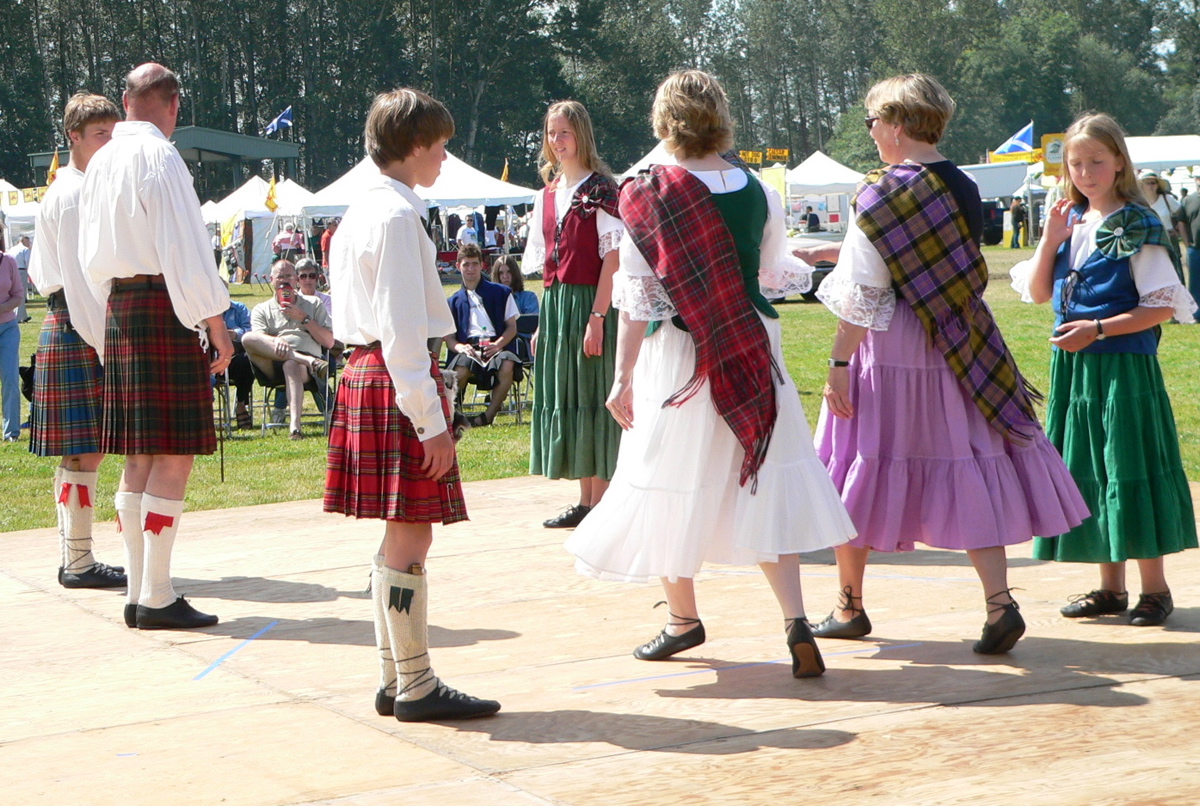 🇬🇧 United Kingdom and 5 moreScottish country dance
A social dance for sets of couples, using Scottish steps and figuresFolk dance · Set or square · Line or chain
🇬🇧 United Kingdom and 5 moreScottish country dance
A social dance for sets of couples, using Scottish steps and figuresFolk dance · Set or square · Line or chain
Its cousins elsewhere
All social dances 🇸🇳 Senegal and 2 moreMbalax
Urban dance from Senegal built on Wolof sabar drumming and modern pop soundsFolk dance · Group
🇦🇴 Angola and 1 moreKuduro
A fast electronic dance from Angola with sharp, staccato movements inspired by street life and resilience.Social dance · Circle · Group
🇸🇳 Senegal and 2 moreMbalax
Urban dance from Senegal built on Wolof sabar drumming and modern pop soundsFolk dance · Group
🇦🇴 Angola and 1 moreKuduro
A fast electronic dance from Angola with sharp, staccato movements inspired by street life and resilience.Social dance · Circle · Group
 🇦🇷 Argentina and 1 moreTango
A partner dance from the Río de la Plata, danced in close or open embraceSocial dance · Couple
🇦🇷 Argentina and 1 moreTango
A partner dance from the Río de la Plata, danced in close or open embraceSocial dance · Couple
 🇪🇬 Egypt and 3 moreBelly danceرقص شرقي
A Middle Eastern dance focused on hip and torso articulation.Folk dance · Solo
🇪🇬 Egypt and 3 moreBelly danceرقص شرقي
A Middle Eastern dance focused on hip and torso articulation.Folk dance · Solo