
Seungmu
In its own language: 승무 (僧舞)
A solo Korean dance with long white sleeves and a drum, tracing cosmic cycles.
Seungmu is a traditional Korean dance performed by Buddhist monks. It was designated as an important intangible cultural asset in South Korea in 1969. Professional dancers now perform it as a solo art form on stage.
Watch it dancedShare on WhatsApp
- Designated as Intangible Cultural Asset No. 27 in 1969.
- Performed by a solo dancer wearing long white sleeves.
- Accompanied by the bubgo drum throughout eight rhythmic cycles.
- Evolved from Buddhist ritual to street folk art.
- Preserved by Human Cultural Treasures like Lee Mae Bang.
What is Seungmu?
Seungmu, or Monk Dance, is a celebrated Korean performance. It began as a ritual by Buddhist monks but evolved into a secular folk art. A single dancer wears a colorful robe with extra-long white sleeves and a white hood. They move to the beat of a drum called bubgo. The dance combines fluid motion with sudden stillness. It tells a story through the sweep of the sleeves and the rhythm of the feet. The performance feels dignified and sharp, capturing both joy and sorrow.
Where does Seungmu come from?
The exact origin of Seungmu is unclear. Some link it to the monk Wonhyo, while others suggest it mocked upper-class priests. It may have started as a Buddhist ritual dance called bubgo. During the Joseon dynasty, it was banned from temples. Courtesans, known as kisaengs, adapted it for street entertainment. By the sixteenth century, it gained popularity among commoners. In the twentieth century, artists like Han Songjun transformed it into a formal stage art. This shift moved it from religious practice to folk culture.
How is Seungmu danced?
The dancer begins crouched on the ground. They slowly rise, expanding their movements to mimic the creation of the universe. The choreography follows eight rhythmic cycles. Each cycle changes the mood and speed of the steps. The long white sleeves amplify every gesture. Dancers use them to depict swirling winds, blooming flowers, or sowing crops. The white hood remains serene while the body moves dynamically. The performance requires precise control over posture and footwork.
Seungmu, drawn
The music of Seungmu
The bubgo drum drives the entire performance. The music shifts through eight specific rhythmic cycles. These include yeombul, dodeuri, taryeong, and jajin taryeong. The tempo varies from heavy and slow to fast and complex. Early versions were improvised, allowing regional variations. Later, these rhythms were archived and fixed into set routines. The drumbeat guides the dancer through stages of life, from birth to maturity and decay.
Costume and what is carried
Dancers wear a jangsam robe with gasa, which are elongated white sleeves. They also wear a gokkal, a white hood that covers the head. The costume is vibrant and elegant. The stark white of the sleeves and hood contrasts with the colored robe. The fabric flows freely, enhancing the visual impact of the arm movements. The hood maintains a calm expression regardless of the physical intensity below.

When and where Seungmu is danced
Originally, this dance was part of Buddhist rituals. It later became a folk performance for public entertainment. Today, it is presented on stages as a concert dance. It is recognized as an important intangible cultural asset in South Korea. Master performers preserve the tradition as human cultural treasures. The dance is passed down through rigorous training under these masters.
Styles of Seungmu
Until the 1930s, styles varied by region and were often improvised. Artists then standardized the choreography for stage presentation. Different schools emerged around famous masters like Lee Mae Bang. Kim Myo Seon and Kim Myung Ja are noted assistant masters. These variations reflect the transition from street performance to formal art. The core elements remain consistent across all versions.
What Seungmu means
Seungmu holds significant status in Korean heritage. It was designated as Intangible Cultural Asset No. 27 in 1969. The dance represents a bridge between sacred Buddhist roots and secular folk life. It is considered one of the most beautiful Korean dances. Performers are honored as living national treasures. The work preserves historical movements and musical structures for future generations.
Questions people ask about Seungmu
What is Seungmu?
Seungmu is a traditional Korean solo dance originally performed by Buddhist monks. It features a dancer in a robe with long white sleeves moving to the rhythm of a bubgo drum. It is now a celebrated stage art form in South Korea.
Where did Seungmu originate?
Its origins are debated, with links to the monk Wonhyo or mockery of priests. It likely derived from Buddhist ritual dances. It was banned during the Joseon dynasty and revived by courtesans as folk entertainment before becoming formal stage art.
What does the dance represent?
The movements trace cosmic and life cycles. Starting crouched, the dancer expands to symbolize the universe's creation. The rhythms depict seasons, emotions, and the passage of time, ending with a return to the original state.
Who performs Seungmu today?
Professional dancers perform it as a solo concert piece. Masters like Lee Mae Bang preserved it as an intangible cultural treasure. The government designates specific artists to maintain the authentic style and techniques.
Good reading and sources
- Seungmu on WikipediaEncyclopedia
- More photos and video on Wikimedia CommonsPhotos and video
- Wikidata recordOpen data
- Videos of Seungmu on YouTubeSearch results, not chosen by Ghungroo
The facts on this page come from the Wikipedia article "Seungmu", written by its contributors and used under the CC BY-SA 4.0 licence, and from its Wikidata record (CC0). Ghungroo rewrote the text in its own words, with AI assistance, and compares every page with the article to make sure no passage is copied. It may be reused under the same CC BY-SA 4.0 licence with a link back.
It may contain mistakes, and it describes the dance in outline: it is not a lesson. Traditions differ from one teacher, village or family to the next. If something is wrong, tell us. Last refreshed 2026-10-03.
More from South Korea
All the dances of South Korea 🇰🇷 South Korea and 1 moreGanggangsullae강강술래
A Korean circle dance sung and danced by women under the full moonFolk dance · Circle · Line or chain
🇰🇷 South Korea and 1 moreGanggangsullae강강술래
A Korean circle dance sung and danced by women under the full moonFolk dance · Circle · Line or chain
 🇰🇷 South Korea and 1 moreTalchum탈춤
A Korean mask dance-drama mixing satire, ritual and storyFolk dance · Group · Circle
🇰🇷 South Korea and 1 moreTalchum탈춤
A Korean mask dance-drama mixing satire, ritual and storyFolk dance · Group · Circle
 🇰🇷 South Korea and 2 morePungmul풍물
A Korean folk performance with drumming, dance, and song, rooted in farming lifeFolk dance · Group · Solo
🇰🇷 South Korea and 2 morePungmul풍물
A Korean folk performance with drumming, dance, and song, rooted in farming lifeFolk dance · Group · Solo
 🇰🇷 South KoreaBuchaechum부채춤
A group fan dance created in 1954, performed by women using large painted fans.Folk dance · Group
🇰🇷 South KoreaBuchaechum부채춤
A group fan dance created in 1954, performed by women using large painted fans.Folk dance · Group
Its cousins elsewhere
All ritual and sacred dances 🇧🇪 Belgium and 5 moreProcessional giant
Huge costumed figures carried and danced in European street processionsFolk dance · Solo · Procession
🇧🇪 Belgium and 5 moreProcessional giant
Huge costumed figures carried and danced in European street processionsFolk dance · Solo · Procession
 🇧🇧 BarbadosBarbados Land-ship
A parade and dance tradition in Barbados, mimicking naval maneuvers on landFolk dance · Group · Procession
🇧🇧 BarbadosBarbados Land-ship
A parade and dance tradition in Barbados, mimicking naval maneuvers on landFolk dance · Group · Procession
 🇰🇪 Kenya and 1 moreAdumu
A vertical leaping dance performed by Maasai warriors in a circle to show strength and agility.Folk dance · Circle
🇰🇪 Kenya and 1 moreAdumu
A vertical leaping dance performed by Maasai warriors in a circle to show strength and agility.Folk dance · Circle
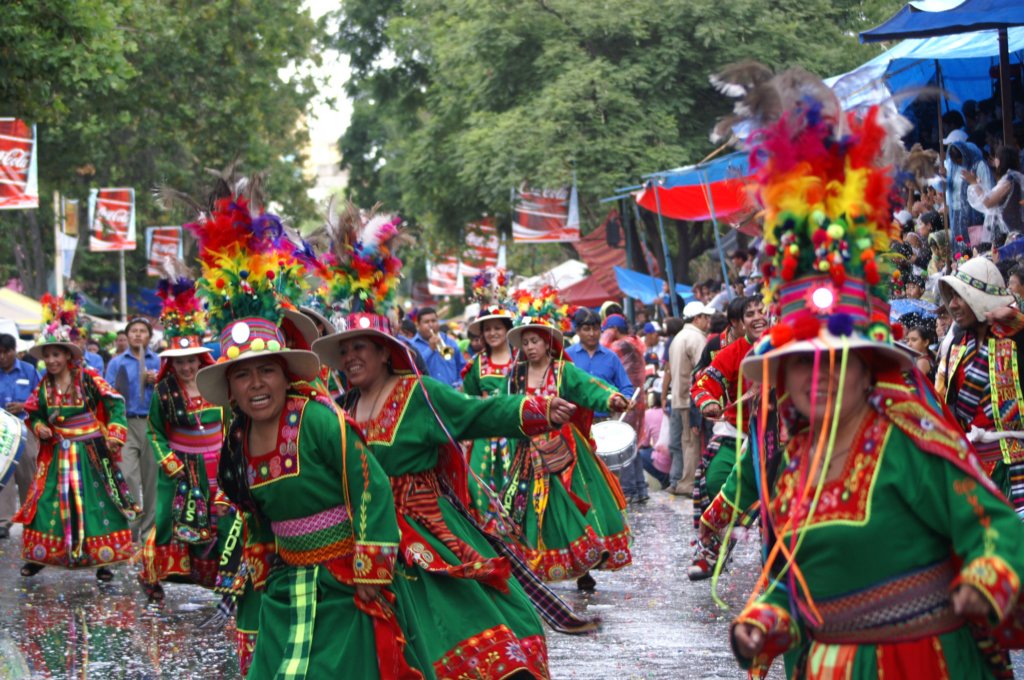 🇧🇴 BoliviaTinku
A Bolivian dance that echoes ritual combat, with bold costumes and warlike rhythmsFolk dance · Circle · Group
🇧🇴 BoliviaTinku
A Bolivian dance that echoes ritual combat, with bold costumes and warlike rhythmsFolk dance · Circle · Group