
Tahtib
In its own language: تحطيب
A stick-fighting martial art turned folk dance from Upper Egypt
Tahtib is an Egyptian stick dance and martial art practiced mainly in Upper Egypt. It evolved from ancient military training into a performance art for men and women.
Watch it dancedShare on WhatsApp
- Origins trace back to Old Kingdom military training around 2500 BC.
- Dancers swing four-foot sticks in fast figure-eight patterns.
- Accompanied by the tabl drum and mizmar oboe.
- Performed today in Luxor and Aswan for tourists.
- Female dancers may use hooked canes decorated with sequins.
What is Tahtib?
Tahtib is a traditional Egyptian practice that blends martial arts with folk dance. Dancers use long wooden sticks to perform mock combat or rhythmic displays. The activity originated as military training but has become a popular social and ceremonial performance. It is primarily associated with the regions of Upper Egypt.
Where does Tahtib come from?
The earliest evidence of tahtib appears on engravings at Abusir and the Pyramid of Sahure, dating back to around 2500 BC. These images show soldiers using sticks for warfare training alongside archery and wrestling. Later depictions appear in the Beni Hassan tombs and Tell el Amarna. By the New Empire, it transitioned into a civilian leisure activity performed at weddings and celebrations.
How is Tahtib danced?
Dancers wield a four-foot stick called an asa. They swing the stick rapidly across their bodies in large figure-eight patterns. The speed of the movement creates a loud whistling sound from the air displacement. Traditional matches focus on striking the opponent's head while protecting one's own. Modern versions allow mixed-gender groups and codify these defensive and offensive techniques.
Tahtib, drawn
The music of Tahtib
The rhythm is driven by two main instruments: the tabl, a bass drum, and the mizmar, a folk oboe. One hand strikes the center of the drum to produce deep dum beats. The other hand uses a light twig to strike the edge, creating rapid staccato taks sounds. This combination provides the heartbeat for the dancers' movements.
Costume and what is carried
Traditional male performers wear simple clothing suitable for vigorous movement. Female dancers may dress as men to imitate the male style or perform a flirtatious variant called ra's el assaya. In this version, the stick is lighter, hooked like a cane, and often decorated with sequins or foil. Performers may balance the stick on their head, hip, or shoulder.
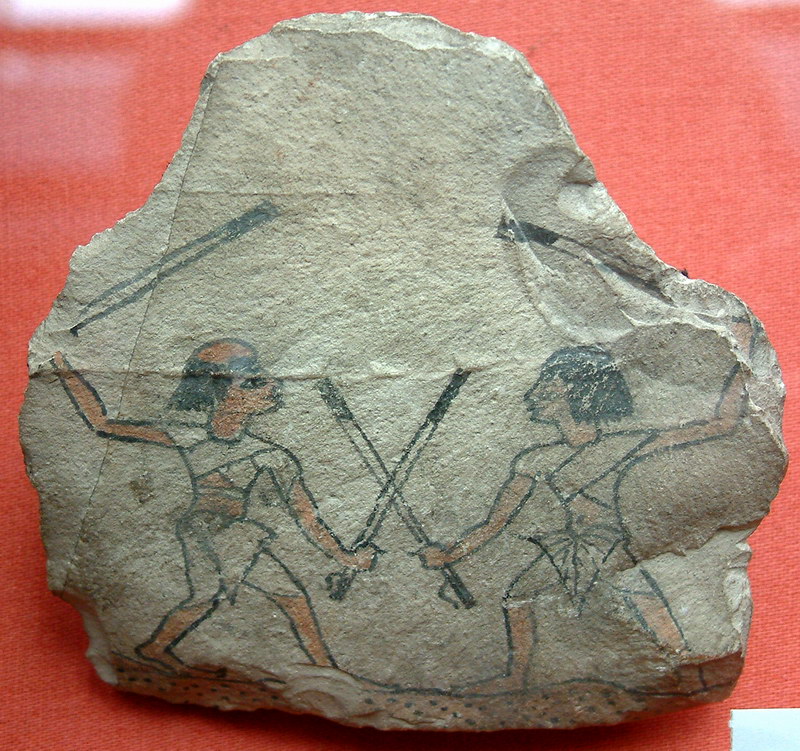
When and where Tahtib is danced
Historically, tahtib was taught to soldiers and played by farmers during festivals. Early Christian writings note it as a popular art form for men at weddings. Today, it is performed in Upper Egypt for cultural events and tourist shows in cities like Luxor and Aswan. It serves as both a competitive sport and a celebratory entertainment.
Styles of Tahtib
The practice includes a martial version focused on combat techniques and a dance version for performance. A female variant known as ra's el assaya incorporates elements of cabaret and belly dance. Modern tahtib attempts to codify the original fighting techniques structurally, allowing both men and women to train together in mixed groups.
What Tahtib means
Tahtib holds significant historical value as one of Egypt's oldest continuous traditions. It represents a shift from ancient military discipline to civilian celebration. The dance preserves the physical culture of Upper Egypt and remains a key part of local identity and tourism.
Questions people ask about Tahtib
What is tahtib?
Tahtib is an Egyptian stick dance and martial art. It involves wielding a long wooden stick to perform mock combat or rhythmic displays. It originated as military training and evolved into a folk dance.
Where does tahtib come from?
It comes from Egypt, specifically Upper Egypt. Ancient engravings from the Old Kingdom show its origins as a military exercise for soldiers.
When is tahtib danced?
It is performed at weddings, festivals, and cultural celebrations. Today, it is also regularly shown to tourists in cities like Luxor and Aswan.
Who performs tahtib?
Originally performed only by men, it now includes female dancers. Women may mimic male styles or perform a flirtatious variant using a lighter, hooked cane.
Good reading and sources
- Tahtib on WikipediaEncyclopedia
- More photos and video on Wikimedia CommonsPhotos and video
- Wikidata recordOpen data
- Videos of Tahtib on YouTubeSearch results, not chosen by Ghungroo
The facts on this page come from the Wikipedia article "Tahtib", written by its contributors and used under the CC BY-SA 4.0 licence, and from its Wikidata record (CC0). Ghungroo rewrote the text in its own words, with AI assistance, and compares every page with the article to make sure no passage is copied. It may be reused under the same CC BY-SA 4.0 licence with a link back.
It may contain mistakes, and it describes the dance in outline: it is not a lesson. Traditions differ from one teacher, village or family to the next. If something is wrong, tell us. Last refreshed 2026-10-03.
More from Egypt
All the dances of Egypt 🇪🇬 Egypt and 3 moreBelly danceرقص شرقي
A Middle Eastern dance focused on hip and torso articulation.Folk dance · Solo
🇪🇬 Egypt and 3 moreZaffaزفـّـة
A wedding procession with music and dance across the Arab worldFolk dance · Procession · Group
🇪🇬 Egypt and 3 moreBelly danceرقص شرقي
A Middle Eastern dance focused on hip and torso articulation.Folk dance · Solo
🇪🇬 Egypt and 3 moreZaffaزفـّـة
A wedding procession with music and dance across the Arab worldFolk dance · Procession · Group
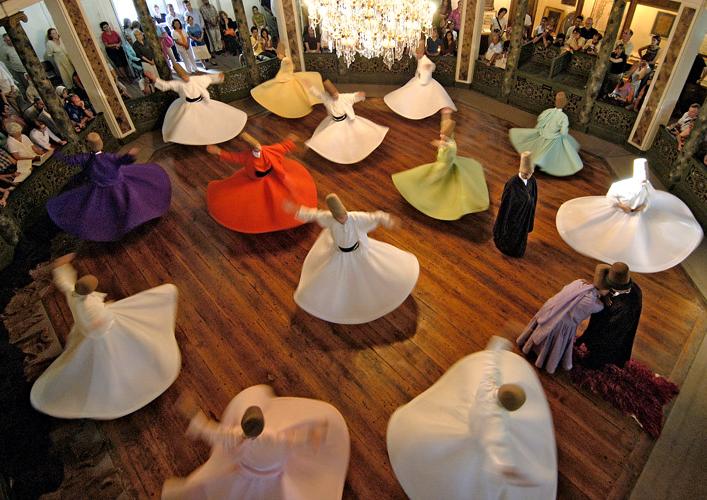 🇹🇷 Turkey and 3 moreSufi whirling
A meditative spinning dance practiced by Sufi dervishes during worship ceremoniesRitual dance · Solo · Group
🇸🇦 Saudi Arabia and 1 moreMezmarمزمار
A group stick dance with drumming and singing from western Saudi ArabiaFolk dance · Group
🇹🇷 Turkey and 3 moreSufi whirling
A meditative spinning dance practiced by Sufi dervishes during worship ceremoniesRitual dance · Solo · Group
🇸🇦 Saudi Arabia and 1 moreMezmarمزمار
A group stick dance with drumming and singing from western Saudi ArabiaFolk dance · Group
Its cousins elsewhere
All folk dances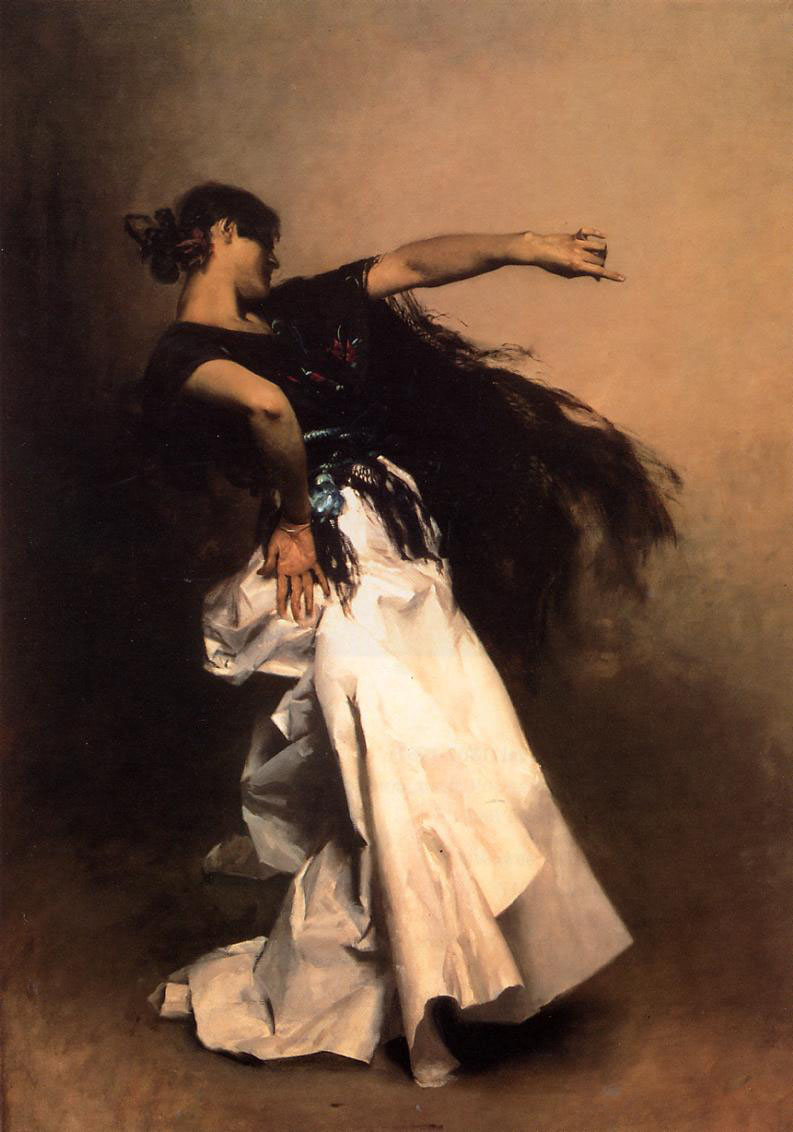 🇪🇸 SpainFlamenco
A dramatic dance and music tradition rooted in Andalusia's gitano and folk culturesFolk dance · Solo · Group
🇪🇸 SpainFlamenco
A dramatic dance and music tradition rooted in Andalusia's gitano and folk culturesFolk dance · Solo · Group
 🇦🇷 Argentina and 1 moreTango
A partner dance from the Río de la Plata, danced in close or open embraceSocial dance · Couple
🇦🇷 Argentina and 1 moreTango
A partner dance from the Río de la Plata, danced in close or open embraceSocial dance · Couple
 🇦🇹 Austria and 4 moreWaltz
A turning couple dance in triple time, first popular in 18th-century EuropeBallroom or Latin dance · Couple
🇦🇹 Austria and 4 moreWaltz
A turning couple dance in triple time, first popular in 18th-century EuropeBallroom or Latin dance · Couple
 🇮🇳 India and 1 moreFolk dance
Traditional group dances rooted in local life and passed down through generationsFolk dance · Group · Circle
🇮🇳 India and 1 moreFolk dance
Traditional group dances rooted in local life and passed down through generationsFolk dance · Group · Circle