
Cotillion
In its own language: cotillon
A square formation social dance popular in eighteenth-century Europe and America.
The cotillion is a social dance that spread across Europe and North America during the eighteenth century. Groups of four couples arranged themselves in a square pattern, swapping partners through set sequences while attending formal balls.
Watch it dancedShare on WhatsApp
- Four couples danced in a square pattern during the eighteenth century.
- The name likely references an underskirt or a song about petticoats.
- Dancers swapped partners repeatedly while following a caller’s directions.
- The style evolved into the quadrille and American square dance.
- Instructional manuals were widely published to teach the changing figures.
What is Cotillion?
A cotillion is a social dance that spread across Europe and North America during the eighteenth century. Groups of four couples arranged themselves in a square pattern. Dancers moved through set sequences while swapping partners. The style blended English country steps with French elegance, though many participants simply walked the figures. It served as a lively conclusion to formal balls before fading from high society fashion.
Where does Cotillion come from?
The term comes from the French word for an underskirt. One theory suggests the dance was named after lyrics asking whether the petticoat showed while moving. Another claims the skirt lifted during the steps. The choreography appeared in France around the start of the seventeen hundreds. It crossed into England by the mid-century and reached American colonies shortly after. Dancing masters published manuals to track the growing number of patterns. The form eventually evolved into the quadrille and later influenced American square dancing.
How is Cotillion danced?
Four couples stood facing inward on a square floor. A caller or leading couple directed shifts between fixed figures and spontaneous changes. Dancers often began in a large ring before breaking into smaller circles or chains. Partners traded places repeatedly throughout the sequence. Some instructors taught light jumps and gliding steps, while others favored the measured walk of a minuet. Many attendees treated the footwork as optional, focusing instead on navigating the changing formations.
Cotillion, drawn
The music of Cotillion
Performances followed simple rhythmic cycles of two-four time. Tunes typically lasted eight measures, occasionally stretching to sixteen. The melodies supported the shifting partner exchanges and circular movements without demanding complex accompaniment. As the dance matured, musicians adapted older country dance rhythms to match the new patterns. Later versions sometimes paired the figures with waltzes or mazurkas during private gatherings.
Costume and what is carried
Participants wore the formal evening wear typical of their era. Women dressed in gowns with layered skirts, while men wore tailcoats and breeches. The name itself hints at the importance of the lower garments, as dancers needed room to move without tangling their hems. Later iterations occasionally featured masks or themed attire for costume balls. The clothing allowed freedom for walking, turning, and stepping across the floor.


When and where Cotillion is danced
Hosts placed the cotillion near the end of evening celebrations. Families and friends gathered in private homes or public halls to practice the steps. Young adults used the partner swaps to meet potential matches. The dance remained popular among upper-class circles until the early eighteen hundreds. Afterward, it survived in regional communities and school events, gradually simplifying into local folk traditions.
Styles of Cotillion
Early versions emphasized strict geometric patterns and rapid partner trading. The German cotillion added more couples and playful games to the routine. In Britain, the form slowly merged with the quadrille, which allowed half the group to rest while the other performed. American hosts eventually applied the name to debutante balls and community square dances. Regional schools developed different calling styles to guide the shifting formations.
What Cotillion means
The dance reflected the social etiquette of its time. Mastering the steps signaled refinement and proper upbringing. Publishing houses produced instructional books to help amateurs navigate the complex routines. Literary works later referenced masked cotillions as atmospheric settings for mystery stories. Though no longer a mainstream ballroom staple, the choreographic ideas live on in modern folk dancing and historical reenactment groups.
Questions people ask about Cotillion
Where did the cotillion originate?
The dance emerged in France around the beginning of the eighteenth century. It quickly spread to England and the American colonies, becoming a staple of upper-class social gatherings before evolving into newer partner dances.
How many people dance the cotillion at once?
The original format required exactly four couples, totaling eight dancers. Later versions expanded to include more participants, especially when games or costume themes were added to the evening program.
What kind of music accompanies this dance?
Musicians played simple two-four time melodies lasting eight or sixteen measures. The rhythm supported steady walking and turning steps, allowing callers to direct partner swaps without complex instrumental backing.
Is the cotillion still practiced today?
It no longer appears in mainstream ballrooms, but historical reenactors and folk dance groups keep the steps alive. Modern square dancing and debutante events also preserve elements of the original choreography.
Good reading and sources
- Cotillion on WikipediaEncyclopedia
- More photos and video on Wikimedia CommonsPhotos and video
- Wikidata recordOpen data
- Videos of Cotillion on YouTubeSearch results, not chosen by Ghungroo
The facts on this page come from the Wikipedia article "Cotillion", written by its contributors and used under the CC BY-SA 4.0 licence, and from its Wikidata record (CC0). Ghungroo rewrote the text in its own words, with AI assistance, and compares every page with the article to make sure no passage is copied. It may be reused under the same CC BY-SA 4.0 licence with a link back.
It may contain mistakes, and it describes the dance in outline: it is not a lesson. Traditions differ from one teacher, village or family to the next. If something is wrong, tell us. Last refreshed 2026-10-04.
More from France
All the dances of France 🇵🇱 Poland and 3 morePolonaisePolonez, chodzony
A stately walking dance in triple time, opening Polish celebrations and ballsFolk dance · Couple · Procession
🇵🇱 Poland and 3 morePolonaisePolonez, chodzony
A stately walking dance in triple time, opening Polish celebrations and ballsFolk dance · Couple · Procession
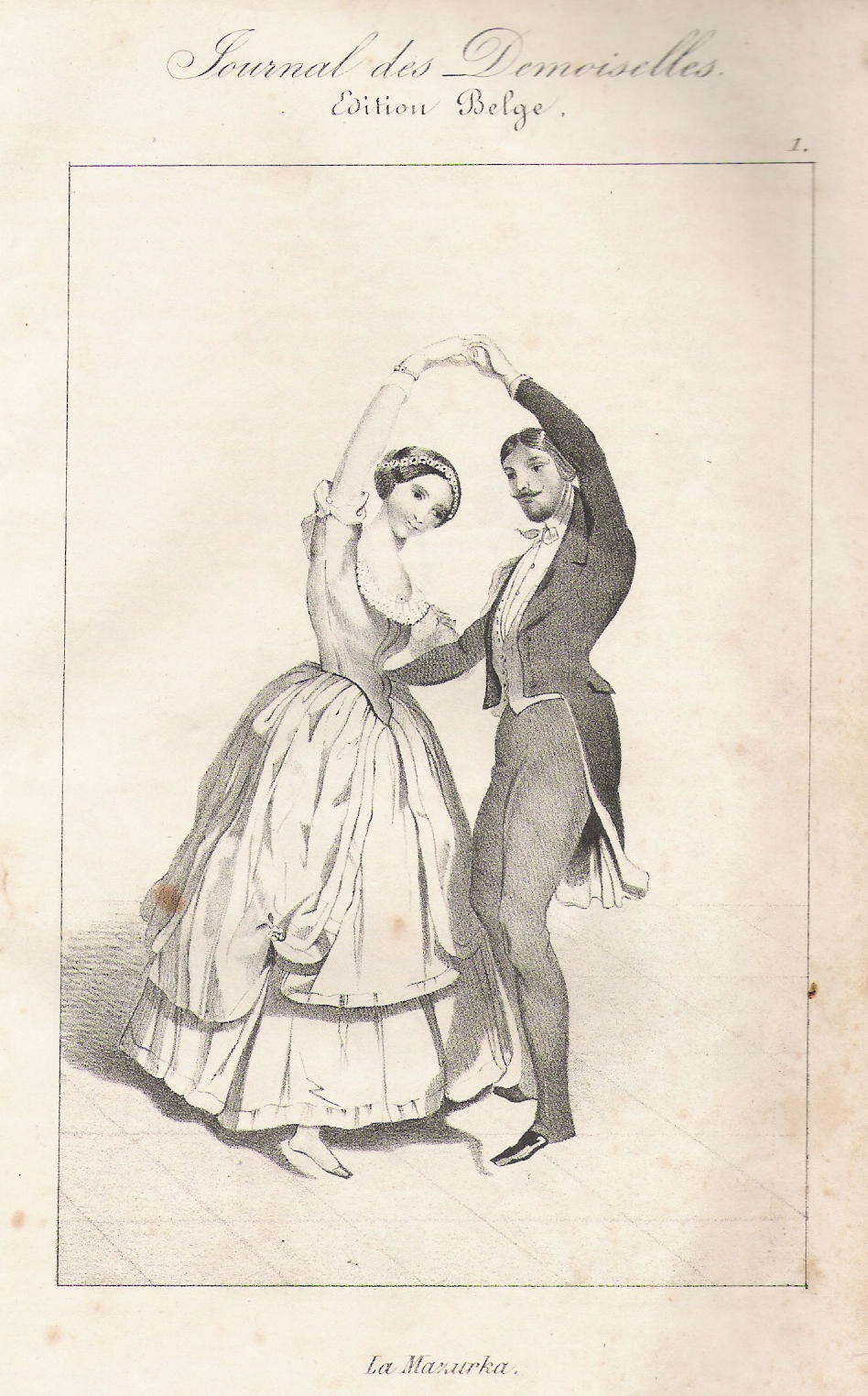 🇵🇱 Poland and 5 moreMazurka
A lively Polish folk dance in triple time, known for its shifting accentsFolk dance · Couple · Group
🇫🇷 FranceMinuetmenuet
A French social dance for two people in triple time, known for its graceful and controlled steps.Social dance · Couple
🇵🇱 Poland and 5 moreMazurka
A lively Polish folk dance in triple time, known for its shifting accentsFolk dance · Couple · Group
🇫🇷 FranceMinuetmenuet
A French social dance for two people in triple time, known for its graceful and controlled steps.Social dance · Couple
 🇫🇷 France and 1 moreCan-can
A high-energy French dance featuring vigorous kicks and skirt manipulation.Social dance · Couple · Group
🇫🇷 France and 1 moreCan-can
A high-energy French dance featuring vigorous kicks and skirt manipulation.Social dance · Couple · Group
Its cousins elsewhere
All social dances 🇦🇷 Argentina and 1 moreTango
A partner dance from the Río de la Plata, danced in close or open embraceSocial dance · Couple
🇦🇷 Argentina and 1 moreTango
A partner dance from the Río de la Plata, danced in close or open embraceSocial dance · Couple
 🇮🇳 India and 1 moreFolk dance
Traditional group dances rooted in local life and passed down through generationsFolk dance · Group · Circle
🇮🇳 India and 1 moreFolk dance
Traditional group dances rooted in local life and passed down through generationsFolk dance · Group · Circle
 🇪🇬 Egypt and 3 moreBelly danceرقص شرقي
A Middle Eastern dance focused on hip and torso articulation.Folk dance · Solo
🇪🇬 Egypt and 3 moreBelly danceرقص شرقي
A Middle Eastern dance focused on hip and torso articulation.Folk dance · Solo
 🇦🇷 Argentina and 1 moreArgentine tango
A partner dance from Buenos Aires suburbs, defined by the bandoneon and an intimate embrace.Social dance · Couple
🇦🇷 Argentina and 1 moreArgentine tango
A partner dance from Buenos Aires suburbs, defined by the bandoneon and an intimate embrace.Social dance · Couple