
Gavotte
A French dance with skipping steps, once danced in lines or circles at court and in villages
The gavotte is a French dance that began as a folk tradition and later became popular in royal courts, especially during the 17th and 18th centuries. Dancers perform in lines or circles with lively, skipping steps to music in duple or quadruple time, and it has appeared in both social gatherings and stage works.
Watch it dancedShare on WhatsApp
- Originated among the Gavot people in southeastern France
- Danced in lines or circles with skipping steps
- Popular at the court of Louis XIV and in Baroque dance suites
- Music often in 4/4 or 2/2 time, sometimes with a bagpipe-like drone
- Folk and court versions differ in steps and style
What is Gavotte?
The gavotte is a French dance that began in rural communities and later became a favorite at royal courts. It is danced in lines or circles, with steps that include small jumps and skips. The music is steady and lively, often in duple or quadruple time. In its courtly form, the dance is elegant and measured, while folk versions can be more robust. The gavotte has also inspired many classical composers, who wrote pieces for both dance and listening.
Where does Gavotte come from?
The gavotte is named after the Gavot people from the Pays de Gap in Dauphiné, southeastern France, though some sources suggest it may have started in Lower Brittany, Provence, or the French Basque Country. It first appeared in the late 16th century as a folk dance and was soon adopted by the French court, especially under Louis XIV. Over time, it became a standard part of the Baroque dance suite, spreading throughout France and into other countries.
How is Gavotte danced?
Dancers perform the gavotte with alternating steps to the left and right, moving as a line or circle. Each sequence involves firm outward steps, drawing the feet together, and adding little jumps or skips. In the court style, the steps are precise, with some movements borrowed from other dances like the galliard. The group moves together, sometimes with figures or patterns, and the dance can include gestures such as presenting flowers.
Gavotte, drawn
The music of Gavotte
Gavotte music is usually in 4/4 or 2/2 time, though folk versions may use 9/8 or 5/8. The rhythm is steady, and in the 18th-century court style, phrases often begin on a half-bar upbeat. Earlier versions start on the downbeat. The music can be lively or more stately, and sometimes includes a musette section with a drone to imitate bagpipes. Many composers, including Bach and Lully, wrote gavottes for both dance and concert.
Costume and what is carried
There is no single costume for the gavotte, as it was danced both by villagers in everyday dress and by courtiers in elaborate attire. In the court, dancers wore the formal clothing of the era, which could include wigs, gowns, and suits. In folk settings, dancers wore regional or peasant clothing. Early court versions sometimes included props such as flowers.


When and where Gavotte is danced
The gavotte was danced at festivals, social gatherings, and court entertainments. In the countryside, it was a community dance, while at court it became part of formal balls and stage performances. It was also taught for social grace and appeared in theatrical works. The dance spread widely in France during the 17th and 18th centuries.
Styles of Gavotte
There are many regional and historical versions of the gavotte. In the Baroque period, it became a standard part of the dance suite, with composers writing their own interpretations. Folk gavottes in Brittany and other regions have their own steps and musical meters. Later, the name was used for unrelated 19th-century dances, but these do not resemble the original form.
What Gavotte means
The gavotte reflects both rural and aristocratic French culture. It began as a village dance and was transformed into a symbol of courtly refinement. Its presence in music by major composers and in literature and theatre shows its lasting influence. The dance has been referenced in popular culture, poetry, and even as a metaphor in other fields.
Questions people ask about Gavotte
Where does the gavotte come from?
The gavotte began in France, with possible origins among the Gavot people in Dauphiné, but some sources also mention Lower Brittany, Provence, or the French Basque Country.
When is the gavotte danced?
It was danced at festivals, social gatherings, and especially at court events in the 17th and 18th centuries. Folk versions are still performed in some regions.
What does the gavotte look like?
Dancers move in lines or circles, using steps with small jumps or skips, alternating directions. The style can be lively or stately, depending on the setting.
What kind of music is used for the gavotte?
Gavotte music is usually in 4/4 or 2/2 time, sometimes 9/8 or 5/8, with a steady rhythm. Baroque versions may include a musette section with a drone.
Who can dance the gavotte?
The dance has been performed by both men and women, in village and court settings, and the number and mix of dancers can vary.
Good reading and sources
- Gavotte on WikipediaEncyclopedia
- More photos and video on Wikimedia CommonsPhotos and video
- Wikidata recordOpen data
- Videos of Gavotte on YouTubeSearch results, not chosen by Ghungroo
The facts on this page come from the Wikipedia article "Gavotte", written by its contributors and used under the CC BY-SA 4.0 licence, and from its Wikidata record (CC0). Ghungroo rewrote the text in its own words, with AI assistance, and compares every page with the article to make sure no passage is copied. It may be reused under the same CC BY-SA 4.0 licence with a link back.
It may contain mistakes, and it describes the dance in outline: it is not a lesson. Traditions differ from one teacher, village or family to the next. If something is wrong, tell us. Last refreshed 2026-10-03.
More from France
All the dances of France 🇦🇹 Austria and 4 moreWaltz
A turning couple dance in triple time, first popular in 18th-century EuropeBallroom or Latin dance · Couple
🇦🇹 Austria and 4 moreWaltz
A turning couple dance in triple time, first popular in 18th-century EuropeBallroom or Latin dance · Couple
 🇧🇪 Belgium and 5 moreProcessional giant
Huge costumed figures carried and danced in European street processionsFolk dance · Solo · Procession
🇧🇪 Belgium and 5 moreProcessional giant
Huge costumed figures carried and danced in European street processionsFolk dance · Solo · Procession
 🇵🇱 Poland and 3 morePolonaisePolonez, chodzony
A stately walking dance in triple time, opening Polish celebrations and ballsFolk dance · Couple · Procession
🇵🇱 Poland and 3 morePolonaisePolonez, chodzony
A stately walking dance in triple time, opening Polish celebrations and ballsFolk dance · Couple · Procession
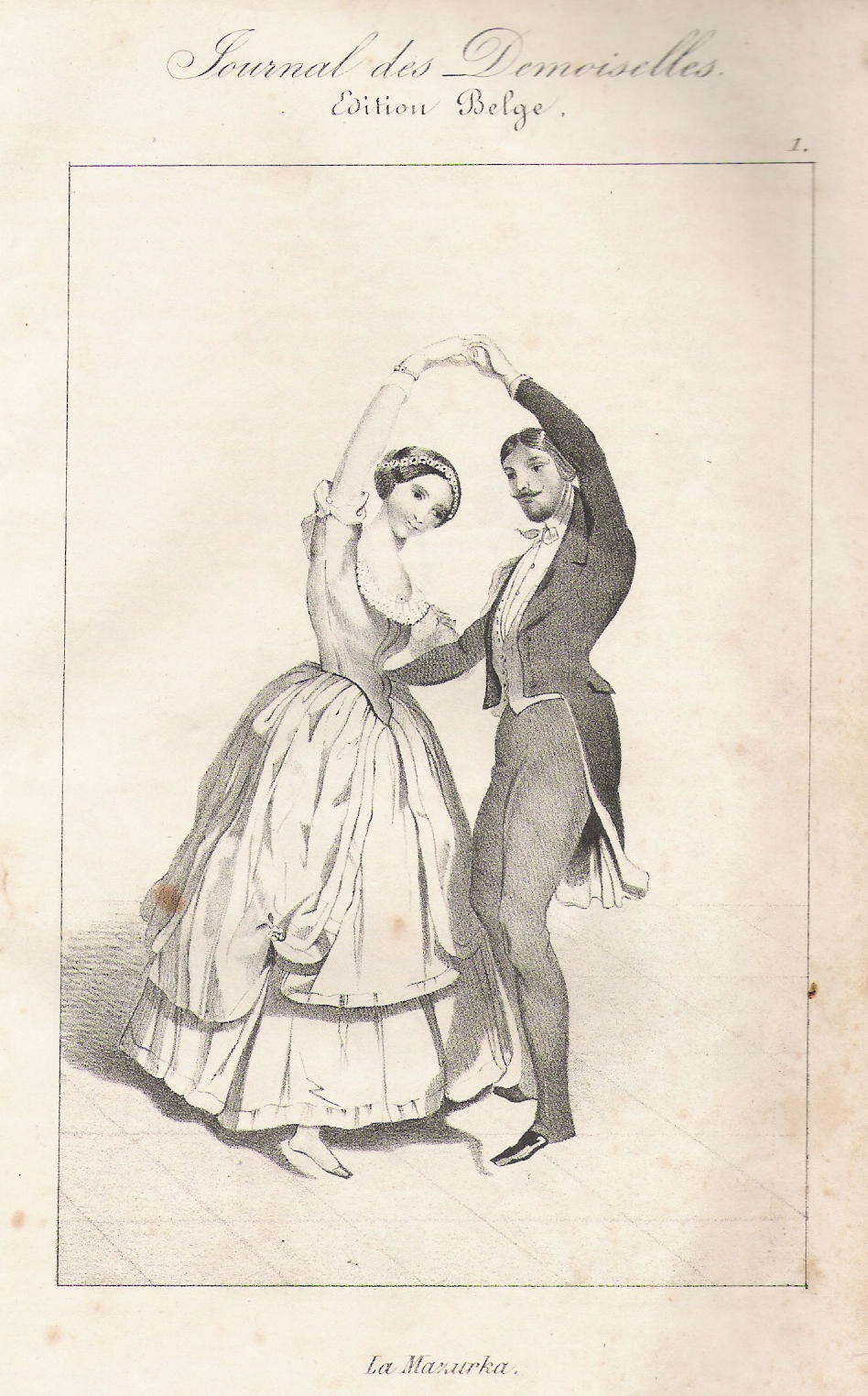 🇵🇱 Poland and 5 moreMazurka
A lively Polish folk dance in triple time, known for its shifting accentsFolk dance · Couple · Group
🇵🇱 Poland and 5 moreMazurka
A lively Polish folk dance in triple time, known for its shifting accentsFolk dance · Couple · Group
Its cousins elsewhere
All folk dances 🇦🇷 Argentina and 1 moreTango
A partner dance from the Río de la Plata, danced in close or open embraceSocial dance · Couple
🇦🇷 Argentina and 1 moreTango
A partner dance from the Río de la Plata, danced in close or open embraceSocial dance · Couple
 🇮🇳 India and 1 moreFolk dance
Traditional group dances rooted in local life and passed down through generationsFolk dance · Group · Circle
🇮🇳 India and 1 moreFolk dance
Traditional group dances rooted in local life and passed down through generationsFolk dance · Group · Circle
 🇧🇷 BrazilCapoeira
A Brazilian martial art that blends dance, acrobatics, and music in a circle gameWar or martial dance · Circle · Solo
🇧🇷 BrazilCapoeira
A Brazilian martial art that blends dance, acrobatics, and music in a circle gameWar or martial dance · Circle · Solo
 🇪🇬 Egypt and 3 moreBelly danceرقص شرقي
A Middle Eastern dance focused on hip and torso articulation.Folk dance · Solo
🇪🇬 Egypt and 3 moreBelly danceرقص شرقي
A Middle Eastern dance focused on hip and torso articulation.Folk dance · Solo