
Pendet
In its own language: ᬧᭂᬦ᭄ᬤᭂᬢ᭄
A Balinese dance where girls offer flowers to greet guests and spirits
Pendet is a traditional Balinese dance from Indonesia, performed mostly by young girls who carry bowls of flower petals. The dance is used to welcome guests or spirits, often before ceremonies or other dances, and is now seen at both temple rituals and social gatherings.
Watch it dancedShare on WhatsApp
- Dancers carry silver bowls filled with flower petals
- The dance welcomes both guests and spirits
- Pendet is rooted in Balinese Hindu temple rituals
- The current form was shaped in the 1950s
- Performed by groups of young girls
What is Pendet?
Pendet is a dance from Bali, Indonesia, where young girls move through temple courtyards holding small bowls filled with flowers. As they dance, they scatter the petals, marking the space as ready for ceremonies or welcoming those present. The dance is gentle and graceful, with simple steps and gestures. It is often performed in groups, creating a sense of unity and shared purpose. The music is played on Balinese instruments, adding a lively background to the dancers’ movements.
Where does Pendet come from?
Pendet comes from the island of Bali and is rooted in local Hindu practices. It began as a ritual connected to offering flowers at temples, expressing gratitude and joy for the presence of deities. Over time, the dance shifted from being strictly ceremonial to also serving as a way to greet guests at social events. The version most seen today was shaped in the 1950s by artists from Denpasar, who formalized the choreography and costumes. In 1962, the dance was performed by hundreds of dancers at the Asian Games opening ceremony in Jakarta.
How is Pendet danced?
The dance uses basic Balinese steps and hand movements, making it accessible to beginners. Dancers hold a silver bowl in their right hand, decorated with palm leaves and filled with colorful flowers. They move from one area to another, often following older dancers’ lead. The group scatters flower petals as they go, sometimes tossing them toward the audience at the end. The dance is learned by watching and copying, with older women guiding the younger girls.
Pendet, drawn
The music of Pendet
Pendet is accompanied by gamelan and gong, traditional Balinese instruments that produce a layered, resonant sound. The music sets the pace and mood, supporting the dancers as they move and scatter flowers. Sometimes incense is included in the offering bowls, adding a fragrant element to the ceremony. The rhythms are typical of Balinese performances, lively but not hurried.
Costume and what is carried
Dancers wear traditional Balinese dress, often in bright colors, and carry a small silver bowl (bokor) filled with flowers and sometimes incense. The bowl is decorated with young palm leaves. The costume is simple compared to other Balinese dances, focusing on the ritual aspect rather than elaborate ornamentation.


When and where Pendet is danced
Pendet is performed at temple ceremonies, especially during festivals, as well as at social gatherings to welcome guests. It is a regular part of religious life in Bali, but has also become a feature of cultural shows and tourist events. The dance is usually passed down informally, with girls learning by imitation from older women in their community.
Styles of Pendet
The dance was originally performed by four or five girls, but larger group versions have been created for special occasions. In 1962, a mass performance involved over 800 dancers. While it began as a temple ritual, Pendet is now also performed at hotels and public events, sometimes with changes in choreography or the number of dancers.
What Pendet means
Pendet holds an important place in Balinese Hindu practice, symbolizing welcome and spiritual cleansing. It is seen as both a religious act and a gesture of hospitality. The dance is a source of pride for Balinese people and is often featured in cultural presentations. Its transformation from a temple ritual to a broader welcoming dance reflects changes in Balinese society and tourism.
Questions people ask about Pendet
Where does Pendet come from?
Pendet originates from Bali, Indonesia, and is closely tied to Balinese Hindu traditions and temple rituals.
Who usually performs the Pendet dance?
It is most often danced by young girls, sometimes guided by older women, especially during ceremonies and festivals.
When is Pendet danced?
Pendet is performed at temple ceremonies, festivals, and also at social events to greet guests or mark the start of other dances.
What do the dancers carry?
Each dancer holds a small silver bowl decorated with palm leaves and filled with flower petals, which are scattered during the dance.
What music is used for Pendet?
The dance is accompanied by Balinese gamelan and gong, creating a lively and layered musical background.
Good reading and sources
- Pendet dance on WikipediaEncyclopedia
- More photos and video on Wikimedia CommonsPhotos and video
- Wikidata recordOpen data
- Videos of Pendet on YouTubeSearch results, not chosen by Ghungroo
The facts on this page come from the Wikipedia article "Pendet dance", written by its contributors and used under the CC BY-SA 4.0 licence, and from its Wikidata record (CC0). Ghungroo rewrote the text in its own words, with AI assistance, and compares every page with the article to make sure no passage is copied. It may be reused under the same CC BY-SA 4.0 licence with a link back.
It may contain mistakes, and it describes the dance in outline: it is not a lesson. Traditions differ from one teacher, village or family to the next. If something is wrong, tell us. Last refreshed 2026-10-03.
More from Indonesia
All the dances of Indonesia 🇨🇳 China and 5 moreLion dance舞獅
A costumed dance that mimics a lion to bring luck and drive away evilFolk dance · Group · Procession
🇨🇳 China and 5 moreLion dance舞獅
A costumed dance that mimics a lion to bring luck and drive away evilFolk dance · Group · Procession
 🇮🇩 IndonesiaLegongᬮᬾᬕᭀᬂ
A Balinese dance with intricate finger, foot and facial movementsFolk dance · Group
🇮🇩 IndonesiaLegongᬮᬾᬕᭀᬂ
A Balinese dance with intricate finger, foot and facial movementsFolk dance · Group
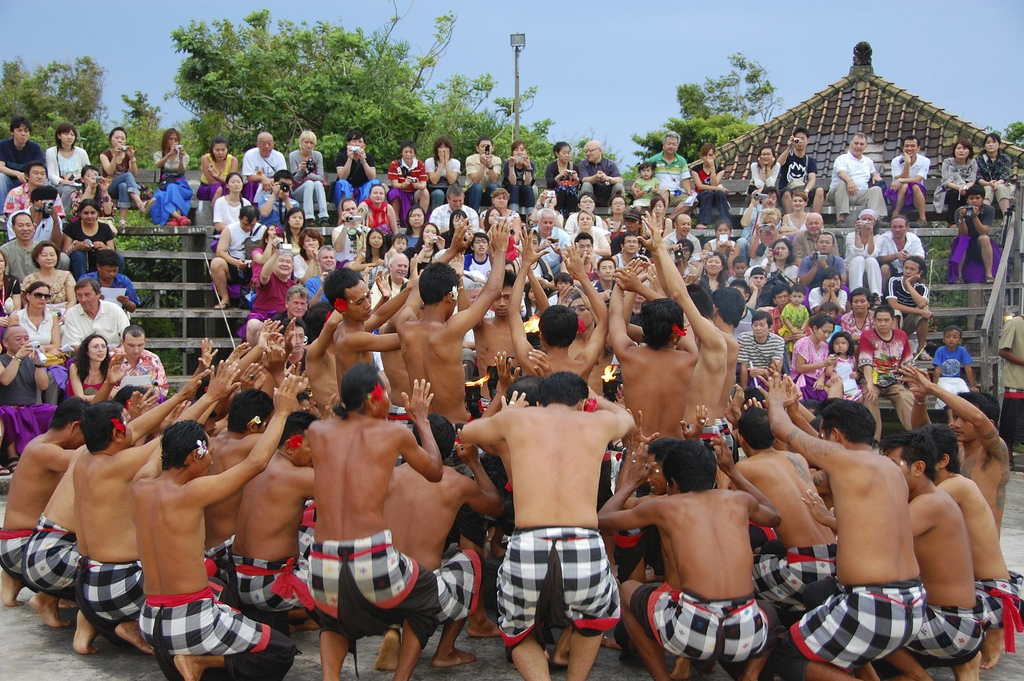 🇮🇩 IndonesiaKecakᬓᬾᬘᬓ᭄
A massed chant and dance-drama from Bali, performed in a circle at duskFolk dance · Circle · Group
🇮🇩 IndonesiaKecakᬓᬾᬘᬓ᭄
A massed chant and dance-drama from Bali, performed in a circle at duskFolk dance · Circle · Group
 🇨🇳 China and 6 morePeacock dance
A folk dance imitating the peacock, found across South and Southeast AsiaFolk dance · Solo · Group
🇨🇳 China and 6 morePeacock dance
A folk dance imitating the peacock, found across South and Southeast AsiaFolk dance · Solo · Group
Its cousins elsewhere
All folk dances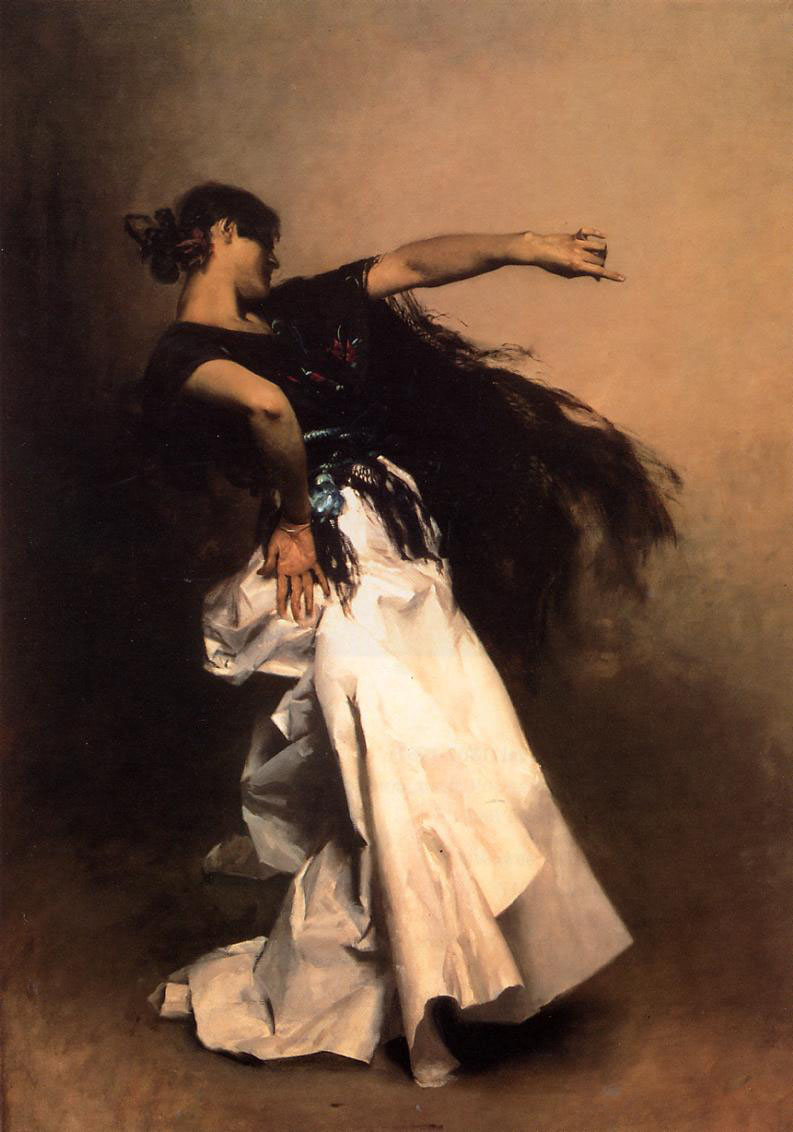 🇪🇸 SpainFlamenco
A dramatic dance and music tradition rooted in Andalusia's gitano and folk culturesFolk dance · Solo · Group
🇪🇸 SpainFlamenco
A dramatic dance and music tradition rooted in Andalusia's gitano and folk culturesFolk dance · Solo · Group
 🇦🇷 Argentina and 1 moreTango
A partner dance from the Río de la Plata, danced in close or open embraceSocial dance · Couple
🇦🇷 Argentina and 1 moreTango
A partner dance from the Río de la Plata, danced in close or open embraceSocial dance · Couple
 🇦🇹 Austria and 4 moreWaltz
A turning couple dance in triple time, first popular in 18th-century EuropeBallroom or Latin dance · Couple
🇦🇹 Austria and 4 moreWaltz
A turning couple dance in triple time, first popular in 18th-century EuropeBallroom or Latin dance · Couple
 🇧🇷 BrazilCapoeira
A Brazilian martial art that blends dance, acrobatics, and music in a circle gameWar or martial dance · Circle · Solo
🇧🇷 BrazilCapoeira
A Brazilian martial art that blends dance, acrobatics, and music in a circle gameWar or martial dance · Circle · Solo