
Lion dance
In its own language: 舞獅
A costumed dance that mimics a lion to bring luck and drive away evil
Lion dance is a traditional performance where dancers in a lion costume imitate the animal's movements to bring good fortune and ward off bad spirits. Originating in China, it is now found across East and Southeast Asia, often performed at Lunar New Year, festivals, and important community events. Usually, two performers animate the lion to the beat of drums, cymbals, and gongs.
Watch it dancedShare on WhatsApp
- Usually performed by two dancers inside a lion costume
- Accompanied by drum, cymbal, and gong
- Seen at Lunar New Year and major celebrations
- Northern and Southern styles have distinct looks and moves
- Linked to martial arts schools and acrobatics
What is Lion dance?
Lion dance is a traditional performance where dancers wear a large, elaborate lion costume and move in ways that suggest a lion's character. The dance is usually done by two people: one controls the head, the other the tail. Movements can be playful, fierce, or acrobatic, and the lion may interact with the audience or props. The dance is accompanied by loud, rhythmic drumming, gongs, and cymbals, creating an energetic atmosphere. Lion dance is seen at festivals, openings, and ceremonies in Chinese and other Asian communities.
Where does Lion dance come from?
The lion dance has roots in ancient Chinese masked dances, but the lion itself is not native to China. The dance likely arrived from India or Persia through Central Asia, as suggested by the word for lion in Chinese. Early mentions appear in Han dynasty texts, and by the Tang dynasty, the lion dance was recognized as a foreign performance. The Southern Lion, now widespread in Southeast Asia, developed later in Guangdong, possibly during the Ming dynasty, adapting local myths and traditions.
How is Lion dance danced?
The lion costume is animated by two dancers: one manipulates the head, making the mouth, eyes, and ears move, while the other moves the tail. The pair work closely to mimic a lion’s steps, jumps, and playful or fierce gestures. Acrobatics are common, especially in the Northern style, with stunts like balancing on platforms or balls. The Southern style uses martial arts stances and footwork, and the lion may 'eat' lettuce or interact with objects as part of the performance.
Lion dance, drawn
The music of Lion dance
Lion dance is performed to strong, lively rhythms played on a large drum, gongs, and cymbals. The music sets the pace and highlights the lion’s actions, with patterns that match the dance style. In some styles, specific drum beats are designed to follow the lion’s movements, making the dance and music tightly connected. The sound is loud and festive, intended to drive away bad spirits and bring excitement.
Costume and what is carried
The lion costume is large and colorful, with a head made from papier-mâché over a bamboo or modern frame, decorated with fur, paint, and sometimes sequins. The body is a long cloth trimmed with fur, covering both dancers. Northern lions are shaggier and resemble dogs, while Southern lions have a single horn and ornate features. The costume may include bells or other decorations, and dancers wear matching pants and shoes.


When and where Lion dance is danced
Lion dance is most often seen during Lunar New Year, but also at weddings, business openings, religious festivals, and special celebrations. It is performed to bring luck, celebrate, or honor guests. In many places, lion dance troupes are linked to martial arts schools, and performers train in both dance and acrobatics. The tradition is passed down in families, communities, and schools, especially in Chinese diaspora communities.
Styles of Lion dance
There are two main Chinese styles: Northern and Southern Lion. The Northern Lion is shaggier, often performed in pairs as male and female, and features acrobatics. The Southern Lion, from Guangdong, is the most widespread, with substyles like Fut San and Hok San, each with distinct head shapes and movements. Other regions and ethnic groups in China have their own versions, and related dances are found in Japan, Vietnam, Korea, and beyond.
What Lion dance means
Lion dance is a symbol of good fortune and protection in Chinese and other Asian cultures. It is a key part of community celebrations and identity, especially among overseas Chinese. The dance is also linked to martial arts, with many troupes coming from kung fu schools. In some places, it has become a competitive performance, with troupes showcasing skill and creativity. The dance continues to evolve, blending tradition with new styles and materials.
Questions people ask about Lion dance
Where does the lion dance come from?
Lion dance originated in China, with early forms appearing in the Han and Tang dynasties. It may have been influenced by traditions from India or Persia and has spread to many Asian countries.
When is lion dance performed?
It is most often performed during Lunar New Year, but also at weddings, business openings, festivals, and other important events to bring luck and drive away evil.
How is the lion dance performed?
Two dancers work together inside a lion costume, with one controlling the head and the other the tail. They mimic a lion’s movements to music played on drums, gongs, and cymbals.
What are the main styles of lion dance?
The two main types are the Northern Lion, which is shaggier and acrobatic, and the Southern Lion, which is more common outside China and has a single horn and martial arts-based moves.
Why is lion dance important?
Lion dance is believed to bring good fortune, ward off evil, and is a symbol of community and cultural identity, especially among Chinese and other Asian communities.
Good reading and sources
- Lion dance on WikipediaEncyclopedia
- More photos and video on Wikimedia CommonsPhotos and video
- Wikidata recordOpen data
- Videos of Lion dance on YouTubeSearch results, not chosen by Ghungroo
The facts on this page come from the Wikipedia article "Lion dance", written by its contributors and used under the CC BY-SA 4.0 licence, and from its Wikidata record (CC0). Ghungroo rewrote the text in its own words, with AI assistance, and compares every page with the article to make sure no passage is copied. It may be reused under the same CC BY-SA 4.0 licence with a link back.
It may contain mistakes, and it describes the dance in outline: it is not a lesson. Traditions differ from one teacher, village or family to the next. If something is wrong, tell us. Last refreshed 2026-10-03.
More from China
All the dances of China 🇺🇸 United States and 4 morePole dance
A vertical acrobatic dance combining strength and artistry on a chrome or steel column.Social dance · Solo
🇺🇸 United States and 4 morePole dance
A vertical acrobatic dance combining strength and artistry on a chrome or steel column.Social dance · Solo
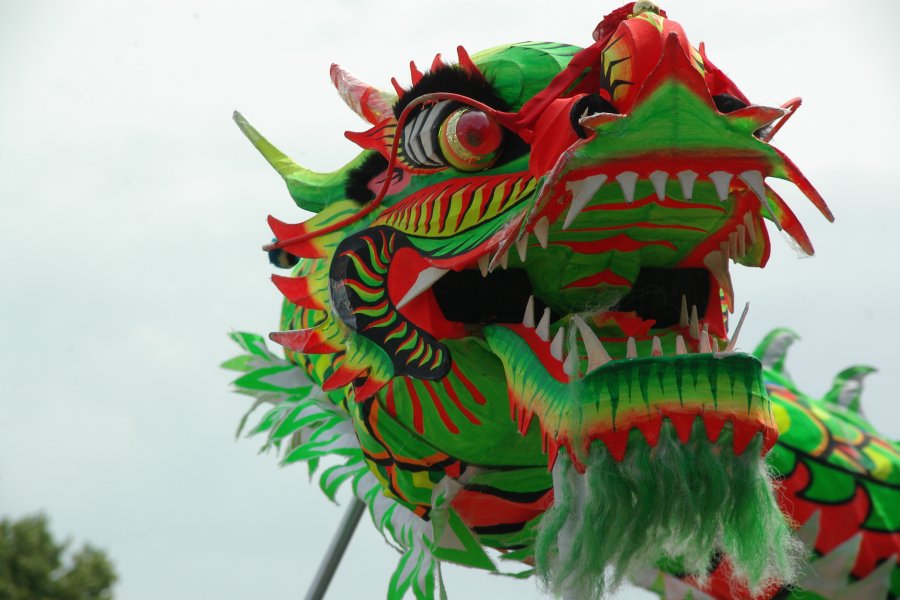 🇨🇳 ChinaDragon dance舞龙 / 舞龍
A team dance with a giant dragon puppet, seen at Chinese New Year and festivalsFolk dance · Group · Procession
🇨🇳 ChinaDragon dance舞龙 / 舞龍
A team dance with a giant dragon puppet, seen at Chinese New Year and festivalsFolk dance · Group · Procession
 🇰🇷 South Korea and 2 morePungmul풍물
A Korean folk performance with drumming, dance, and song, rooted in farming lifeFolk dance · Group · Solo
🇰🇷 South Korea and 2 morePungmul풍물
A Korean folk performance with drumming, dance, and song, rooted in farming lifeFolk dance · Group · Solo
 🇨🇳 China and 6 morePeacock dance
A folk dance imitating the peacock, found across South and Southeast AsiaFolk dance · Solo · Group
🇨🇳 China and 6 morePeacock dance
A folk dance imitating the peacock, found across South and Southeast AsiaFolk dance · Solo · Group
Its cousins elsewhere
All folk dances 🇧🇪 Belgium and 5 moreProcessional giant
Huge costumed figures carried and danced in European street processionsFolk dance · Solo · Procession
🇧🇪 Belgium and 5 moreProcessional giant
Huge costumed figures carried and danced in European street processionsFolk dance · Solo · Procession
 🇧🇧 BarbadosBarbados Land-ship
A parade and dance tradition in Barbados, mimicking naval maneuvers on landFolk dance · Group · Procession
🇧🇧 BarbadosBarbados Land-ship
A parade and dance tradition in Barbados, mimicking naval maneuvers on landFolk dance · Group · Procession
 🇫🇷 FranceFarandolefarandola
A long chain dance of Provence, led by a drummer with a tambourine and flute.Folk dance · Group
🇫🇷 FranceFarandolefarandola
A long chain dance of Provence, led by a drummer with a tambourine and flute.Folk dance · Group
 🇬🇧 United Kingdom and 5 moreMorris dance
A group folk dance from England, with bells, sticks or handkerchiefsFolk dance · Group · Procession
🇬🇧 United Kingdom and 5 moreMorris dance
A group folk dance from England, with bells, sticks or handkerchiefsFolk dance · Group · Procession