
Reog
In its own language: ꦫꦺꦪꦺꦴꦒ꧀
A Javanese dance drama featuring a massive lion mask carried by the teeth of a strongman.
Reog is a traditional folk performance from East Java, Indonesia, known for its heavy lion mask and mystical themes. It originated in Ponorogo and depicts stories of royal struggle and mythical battles, often performed during local festivals and celebrations.
Watch it dancedShare on WhatsApp
- The lion mask weighs up to 40 kg and is held by the dancer's teeth.
- Originated in Ponorogo, East Java, during the Majapahit era.
- UNESCO inscribed it on the urgent safeguarding list in December 2024.
- Features dancers riding woven bamboo horses in a trance-like state.
- Controversy exists between Indonesia and Malaysia over its cultural ownership.
What is Reog?
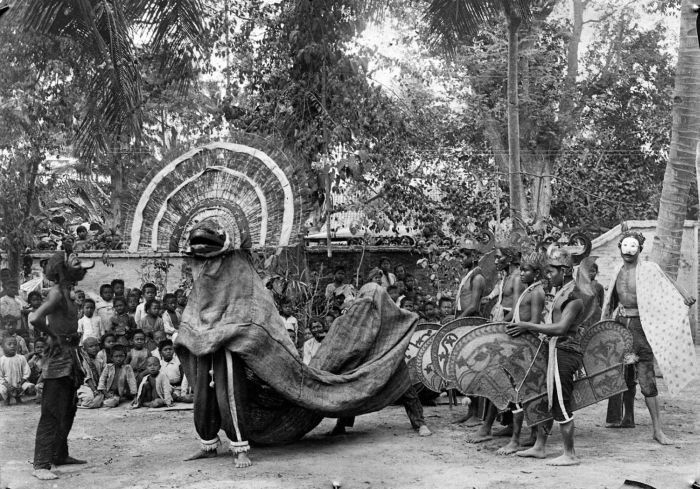
Reog is a vibrant folk performance from the northwestern part of East Java, Indonesia. The show centers on a dancer called a warok who carries a massive lion mask using only his teeth. This central figure is surrounded by masked men, young riders on bamboo horses, and other performers. The dance blends physical strength with spiritual elements, creating a spectacle that entertains crowds while maintaining deep cultural roots.
Where does Reog come from?
The dance traces back to the 15th-century Majapahit Empire. One theory suggests it satirized the incompetence of the king, represented by the lion, and the queen, represented by peacock feathers. Another legend credits Ki Ageng Kutu, who used Reog to hide political resistance against the corrupt ruler Kertabhumi. Over time, the storyline evolved to include tales of Prince Klono Sewandono seeking a princess, blending history with folklore.
How is Reog danced?
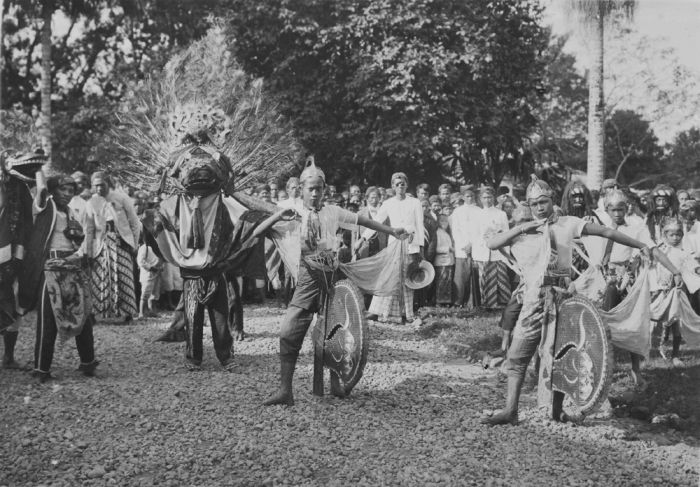
The performance features three main parts. First, rough men in black costumes perform an opening act. Next, dancers ride woven bamboo horses in a style similar to Kuda Lumping. Finally, the warok enters carrying the heavy Singo Barong mask. He supports the weight with his jaw and neck muscles, sometimes even lifting another dancer onto the mask. The movements are powerful and acrobatic, demonstrating immense physical control.
Reog, drawn
The music of Reog
The accompaniment relies on gamelan, a traditional ensemble of percussion instruments. The rhythmic cycles drive the energy of the performance, matching the intensity of the dancers. The music sets the mood for both the playful segments and the intense moments where dancers enter trance-like states.
Costume and what is carried
The most striking element is the Singo Barong mask, made from tiger or leopard skin and topped with real peacock feathers. Weighing up to 40 kilograms, it spans over two meters wide. Other dancers wear colorful outfits, with some donning red masks to represent fierce characters. Riders on bamboo horses wear bright, youthful attire.


When and where Reog is danced
Reog is performed at weddings, independence day parades, and religious holidays like Eid al-Fitr. It is also a staple of the annual National Reog Festival in Ponorogo. Historically, the warok underwent strict spiritual training and rituals. Today, performances are more secular, though the mystical reputation remains. Troupes travel internationally, bringing the art to audiences worldwide.
Styles of Reog
The original form included gemblak, young boys who played specific roles. Modern regulations and social changes have replaced these male dancers with women. A similar tradition exists in Malaysia called Barongan, which sparked diplomatic disputes over cultural ownership. Malaysian versions incorporate Islamic elements, while Indonesian Reog retains its Javanese mysticism.
What Reog means
In 2013, Indonesia recognized Reog as a national intangible cultural heritage. In December 2024, UNESCO added it to the list of traditions needing urgent safeguarding. The dance is a source of pride for Ponorogo, symbolizing local identity and resilience. Despite controversies regarding its historical origins and social practices, it remains a vital part of Indonesian performing arts.
Days Reog is danced for
Questions people ask about Reog
What is Reog?
Reog is a traditional Javanese dance-drama from Ponorogo, Indonesia. It features a large lion mask carried by a strongman's teeth and includes masked dancers and bamboo horse riders.
Where did Reog originate?
It originated in Ponorogo, a region in East Java. The dance reflects the history and culture of the Majapahit Empire and the local people's resistance to central rule.
Why is the mask so important?
The Singo Barong mask is the centerpiece. Made of animal skin and peacock feathers, it can weigh over 40 kg. The dancer supports it with their jaw, showcasing supernatural strength.
When is Reog performed?
It is danced at festivals, weddings, and national holidays like Independence Day. The annual Reog Festival in Ponorogo is a major event celebrating this heritage.
Is Reog still practiced today?
Yes, though modern versions have changed. Female dancers now replace the traditional young male roles due to social shifts. It remains a key part of Indonesian cultural identity.
Good reading and sources
- Reog on WikipediaEncyclopedia
- More photos and video on Wikimedia CommonsPhotos and video
- Wikidata recordOpen data
- Videos of Reog on YouTubeSearch results, not chosen by Ghungroo
The facts on this page come from the Wikipedia article "Reog", written by its contributors and used under the CC BY-SA 4.0 licence, and from its Wikidata record (CC0). Ghungroo rewrote the text in its own words, with AI assistance, and compares every page with the article to make sure no passage is copied. It may be reused under the same CC BY-SA 4.0 licence with a link back.
It may contain mistakes, and it describes the dance in outline: it is not a lesson. Traditions differ from one teacher, village or family to the next. If something is wrong, tell us. Last refreshed 2026-10-03.
More from Indonesia
All the dances of Indonesia 🇨🇳 China and 5 moreLion dance舞獅
A costumed dance that mimics a lion to bring luck and drive away evilFolk dance · Group · Procession
🇨🇳 China and 5 moreLion dance舞獅
A costumed dance that mimics a lion to bring luck and drive away evilFolk dance · Group · Procession
 🇮🇩 IndonesiaLegongᬮᬾᬕᭀᬂ
A Balinese dance with intricate finger, foot and facial movementsFolk dance · Group
🇮🇩 IndonesiaLegongᬮᬾᬕᭀᬂ
A Balinese dance with intricate finger, foot and facial movementsFolk dance · Group
 🇮🇩 IndonesiaKecakᬓᬾᬘᬓ᭄
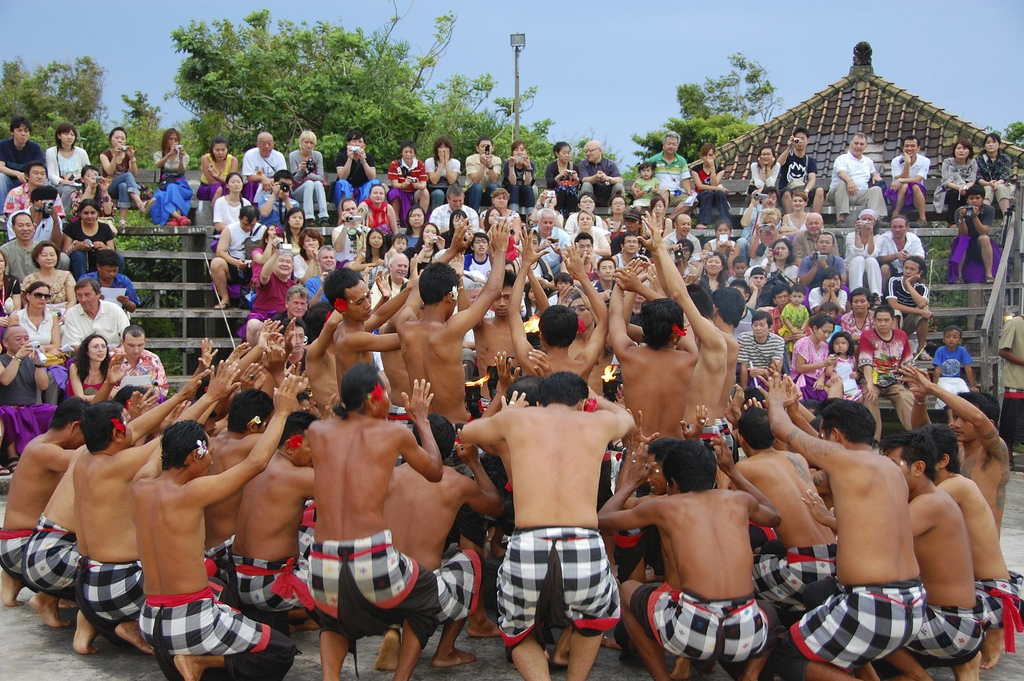
A massed chant and dance-drama from Bali, performed in a circle at duskFolk dance · Circle · Group
🇮🇩 IndonesiaKecakᬓᬾᬘᬓ᭄
A massed chant and dance-drama from Bali, performed in a circle at duskFolk dance · Circle · Group
 🇮🇩 IndonesiaPendetᬧᭂᬦ᭄ᬤᭂᬢ᭄
A Balinese dance where girls offer flowers to greet guests and spiritsFolk dance · Group
🇮🇩 IndonesiaPendetᬧᭂᬦ᭄ᬤᭂᬢ᭄
A Balinese dance where girls offer flowers to greet guests and spiritsFolk dance · Group
Its cousins elsewhere
All folk dances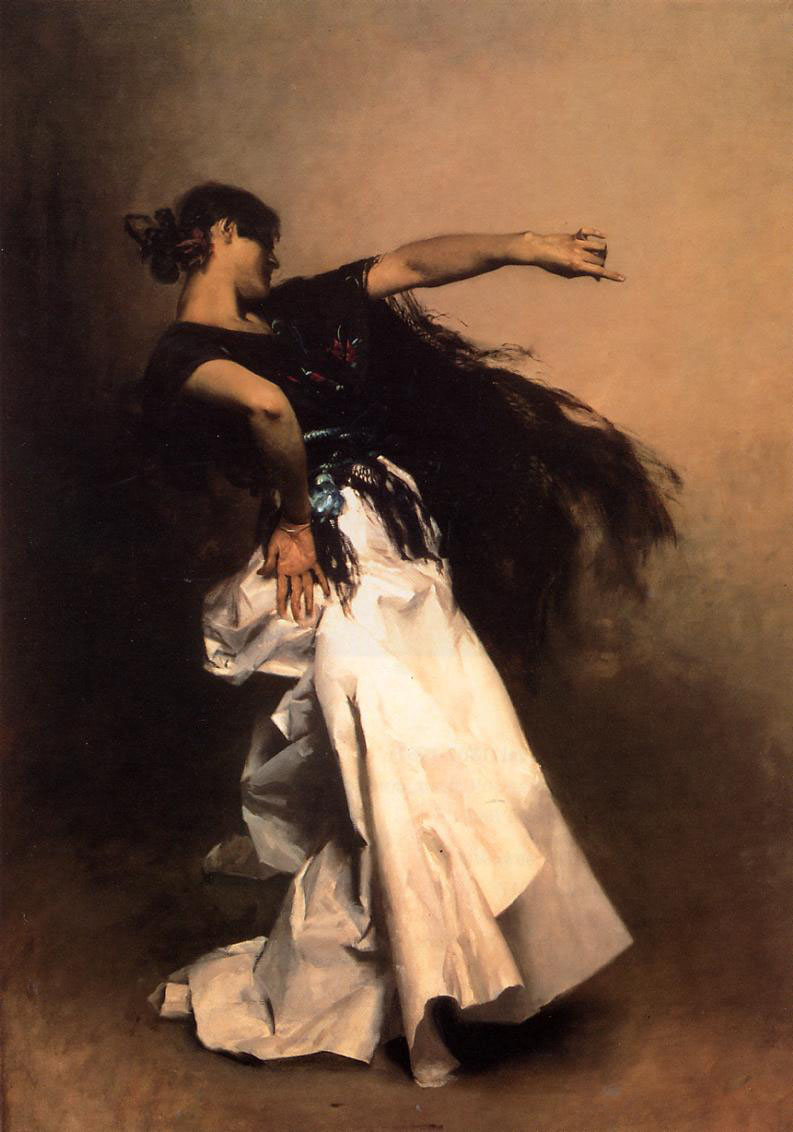 🇪🇸 SpainFlamenco
A dramatic dance and music tradition rooted in Andalusia's gitano and folk culturesFolk dance · Solo · Group
🇪🇸 SpainFlamenco
A dramatic dance and music tradition rooted in Andalusia's gitano and folk culturesFolk dance · Solo · Group
 🇦🇷 Argentina and 1 moreTango
A partner dance from the Río de la Plata, danced in close or open embraceSocial dance · Couple
🇦🇷 Argentina and 1 moreTango
A partner dance from the Río de la Plata, danced in close or open embraceSocial dance · Couple
 🇦🇹 Austria and 4 moreWaltz
A turning couple dance in triple time, first popular in 18th-century EuropeBallroom or Latin dance · Couple
🇦🇹 Austria and 4 moreWaltz
A turning couple dance in triple time, first popular in 18th-century EuropeBallroom or Latin dance · Couple
 🇧🇷 BrazilCapoeira
A Brazilian martial art that blends dance, acrobatics, and music in a circle gameWar or martial dance · Circle · Solo
🇧🇷 BrazilCapoeira
A Brazilian martial art that blends dance, acrobatics, and music in a circle gameWar or martial dance · Circle · Solo