
Sarabande
In its own language: zarabanda
A triple-meter dance that evolved from a lively Spanish folk form to a slow Baroque court staple.
The sarabande began as the zarabanda in sixteenth-century Spain, a spirited partner dance with Arab roots and castanets. It later settled into France as a dignified, measured movement for aristocratic gatherings.
Watch it dancedShare on WhatsApp
- First mentioned in a 1539 Panamanian poem.
- Banned in Spain in 1583 for being indecent.
- Evolved from lively couple dance to slow court form.
- Standard third movement in Baroque dance suites.
- Used by Bach, Handel, and Debussy in compositions.
What is Sarabande?
This is a dance performed in three-beat time, known originally as the zarabanda. Early versions featured couples moving in lively double lines while shaking castanets. The style shifted over time, eventually becoming a slower, more formal movement favored by European nobility.
Where does Sarabande come from?
The dance first appeared in Central America in 1539 within a Panamanian poem. Scholars trace its roots to Spain, where it absorbed Arab influences. Some writers linked it to ancient Greek rituals, though this remains debated. It gained fame in the sixteenth and seventeenth centuries across Spanish territories before spreading northward.
How is Sarabande danced?
Original steps involved energetic movement by pairs holding castanets. Later French interpretations slowed the pace significantly, turning it into a stately courtly affair. Dancers moved with measured grace rather than the initial liveliness of the folk version.
Sarabande, drawn
The music of Sarabande
Composers used the form extensively during the Baroque era. It often served as the third movement in instrumental suites, usually followed by a faster jig. Famous musicians like Bach and Handel wrote notable pieces featuring this rhythm, sometimes using it as the emotional center of their works.
Costume and what is carried
Early dancers wore attire suitable for active movement and held castanets in their hands. Later court versions required formal dress appropriate for aristocratic social gatherings. Specific fabric details are not recorded in the sources.
When and where Sarabande is danced
It started as popular entertainment in Spanish colonies and Spain itself. Authorities once banned it due to its perceived indecency, but it remained a favorite in literature and social settings. It later became a standard feature in classical music performances and stage suites.
Styles of Sarabande
The dance evolved from a fast folk style to a slow court piece. Composers revived the form in later centuries, adapting it for organ, piano, and ballet. Modern films have also used famous musical settings of the sarabande for dramatic effect.
What Sarabande means
The dance faced moral opposition in Spain, with critics calling it indecent and linking it to hell. Despite bans, it persisted in culture and inspired many musical compositions. Its journey from a controversial folk dance to a refined classical staple marks its unique history.
Questions people ask about Sarabande
Where did the sarabande originate?
It originated in Spain with Arab influences, first appearing in writing in Panama in 1539. It spread through Spanish colonies and Europe over the next two centuries.
How did the tempo change over time?
It began as a lively dance with castanets. By the seventeenth century, it transformed into a slow, dignified movement preferred at royal courts in France.
Why was the sarabande controversial?
Religious leaders called it indecent and ugly. A priest described it as exciting bad emotions, leading to a ban in Spain in 1583 despite its popularity.
What instruments accompany the dance?
Early versions used castanets. Later musical settings featured harpsichords, violins, cellos, and organs, especially during the Baroque period.
Good reading and sources
- Sarabande on WikipediaEncyclopedia
- More photos and video on Wikimedia CommonsPhotos and video
- Wikidata recordOpen data
- Videos of Sarabande on YouTubeSearch results, not chosen by Ghungroo
The facts on this page come from the Wikipedia article "Sarabande", written by its contributors and used under the CC BY-SA 4.0 licence, and from its Wikidata record (CC0). Ghungroo rewrote the text in its own words, with AI assistance, and compares every page with the article to make sure no passage is copied. It may be reused under the same CC BY-SA 4.0 licence with a link back.
It may contain mistakes, and it describes the dance in outline: it is not a lesson. Traditions differ from one teacher, village or family to the next. If something is wrong, tell us. Last refreshed 2026-10-03.
More from Spain
All the dances of Spain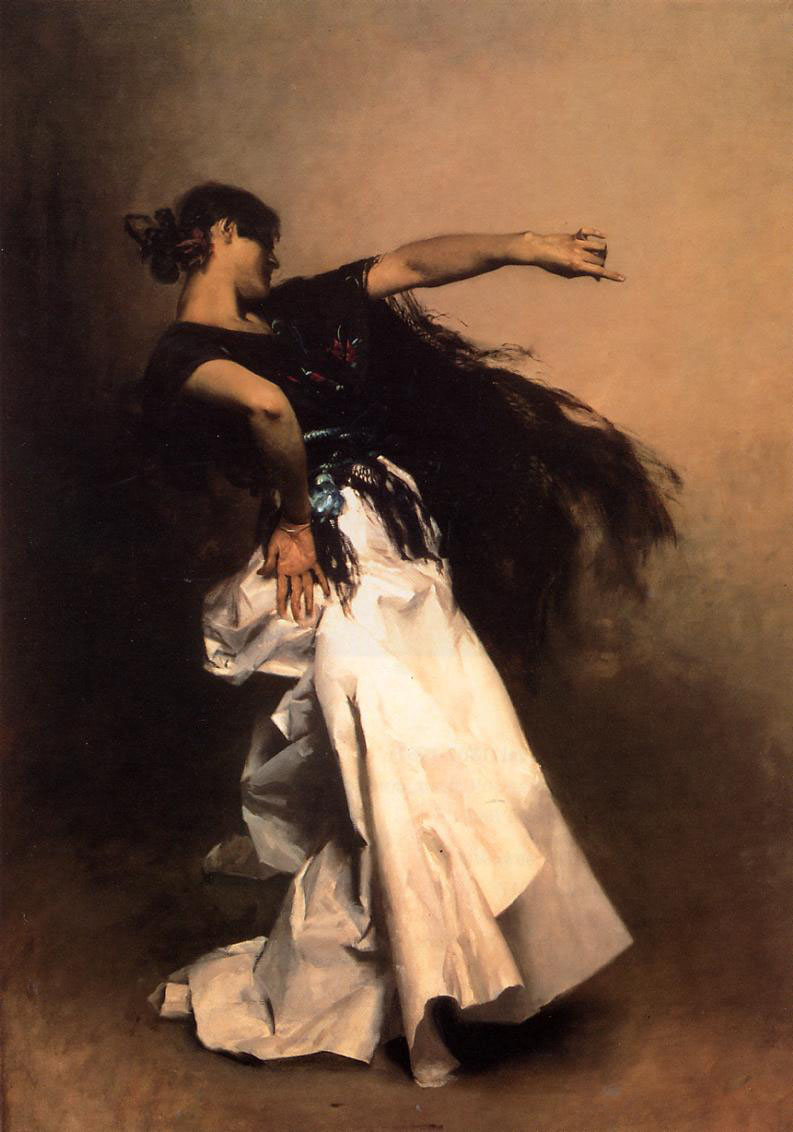 🇪🇸 SpainFlamenco
A dramatic dance and music tradition rooted in Andalusia's gitano and folk culturesFolk dance · Solo · Group
🇪🇸 SpainFlamenco
A dramatic dance and music tradition rooted in Andalusia's gitano and folk culturesFolk dance · Solo · Group
 🇧🇪 Belgium and 5 moreProcessional giant
Huge costumed figures carried and danced in European street processionsFolk dance · Solo · Procession
🇧🇪 Belgium and 5 moreProcessional giant
Huge costumed figures carried and danced in European street processionsFolk dance · Solo · Procession
 🇪🇸 Spain and 5 morePasodoble
A dramatic Spanish partner dance set to march-like music, echoing the bullfightFolk dance · Couple · Group
🇪🇸 Spain and 5 morePasodoble
A dramatic Spanish partner dance set to march-like music, echoing the bullfightFolk dance · Couple · Group
 🇮🇹 Italy and 3 morePavanepavana
A slow, processional couple dance of the European Renaissance.Court dance · Procession · Couple
🇮🇹 Italy and 3 morePavanepavana
A slow, processional couple dance of the European Renaissance.Court dance · Procession · Couple
Its cousins elsewhere
All folk dances 🇦🇷 Argentina and 1 moreTango
A partner dance from the Río de la Plata, danced in close or open embraceSocial dance · Couple
🇦🇷 Argentina and 1 moreTango
A partner dance from the Río de la Plata, danced in close or open embraceSocial dance · Couple
 🇮🇳 India and 1 moreFolk dance
Traditional group dances rooted in local life and passed down through generationsFolk dance · Group · Circle
🇮🇳 India and 1 moreFolk dance
Traditional group dances rooted in local life and passed down through generationsFolk dance · Group · Circle
 🇧🇷 BrazilCapoeira
A Brazilian martial art that blends dance, acrobatics, and music in a circle gameWar or martial dance · Circle · Solo
🇧🇷 BrazilCapoeira
A Brazilian martial art that blends dance, acrobatics, and music in a circle gameWar or martial dance · Circle · Solo
 🇪🇬 Egypt and 3 moreBelly danceرقص شرقي
A Middle Eastern dance focused on hip and torso articulation.Folk dance · Solo
🇪🇬 Egypt and 3 moreBelly danceرقص شرقي
A Middle Eastern dance focused on hip and torso articulation.Folk dance · Solo