
Varsovienne
A nineteenth-century ballroom sequence dance defined by its signature pause step
The Varsovienne is a nineteenth-century ballroom sequence dance for couples that originated in Paris and spread across the world. Dancers perform gliding footwork in triple time, punctuating the smooth patterns with a characteristic pause where they point the toe or heel.
Watch it dancedShare on WhatsApp
- Premiered at the Salle Paganini in Paris in November 1852 with music by Francisco Alonso.
- Features a signature pause where dancers hold a pointed heel or toe for one or two beats.
- Frequently misidentified as a waltz despite its origins as a 3/4 mazurka.
- Hotel founder Conrad Hilton danced the varsovienne for good luck at hotel openings.
- Featured as a key theatrical element in Tennessee Williams's A Streetcar Named Desire.
What is Varsovienne?
The Varsovienne, also called the Varsoviana, is a nineteenth-century round partner dance set to lively triple-metre music. Dancers move together in set sequences across the ballroom floor. Its most recognisable feature is a rhythmic stop during which partners hold their foot outward with the heel or toe extended for a beat or two. This pause distinguishes it from other round dances of its era. Often confused with a waltz, it was initially built on the rhythm of a Polish mazurka with accents falling on the second or third beat. Couples across Europe, the Americas, and Australasia embraced its combination of gliding steps and dramatic pauses.
Where does Varsovienne come from?
A French newspaper announced the debut of the dance at Paris's Salle Paganini in November 1852. The Spanish composer Francisco Alonso wrote the original score and likely designed the accompanying steps, initially imagining a Spanish aesthetic. Around this period, Poland was ruled by Russia, and Frédéric Chopin had made mazurkas widely popular to support Polish nationhood. As a result, the name Varsoviana, referencing Warsaw, became closely linked with the mazurka rhythm. By 1853, the dance had arrived in London, where publisher Alphonse Leduc marketed his own arrangement accompanied by the first English written instructions.
How is Varsovienne danced?
Danced by couples, the routine consists of two sections spanning sixteen musical measures. In the opening figure, the lead dancer slides one foot forward in a gliding motion, follows with a cutting step, springs onto the leading foot, and gathers both feet together before holding a stillness. The subsequent figure repeats a shorter four-bar phrase punctuated by a rest at the end. The defining physical action across all variants is this sudden halt, where dancers freeze their posture while holding a pointed heel or toe off the floor. This clear stop ties the physical routine tightly to its accompanying melody.
Varsovienne, drawn
The music of Varsovienne
The dance is played in 3/4 time, featuring strong rhythmic accents on either the second or third beat of each measure. Though commonly misidentified as a waltz, the music developed as a mazurka. Its melodies are closely intertwined with specific titles and regional songs such as Mascando Chicote, Jan Pierewiet, and Turkey Rhubarb. Recordings include releases by Henry Ford's Dance Orchestra and the Albion Dance Band.
Costume and what is carried
Early sheet music published in London depicted a woman dressed in traditional Polish clothing, helping cement the public perception of the dance as Polish rather than Spanish. Aside from period ballroom attire or regional folk clothing in places where it became a social tradition, the sources do not prescribe a uniform costume.
When and where Varsovienne is danced
Originating in nineteenth-century urban ballrooms, the dance transitioned into traditional social gatherings worldwide. In the United States, industrialist Henry Ford promoted it as part of Old Time dance programmes, placing it between quadrille or square dance sets. British dancers kept it in social repertoires into the 1970s. In northwestern Ireland, dancers in County Donegal actively practice it during local couple-dancing revivals.
Styles of Varsovienne
As the dance migrated across several continents, communities adapted both the choreography and its name. In Ireland it became known as Shoe the Donkey, while American and British dancers used nicknames such as Put your Little Foot and Cock your Leg Up. These colloquial titles highlight the playful pause motif. In Spanish-speaking areas, the shortened name La Va emerged alongside local lyrical versions.
What Varsovienne means
Beyond social halls, the piece holds notable cultural footprints. It appears prominently as a dramatic musical element in Tennessee Williams's play A Streetcar Named Desire. Hotelier Conrad Hilton adopted the dance as a personal good-luck custom, performing it to mark the openings of his hotels. In County Donegal, it remains an emblem of regional couple-dance preservation.
Questions people ask about Varsovienne
Where did the Varsovienne come from?
The dance was created in Paris, premiering at the Salle Paganini in November 1852. Spanish-born composer Francisco Alonso wrote the melody and likely devised the original steps, which quickly spread across Europe, the Americas, and Australasia.
When and why is the Varsovienne danced?
Originally created for mid-nineteenth-century ballroom society, it later became a popular social dance at Old Time gatherings and folk revivals. Dancers also performed it as a sequence dance between square formations, while hotelier Conrad Hilton danced it at hotel openings.
What makes the Varsovienne distinct from other ballroom dances?
Its most notable feature is an unexpected pause motif. During this break in movement, partners freeze and extend a toe or heel for up to two beats. This signature step sets it apart from typical continuous waltzes or mazurkas.
Why does the dance have so many different names?
As it travelled globally, communities renamed it after regional folk songs or described its signature rest. Popular alternative names include Shoe the Donkey in Ireland, La Va in Spanish, and Put your Little Foot in English-speaking areas.
Good reading and sources
- Varsovienne on WikipediaEncyclopedia
- Wikidata recordOpen data
- Videos of Varsovienne on YouTubeSearch results, not chosen by Ghungroo
The facts on this page come from the Wikipedia article "Varsovienne", written by its contributors and used under the CC BY-SA 4.0 licence, and from its Wikidata record (CC0). Ghungroo rewrote the text in its own words, with AI assistance, and compares every page with the article to make sure no passage is copied. It may be reused under the same CC BY-SA 4.0 licence with a link back.
It may contain mistakes, and it describes the dance in outline: it is not a lesson. Traditions differ from one teacher, village or family to the next. If something is wrong, tell us. Last refreshed 2026-10-04.
More from France
All the dances of France 🇦🇹 Austria and 4 moreWaltz
A turning couple dance in triple time, first popular in 18th-century EuropeBallroom or Latin dance · Couple
🇦🇹 Austria and 4 moreWaltz
A turning couple dance in triple time, first popular in 18th-century EuropeBallroom or Latin dance · Couple
 🇵🇱 Poland and 3 morePolonaisePolonez, chodzony
A stately walking dance in triple time, opening Polish celebrations and ballsFolk dance · Couple · Procession
🇵🇱 Poland and 3 morePolonaisePolonez, chodzony
A stately walking dance in triple time, opening Polish celebrations and ballsFolk dance · Couple · Procession
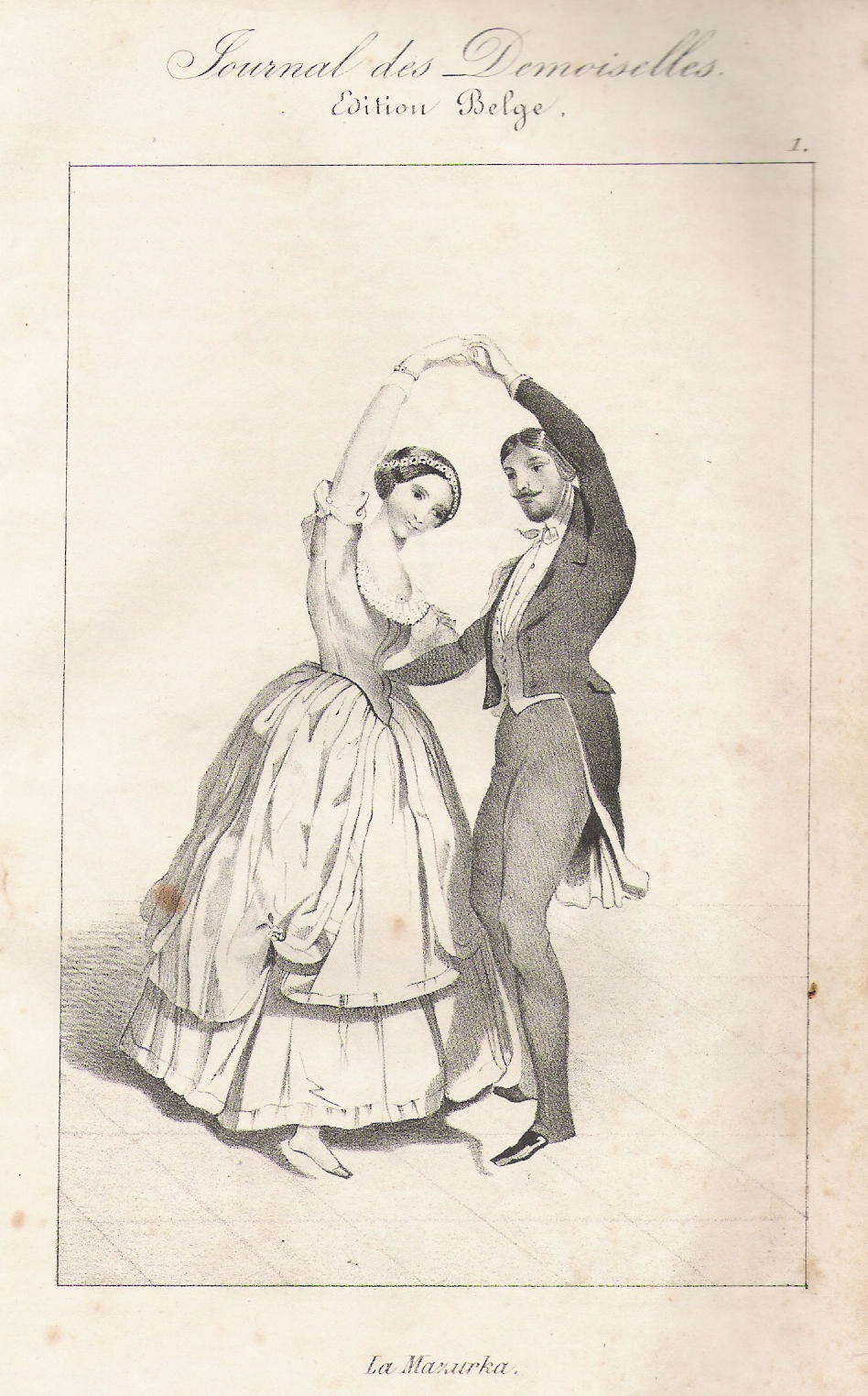 🇵🇱 Poland and 5 moreMazurka
A lively Polish folk dance in triple time, known for its shifting accentsFolk dance · Couple · Group
🇫🇷 FranceMinuetmenuet
A French social dance for two people in triple time, known for its graceful and controlled steps.Social dance · Couple
🇵🇱 Poland and 5 moreMazurka
A lively Polish folk dance in triple time, known for its shifting accentsFolk dance · Couple · Group
🇫🇷 FranceMinuetmenuet
A French social dance for two people in triple time, known for its graceful and controlled steps.Social dance · Couple
Its cousins elsewhere
All ballroom and latin 🇺🇸 United States and 1 moreRhumba
A slow ballroom dance developed in the US from Cuban rhythms and big band music.Ballroom or Latin dance · Couple
🇺🇸 United States and 1 moreRhumba
A slow ballroom dance developed in the US from Cuban rhythms and big band music.Ballroom or Latin dance · Couple
 🇦🇷 Argentina and 1 moreTango
A partner dance from the Río de la Plata, danced in close or open embraceSocial dance · Couple
🇦🇷 Argentina and 1 moreTango
A partner dance from the Río de la Plata, danced in close or open embraceSocial dance · Couple
 🇺🇸 United StatesFoxtrot
A smooth ballroom partner dance that travels around the floor to big band musicBallroom or Latin dance · Couple
🇺🇸 United StatesFoxtrot
A smooth ballroom partner dance that travels around the floor to big band musicBallroom or Latin dance · Couple
 🇨🇺 Cuba and 2 moreCha-cha-cha
A Cuban partner dance with a shuffling triple step, danced to a steady four-four beat.Social dance · Couple
🇨🇺 Cuba and 2 moreCha-cha-cha
A Cuban partner dance with a shuffling triple step, danced to a steady four-four beat.Social dance · Couple