
Bar
A group folk dance from Eastern Anatolia, performed side-by-side with linked arms.
Bar is a Turkish folk dance rooted in the Eastern Anatolia region. Dancers link hands or shoulders to form lines, moving together to the sounds of davul drums and zurna pipes. The tradition spans several provinces including Erzurum and Kars.
Watch it dancedShare on WhatsApp
- Dancers link arms or shoulders in lines.
- Accompanied by davul and zurna instruments.
- Common in 5/8 and 9/8 time signatures.
- Practiced in Eastern Anatolian provinces.
- Name derives from Armenian for 'dance'.
What is Bar?
This dance involves groups performing outdoors in open spaces. Participants stand side-by-side, linking hands, shoulders, or arms to maintain formation. Both men and women take part, though their specific movements may differ. The style relies on collective coordination rather than solo display.
Where does Bar come from?
The term originates from the Armenian word for dance. It is practiced throughout Eastern Anatolia, particularly in provinces like Artvin, Ardahan, Erzurum, Bayburt, Ağrı, Kars, and Erzincan. The name reflects linguistic connections between local communities.
How is Bar danced?
Dancers arrange themselves in lines, holding onto one another’s shoulders or arms. They move as a single unit across the ground. The formation requires steady synchronization among all participants. Men and women may execute distinct variations within this shared structure.
Bar, drawn
The music of Bar
The rhythm is driven by the davul drum and the shrill tone of the zurna pipe. Common time signatures include five-eight and nine-eight beats. Six-eight and twelve-eight measures appear occasionally. The nine-eight pattern is especially characteristic of the region's folk music.
Costume and what is carried
The sources do not describe specific clothing, masks, or accessories worn during the performance. Traditional attire details are absent from the provided material.
When and where Bar is danced
The dance is performed socially in open areas across Eastern Anatolia. It serves as a communal activity for residents of the region. No specific religious festivals or seasonal events are mentioned in the text.
Styles of Bar
Male and female versions of the dance exist separately. These variations reflect gender-specific roles within the same structural framework. Regional differences exist across the listed provinces.
What Bar means
The dance holds significance in Eastern Anatolian culture. A well-known song associated with it is called 'Atabarı'. The practice demonstrates the musical and social traditions of the area.
Questions people ask about Bar
Where does the Bar dance come from?
It originates in the Eastern Anatolia region of Turkey, specifically in provinces such as Erzurum, Kars, and Artvin. The name comes from the Armenian word for dance.
How are the dancers arranged?
They perform in groups outdoors, standing side-by-side. Participants hold each other's hands, shoulders, or arms to maintain a connected line formation.
What instruments play for this dance?
The primary instruments are the davul drum and the zurna, a loud wind instrument. These provide the rhythmic foundation for the movement.
Who performs the Bar dance?
Both men and women participate. There are distinct variations for male and female dancers, but both groups perform in the same linked formation.
Good reading and sources
- Bar (dance) on WikipediaEncyclopedia
- Wikidata recordOpen data
- Videos of Bar on YouTubeSearch results, not chosen by Ghungroo
The facts on this page come from the Wikipedia article "Bar (dance)", written by its contributors and used under the CC BY-SA 4.0 licence, and from its Wikidata record (CC0). Ghungroo rewrote the text in its own words, with AI assistance, and compares every page with the article to make sure no passage is copied. It may be reused under the same CC BY-SA 4.0 licence with a link back.
It may contain mistakes, and it describes the dance in outline: it is not a lesson. Traditions differ from one teacher, village or family to the next. If something is wrong, tell us. Last refreshed 2026-10-03.
More from Turkey
All the dances of Turkey 🇪🇬 Egypt and 3 moreBelly danceرقص شرقي
A Middle Eastern dance focused on hip and torso articulation.Folk dance · Solo
🇹🇷 Turkey and 1 moreHasapikoχασάπικο
A two-speed Greek folk dance from Constantinople, first danced by its butchersFolk dance
🇪🇬 Egypt and 3 moreBelly danceرقص شرقي
A Middle Eastern dance focused on hip and torso articulation.Folk dance · Solo
🇹🇷 Turkey and 1 moreHasapikoχασάπικο
A two-speed Greek folk dance from Constantinople, first danced by its butchersFolk dance
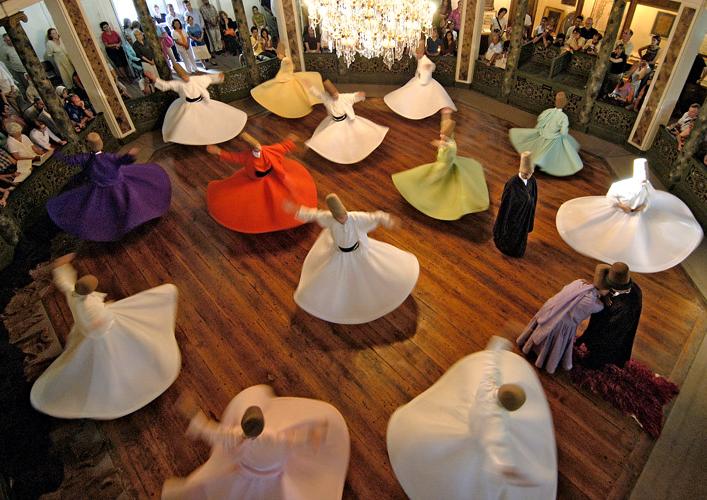 🇹🇷 Turkey and 3 moreSufi whirling
A meditative spinning dance practiced by Sufi dervishes during worship ceremoniesRitual dance · Solo · Group
🇹🇷 Turkey and 3 moreSufi whirling
A meditative spinning dance practiced by Sufi dervishes during worship ceremoniesRitual dance · Solo · Group
 🇹🇷 Turkey and 4 moreHalay
A group dance in lines or circles, led by music or singing at weddings and celebrationsFolk dance · Circle · Line or chain
🇹🇷 Turkey and 4 moreHalay
A group dance in lines or circles, led by music or singing at weddings and celebrationsFolk dance · Circle · Line or chain
Its cousins elsewhere
All folk dances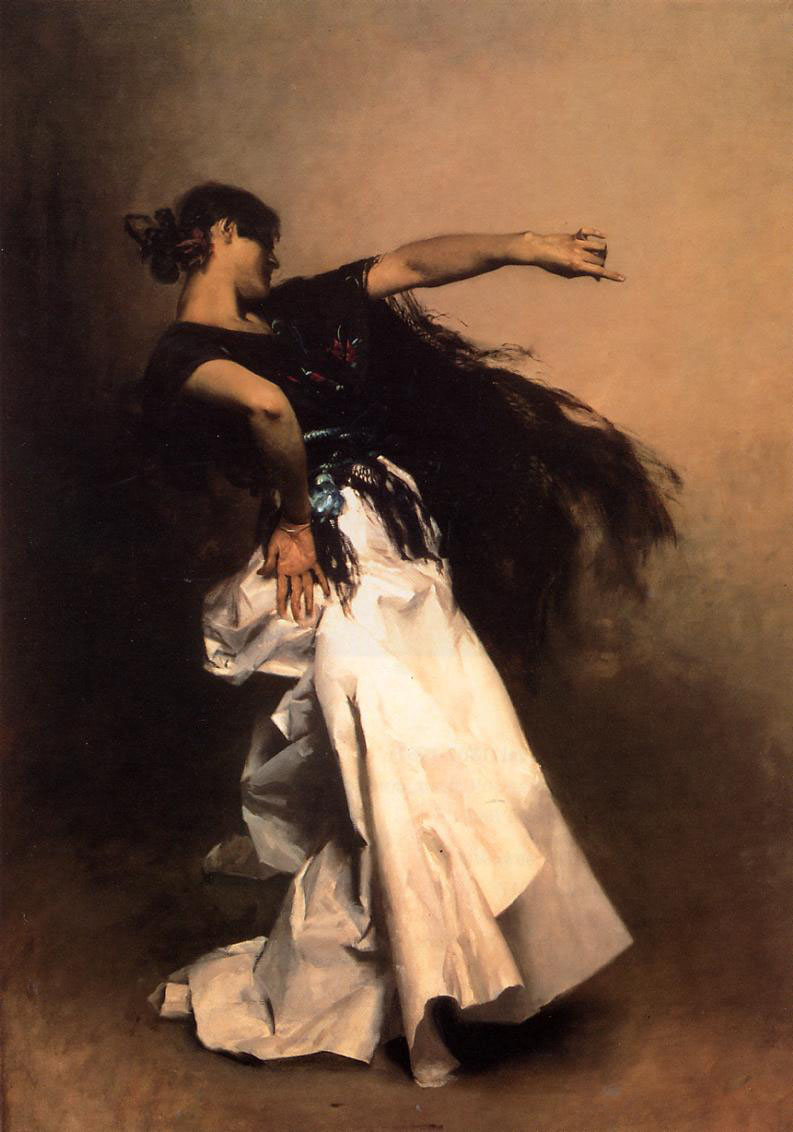 🇪🇸 SpainFlamenco
A dramatic dance and music tradition rooted in Andalusia's gitano and folk culturesFolk dance · Solo · Group
🇪🇸 SpainFlamenco
A dramatic dance and music tradition rooted in Andalusia's gitano and folk culturesFolk dance · Solo · Group
 🇦🇷 Argentina and 1 moreTango
A partner dance from the Río de la Plata, danced in close or open embraceSocial dance · Couple
🇦🇷 Argentina and 1 moreTango
A partner dance from the Río de la Plata, danced in close or open embraceSocial dance · Couple
 🇦🇹 Austria and 4 moreWaltz
A turning couple dance in triple time, first popular in 18th-century EuropeBallroom or Latin dance · Couple
🇦🇹 Austria and 4 moreWaltz
A turning couple dance in triple time, first popular in 18th-century EuropeBallroom or Latin dance · Couple
 🇧🇷 BrazilCapoeira
A Brazilian martial art that blends dance, acrobatics, and music in a circle gameWar or martial dance · Circle · Solo
🇧🇷 BrazilCapoeira
A Brazilian martial art that blends dance, acrobatics, and music in a circle gameWar or martial dance · Circle · Solo