
Basque folk dance
A collection of roughly four hundred folk dances from the Basque Country, featuring sticks, swords, and communal circles
Basque folk dance is the traditional movement practice of the Basque people in Spain. It includes ancient ritual forms with weapons and modern social dances for mixed groups. Performers show skill through high jumps and precise footwork during festivals and community gatherings.
Watch it dancedShare on WhatsApp
- Approximately 400 distinct folk dances exist in the tradition.
- Ancient ritual dances were originally performed only by men.
- Dantzari Dantza uses nine unchanged dances from the 19th century.
- Sorgin Dantza simulates witches and workers in a burlesque style.
- Mutxikoak is now danced more by women than young boys.
What is Basque folk dance?
Basque folk dance represents the collective movement traditions of the Basque people. The collection contains approximately four hundred distinct styles that vary by region. Some forms are ancient rituals performed only by men, while others are social dances open to both sexes. Dancers demonstrate their skill through high leaps, double clicks, and graceful movements. The tradition reflects a deep cultural love for dancing across the mountains and valleys of the Basque Country.
Where does Basque folk dance come from?
The roots of these dances stretch back centuries. Ancient observers like Strabo noted Basques dancing after drinking in the first century BCE. Voltaire later described the people as those who sing and dance on their mountains. Over time, some sacred functions were lost as dances became purely social. Others remain tied to specific local feast days or religious events. The diversity of steps and music changes from one part of the country to another, preserving local identity.
How is Basque folk dance danced?
Dancers often move in two parallel rows facing each other or in large circles. In weapon dances, participants strike sticks or swords together while progressing through choreography. A key feature is the display of virility and agility through high kicks and jumps. Some dances end with a fallen warrior pose, where one dancer lies on their back while others raise them overhead. Circle dances emphasize unity, fusing individuality into a universal pattern around a central symbol.
Basque folk dance, drawn
The music of Basque folk dance
The sources do not specify particular instruments or musical meters used to accompany the dances. The focus remains on the physical performance, the striking of weapons, and the rhythmic footwork. The music serves the celebratory and ritualistic nature of the event, adapting to the specific requirements of each regional style.
Costume and what is carried
Specific details about costumes are not provided in the source material. However, dancers wear attire appropriate for their roles, which can include traditional clothing for social dances or specific garments for burlesque performances involving bears and monkeys. The use of props like sticks, swords, and halberds is central to the visual aspect of many performances.


When and where Basque folk dance is danced
These dances are performed during local feast days, religious holidays like Corpus Christi, and seasonal celebrations such as Midsummer and Carnival. Some dances require setting up a symbolic tree, usually an oak or poplar, in the town square. Activities revolve around this symbol. Training occurs within communities, passing down techniques through participation in these annual events and social gatherings.
Styles of Basque folk dance
Styles differ significantly between regions like Durangaldea, Oria, and Gipuzkoa. Dantzari Dantza features nine unchanging dances from the 19th century. Sorgin Dantza is a comical witch dance found in Lasarte-Oria. Mutxikoak has shifted from being a boys' dance to one primarily performed by women. Weapon dances like Ezpatadantza and Makildantza have specific endings and origins linked to historical battles.
What Basque folk dance means
The dances serve as a marker of Basque identity and heritage. They range from sacred rituals to profane entertainment. Some forms are competitive, judging dancers by their height and grace. Others are communal, reinforcing social bonds. The tradition survives through local festivals and community participation, maintaining its relevance despite modernization.
Days Basque folk dance is danced for
Questions people ask about Basque folk dance
What is Basque folk dance?
It is the collective term for roughly four hundred traditional dances of the Basque people in Spain, ranging from ancient ritual forms to modern social gatherings.
Where is it performed?
It originates in the Basque Country, primarily in Spain, with specific styles identified in regions like Biscay, Gipuzkoa, and cities like Legazpi and Tolosa.
When is it danced?
Performances occur during local feast days, religious holidays like Corpus Christi, Midsummer, and Carnival, often centered around a symbolic tree in the town square.
What props are used?
Many dances feature sticks, swords, and halberds struck together. Some circle dances center around a peeled oak or poplar tree decorated with flowers.
Who performs these dances?
Participation varies. Some ancient rituals are for men only, while social dances allow mixed groups. Mutxikoak, once for boys, is now mostly danced by women.
Good reading and sources
- Basque dance on WikipediaEncyclopedia
- More photos and video on Wikimedia CommonsPhotos and video
- Wikidata recordOpen data
- Videos of Basque folk dance on YouTubeSearch results, not chosen by Ghungroo
The facts on this page come from the Wikipedia article "Basque dance", written by its contributors and used under the CC BY-SA 4.0 licence, and from its Wikidata record (CC0). Ghungroo rewrote the text in its own words, with AI assistance, and compares every page with the article to make sure no passage is copied. It may be reused under the same CC BY-SA 4.0 licence with a link back.
It may contain mistakes, and it describes the dance in outline: it is not a lesson. Traditions differ from one teacher, village or family to the next. If something is wrong, tell us. Last refreshed 2026-10-04.
More from Spain
All the dances of Spain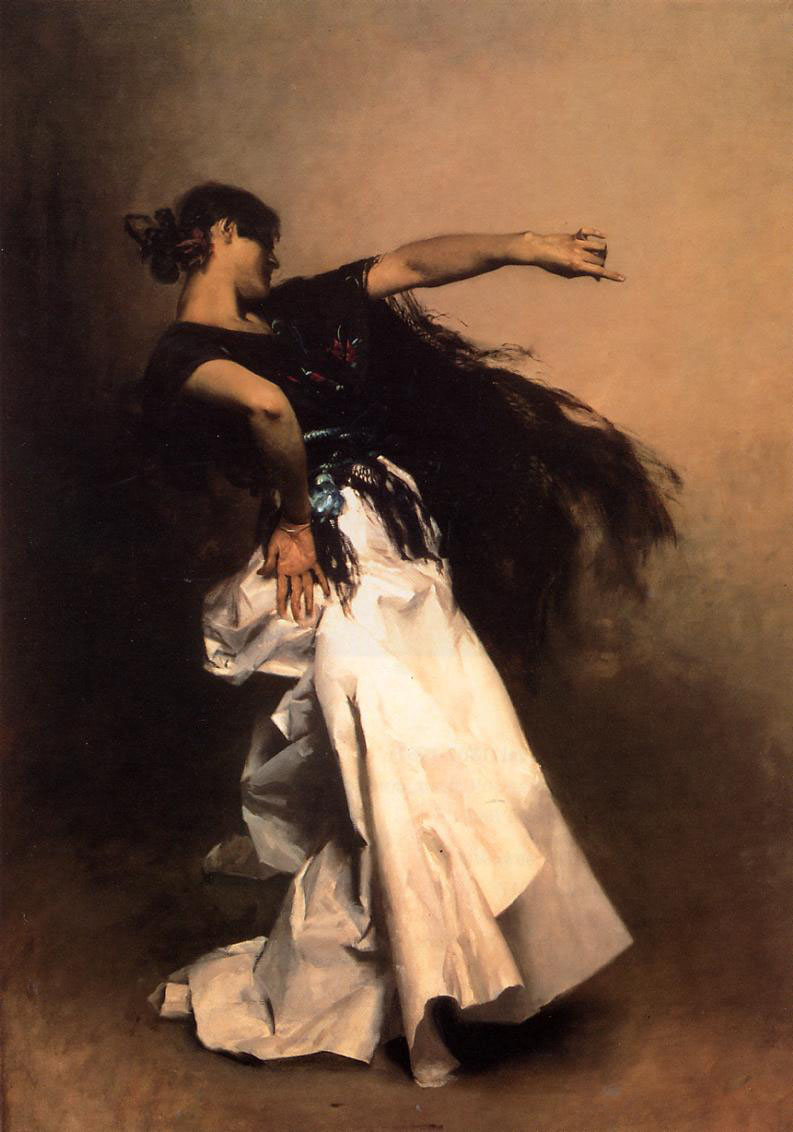 🇪🇸 SpainFlamenco
A dramatic dance and music tradition rooted in Andalusia's gitano and folk culturesFolk dance · Solo · Group
🇪🇸 SpainFlamenco
A dramatic dance and music tradition rooted in Andalusia's gitano and folk culturesFolk dance · Solo · Group
 🇧🇪 Belgium and 5 moreProcessional giant
Huge costumed figures carried and danced in European street processionsFolk dance · Solo · Procession
🇧🇪 Belgium and 5 moreProcessional giant
Huge costumed figures carried and danced in European street processionsFolk dance · Solo · Procession
 🇪🇸 Spain and 5 morePasodoble
A dramatic Spanish partner dance set to march-like music, echoing the bullfightFolk dance · Couple · Group
🇪🇸 Spain and 5 morePasodoble
A dramatic Spanish partner dance set to march-like music, echoing the bullfightFolk dance · Couple · Group
 🇪🇸 Spain and 4 moreFandango
A lively Spanish partner dance in triple meter, accompanied by guitars and castanets.Folk dance · Couple · Group
🇪🇸 Spain and 4 moreFandango
A lively Spanish partner dance in triple meter, accompanied by guitars and castanets.Folk dance · Couple · Group
Its cousins elsewhere
All folk dances 🇦🇷 Argentina and 1 moreTango
A partner dance from the Río de la Plata, danced in close or open embraceSocial dance · Couple
🇦🇷 Argentina and 1 moreTango
A partner dance from the Río de la Plata, danced in close or open embraceSocial dance · Couple
 🇮🇳 India and 1 moreFolk dance
Traditional group dances rooted in local life and passed down through generationsFolk dance · Group · Circle
🇮🇳 India and 1 moreFolk dance
Traditional group dances rooted in local life and passed down through generationsFolk dance · Group · Circle
 🇧🇷 BrazilCapoeira
A Brazilian martial art that blends dance, acrobatics, and music in a circle gameWar or martial dance · Circle · Solo
🇧🇷 BrazilCapoeira
A Brazilian martial art that blends dance, acrobatics, and music in a circle gameWar or martial dance · Circle · Solo
 🇪🇬 Egypt and 3 moreBelly danceرقص شرقي
A Middle Eastern dance focused on hip and torso articulation.Folk dance · Solo
🇪🇬 Egypt and 3 moreBelly danceرقص شرقي
A Middle Eastern dance focused on hip and torso articulation.Folk dance · Solo