
Bugaku
In its own language: 舞楽
A formal Japanese court dance of slow, measured steps, masks and rich robes
Bugaku is a stately Japanese court dance performed on an elevated square stage, accompanied by gagaku music. Dancers in ornate robes and carved masks execute slow, controlled steps that portray legendary battles, divine meetings, and mythical creatures.
Watch it dancedShare on WhatsApp
- Staged on a square platform measuring six yards across.
- Accompanied by gagaku, with some musician lineages continuing for thirty-nine generations.
- Blends seventh-century continental Buddhist dance with ancient Shinto mythological traditions.
- Remained an exclusive imperial palace art for over twelve centuries before opening to the public.
What is Bugaku?
Bugaku is an ancient ceremonial dance from Japan, traditionally staged before emperors and noble guests. Performers move with measured dignity, executing deliberate and exact gestures. The staging takes place upon a square platform that measures six yards on each side. Dancers wear striking masks and layered, highly decorative garments inspired by continental Buddhist styles. An instrumental court ensemble provides the gagaku music that sets the rhythm. Stories told through these dances range from playful mythical dragons and heavenly birds like the phoenix to fierce clashes and audiences with gods. Repeated rhythmic sequences and musical motifs structure each presentation.
Where does Bugaku come from?
The tradition traces its roots to seventh-century cultural exchanges, when Buddhist dance-dramas arrived in Japan from Korea and China. Japanese artists blended these foreign spectacles with native Shinto ceremonial practices. According to Shinto legend, dance began when the goddess Ame-no-uzume danced atop an overturned tub to entice the sun goddess Amaterasu from her hidden cave. Over twelve centuries, the imperial court preserved and refined this synthesis. Generational lines of court artists, such as the thirty-nine generations of the Ono family, maintained the companion music. Long restricted to palace nobility, the art reached broad audiences only after the Second World War, later touring internationally in 1959.
How is Bugaku danced?
Movements in bugaku are slow, highly controlled, and stately. Dancers hold carefully calculated postures, stepping across the square wooden platform with deliberate balance. Historical training manuals instruct performers to embody images drawn from the natural world, such as bending gently like a tree touched by a cool wind. Choreographies often loop, repeating phrases of motion alongside recurring musical passages. Because the tempo is measured and the staging unhurried, performers must keep absolute control over their limbs. They maintain deep mental focus, mirroring the intense concentration required of the accompanying musicians.
Bugaku, drawn
The music of Bugaku
Bugaku is accompanied by gagaku, the classical music of the Japanese imperial court. The musical arrangements follow cyclical patterns that repeat alongside the physical choreography. Court musicians must direct all their physical and mental energy toward the performance, matching the deep concentration of the dancers on the platform.
Costume and what is carried
Performers dress in elaborate robes derived from Buddhist ceremonial attire introduced centuries ago from continental Asia. These garments feature rich detailing and broad layers. In many pieces, dancers also wear expressive, finely crafted masks that transform them into deities, legendary warriors, or mythical beasts such as dragons and the phoenix.
When and where Bugaku is danced
For more than a millennium, bugaku was reserved solely for the imperial family and noble elites within palace walls. Following the end of the Second World War, the tradition opened to general audiences. The court artists began staging public showcases and eventually brought the dance overseas during an international tour in 1959.
Styles of Bugaku
Repertoire pieces vary according to the characters and events they portray. Some works dramatize legendary battles between warriors, while other selections recreate encounters with heavenly spirits. Specific character pieces center on mythical creatures, such as a renowned dance showing two dragons at play, or dances that present fabulous beasts like the phoenix.
What Bugaku means
Bugaku holds deep ties to Japanese imperial lineage, which traces its ancestry to the sun deity Amaterasu. This links palace governance directly to sacred ritual. Even as modern society evolves rapidly, Japan maintains a strong cultural commitment to preserving this ancient performance style, keeping its twelve-hundred-year-old customs active while ancestral forms elsewhere have vanished.
Questions people ask about Bugaku
Where does bugaku come from?
Bugaku developed in the Japanese imperial court. It emerged after seventh-century Buddhist dance styles from China and Korea merged with native Shinto ceremonial traditions.
Why was bugaku danced?
It was performed as an elite entertainment and ceremonial art for the Japanese emperor and nobility, honoring ancestral myths, deities, and legendary tales.
What do the dancers wear?
Performers wear ornate, layered robes based on traditional Buddhist styles and frequently put on detailed masks representing gods, warriors, or mythical beasts.
What stories do the dances tell?
Pieces portray legendary martial battles, audiences with heavenly beings, and the antics of mythical creatures, including frolicking dragons and the phoenix.
Good reading and sources
- Bugaku on WikipediaEncyclopedia
- More photos and video on Wikimedia CommonsPhotos and video
- Wikidata recordOpen data
- Videos of Bugaku on YouTubeSearch results, not chosen by Ghungroo
The facts on this page come from the Wikipedia article "Bugaku", written by its contributors and used under the CC BY-SA 4.0 licence, and from its Wikidata record (CC0). Ghungroo rewrote the text in its own words, with AI assistance, and compares every page with the article to make sure no passage is copied. It may be reused under the same CC BY-SA 4.0 licence with a link back.
It may contain mistakes, and it describes the dance in outline: it is not a lesson. Traditions differ from one teacher, village or family to the next. If something is wrong, tell us. Last refreshed 2026-10-04.
More from Japan
All the dances of Japan 🇯🇵 JapanKabuki歌舞伎
A stylised Japanese theatre form using dance, drama and elaborate makeup.Classical dance · Group
🇯🇵 JapanKabuki歌舞伎
A stylised Japanese theatre form using dance, drama and elaborate makeup.Classical dance · Group
 🇯🇵 JapanKagura神楽
A Shinto ritual dance where performers channel deities through slow circling and energetic leaping.Ritual dance · Group · Procession
🇯🇵 JapanKagura神楽
A Shinto ritual dance where performers channel deities through slow circling and energetic leaping.Ritual dance · Group · Procession
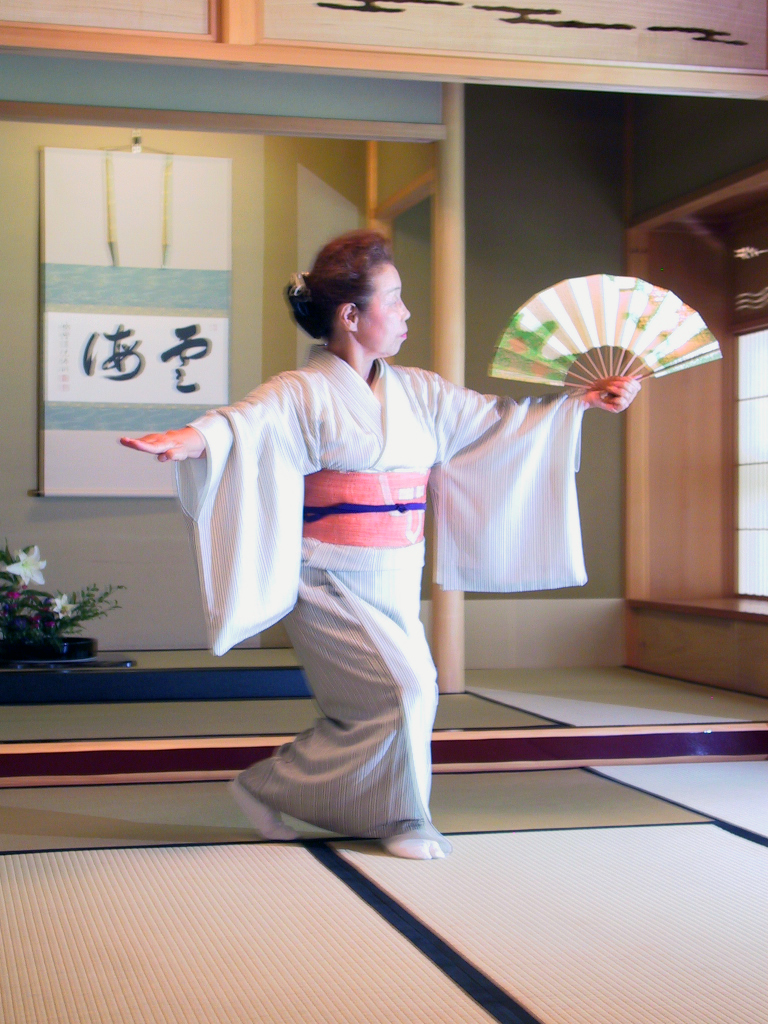 🇯🇵 JapanNihon-buyō日本舞踊
A classical Japanese stage dance refined from kabuki and older traditions.Classical dance · Solo · Group
🇯🇵 JapanNihon-buyō日本舞踊
A classical Japanese stage dance refined from kabuki and older traditions.Classical dance · Solo · Group
 🇯🇵 JapanNoh能
A masked dance-drama of Japan, performed since the fourteenth century.Classical dance · Group
🇯🇵 JapanNoh能
A masked dance-drama of Japan, performed since the fourteenth century.Classical dance · Group
Its cousins elsewhere
All classical dances 🇮🇹 Italy and 2 moreBallet
A highly technical stage dance with its own steps and styles, shaped in France and RussiaClassical dance · Solo · Group
🇫🇷 FranceMinuetmenuet
A French social dance for two people in triple time, known for its graceful and controlled steps.Social dance · Couple
🇮🇹 Italy and 2 moreBallet
A highly technical stage dance with its own steps and styles, shaped in France and RussiaClassical dance · Solo · Group
🇫🇷 FranceMinuetmenuet
A French social dance for two people in triple time, known for its graceful and controlled steps.Social dance · Couple
 🇫🇷 FranceBourrée
A lively French dance in double or triple time, once found in both villages and courtsFolk dance · Couple · Circle
🇫🇷 FranceBourrée
A lively French dance in double or triple time, once found in both villages and courtsFolk dance · Couple · Circle
 🇮🇹 Italy and 3 moreClassical ballet
A formal stage dance using turnout, pointe work and precise, flowing movementClassical dance · Solo · Group
🇮🇹 Italy and 3 moreClassical ballet
A formal stage dance using turnout, pointe work and precise, flowing movementClassical dance · Solo · Group