
Noh
In its own language: 能
A masked dance-drama of Japan, performed since the fourteenth century.
Noh represents Japan’s oldest surviving theater tradition, combining dance, music, and poetry into a highly structured performance. Actors wear carved wooden faces and move across a bare stage using precise gestures while a small orchestra and chorus deliver the narrative.
Watch it dancedShare on WhatsApp
- Originated in the fourteenth century from imported Chinese acts and local rituals.
- Uses carved wooden masks to portray spirits, women, and deities.
- Follows a three-part pacing structure that starts slow and ends rapidly.
- Designated as UNESCO Intangible Cultural Heritage in two thousand eight.
What is Noh?
Noh stands as a foundational theater tradition from Japan. Dancers wear carved wooden faces to portray spirits, women, warriors, and deities. A small ensemble provides musical support while a chorus delivers the narrative lines. Performers move across a bare stage using measured steps and precise hand signals. The art relies on strict rules passed down through generations rather than spontaneous invention. Audiences watch a slow unfolding of emotion where subtle posture shifts carry the weight of the story. This structured performance blends poetry, acting, and rhythm into a single unified experience.
Where does Noh come from?
The form emerged during the fourteenth century after centuries of cultural exchange. Early entertainers brought acrobatic routines and comic sketches from China to the Japanese islands. Local rural harvest celebrations and courtly music gradually blended with these imported acts. By the mid fourteen hundreds, master performers refined these scattered traditions into a polished stage craft. Samurai leaders quickly embraced the new style, offering steady patronage that elevated the craft to aristocratic heights. Later scholars argue that marginalized groups also shaped the early repertoire to gain standing among the ruling class.
How is Noh danced?
Dancers glide forward with feet sliding close to the floor rather than lifting high. Every gesture follows a fixed vocabulary where bent wrists or turned palms signal specific feelings. The body remains upright and still while only the hands and eyes shift to express inner turmoil. Groups arrange themselves in deliberate patterns around the central character. Partners maintain respectful distance while exchanging dialogue through rhythmic speech. The pacing begins deliberately, accelerates through the middle section, and concludes with brisk, urgent motions.
Noh, drawn
The music of Noh
A compact orchestra supplies the sonic backdrop using three distinct drums and one bamboo flute. Musicians sit along the left side of the stage and strike their instruments with focused precision. A seated chorus of six to eight voices chants the spoken verses and lyrical passages. The vocal delivery alternates between clear recitation and melodic singing. Rhythmic cycles guide the actors through each scene, ensuring that every entrance and exit aligns with the beat. The sound remains restrained, allowing the human voice to carry the primary emotional weight.
Costume and what is carried
Performers wear layered silk robes that drape heavily over their shoulders. The fabric features bold patterns and rich colors that shift depending on the character portrayed. Carved wooden masks cover the face entirely, leaving only the neck exposed. These faces represent different categories of beings, including wandering monks, young girls, and fierce demons. Actors adjust their head position slightly to change how light catches the mask, creating the illusion of shifting expressions. Stagehands assist with quick changes behind a simple screen.


When and where Noh is danced
The plays unfold inside dedicated theaters designed specifically for this art form. Modern audiences attend scheduled evening shows featuring two main dramas separated by short comedic interludes. Historically, lords and military commanders commissioned private performances to celebrate victories or mark seasonal transitions. Training begins in early childhood, with students memorizing complex routines under strict supervision. Families pass down specific repertoires through formal apprenticeships that demand years of disciplined practice.
Styles of Noh
Five major lineages preserve distinct performance styles and technical approaches. Each branch maintains its own leadership family that controls the official repertoire and approves new compositions. Some schools emphasize graceful movement while others prioritize dramatic intensity. Regional branches occasionally adapt staging methods to fit smaller venues without altering the core choreography. Contemporary directors experiment with lighting and pacing while respecting the traditional framework. Female performers now join professional associations alongside their male counterparts, bringing fresh perspectives to established roles.
What Noh means
The tradition holds a protected status under national heritage laws. International recognition followed when global bodies added the combined theater program to their preservation list. Critics view the strict adherence to past methods as a conscious choice to safeguard historical memory. The art survives through government funding and public interest rather than commercial popularity. Scholars study the surviving scripts to understand medieval Japanese values and spiritual beliefs. Modern adaptations rarely alter the fundamental structure, preferring evolution over revolution.
Questions people ask about Noh
What exactly is Noh?
It is a classical Japanese dance drama that uses carved masks and stylized gestures to tell stories about spirits and heroes. The art requires years of disciplined training and follows strict traditional rules.
Where does this performance tradition come from?
It developed in Japan during the fourteenth century by blending imported Chinese entertainment with local harvest rituals and court music. Samurai patrons later helped elevate it to a formal theater art.
When and why do people perform it today?
Professional troupes stage regular evening programs in dedicated theaters to preserve historical memory and share medieval storytelling with modern audiences. Government funding supports these performances as protected cultural heritage.
How many musicians accompany the dancers?
Four instrumentalists play a bamboo flute and three different drums while a chorus of six to eight singers delivers the narrative verses. They sit along the stage edge to provide steady rhythmic support.
Good reading and sources
- Encyclopaedia BritannicaArticle
- Harry Partch – how Heiner Goebbels bought Delusion of the Fury to EdinburghThe Guardian, Article
- Noh on WikipediaEncyclopedia
- More photos and video on Wikimedia CommonsPhotos and video
- Wikidata recordOpen data
- Videos of Noh on YouTubeSearch results, not chosen by Ghungroo
The facts on this page come from the Wikipedia article "Noh", written by its contributors and used under the CC BY-SA 4.0 licence, and from its Wikidata record (CC0). Ghungroo rewrote the text in its own words, with AI assistance, and compares every page with the article to make sure no passage is copied. It may be reused under the same CC BY-SA 4.0 licence with a link back.
It may contain mistakes, and it describes the dance in outline: it is not a lesson. Traditions differ from one teacher, village or family to the next. If something is wrong, tell us. Last refreshed 2026-10-03.
More from Japan
All the dances of Japan 🇯🇵 JapanKabuki歌舞伎
A stylised Japanese theatre form using dance, drama and elaborate makeup.Classical dance · Group
🇯🇵 JapanKabuki歌舞伎
A stylised Japanese theatre form using dance, drama and elaborate makeup.Classical dance · Group
 🇯🇵 Japan and 2 moreButoh舞踏 (Butō)
A Japanese dance theatre form known for slow, controlled movement and white body makeup.Dance-drama · Solo · Group
🇯🇵 Japan and 2 moreButoh舞踏 (Butō)
A Japanese dance theatre form known for slow, controlled movement and white body makeup.Dance-drama · Solo · Group
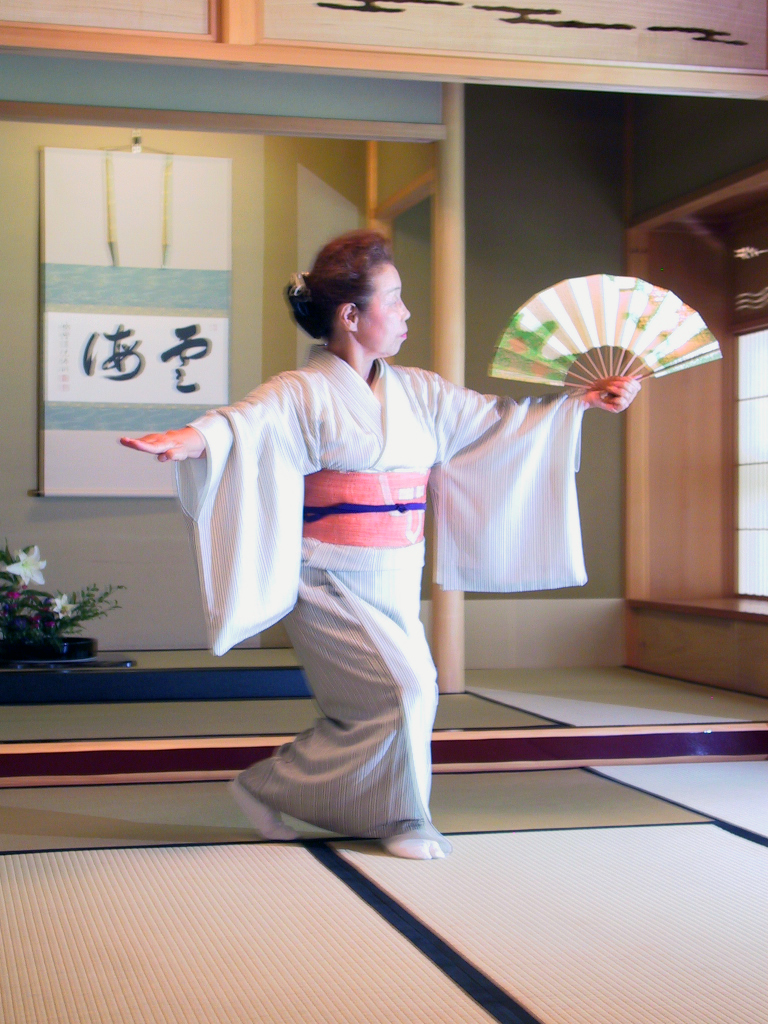 🇯🇵 JapanNihon-buyō日本舞踊
A classical Japanese stage dance refined from kabuki and older traditions.Classical dance · Solo · Group
🇯🇵 JapanNihon-buyō日本舞踊
A classical Japanese stage dance refined from kabuki and older traditions.Classical dance · Solo · Group
 🇯🇵 JapanKumi Odori組踊 (Okinawan: Kumi wudui)
A narrative court dance from Okinawa, blending East Asian styles for diplomatic entertainment.Dance-drama · Group
🇯🇵 JapanKumi Odori組踊 (Okinawan: Kumi wudui)
A narrative court dance from Okinawa, blending East Asian styles for diplomatic entertainment.Dance-drama · Group
Its cousins elsewhere
All classical dances 🇮🇹 Italy and 2 moreBallet
A highly technical stage dance with its own steps and styles, shaped in France and RussiaClassical dance · Solo · Group
🇫🇷 FranceMinuetmenuet
A French social dance for two people in triple time, known for its graceful and controlled steps.Social dance · Couple
🇮🇹 Italy and 2 moreBallet
A highly technical stage dance with its own steps and styles, shaped in France and RussiaClassical dance · Solo · Group
🇫🇷 FranceMinuetmenuet
A French social dance for two people in triple time, known for its graceful and controlled steps.Social dance · Couple
 🇫🇷 FranceBourrée
A lively French dance in double or triple time, once found in both villages and courtsFolk dance · Couple · Circle
🇫🇷 FranceBourrée
A lively French dance in double or triple time, once found in both villages and courtsFolk dance · Couple · Circle
 🇮🇹 Italy and 3 moreClassical ballet
A formal stage dance using turnout, pointe work and precise, flowing movementClassical dance · Solo · Group
🇮🇹 Italy and 3 moreClassical ballet
A formal stage dance using turnout, pointe work and precise, flowing movementClassical dance · Solo · Group