
Gigue
A lively baroque dance in compound time, often closing a musical suite.
The gigue is a fast baroque dance that evolved from the English jig. It reached France in the mid-1600s and became a standard finale for instrumental suites.
Watch it dancedShare on WhatsApp
- Derived from the English jig and imported to France.
- Typically written in 3/8 or 6/8 compound time.
- Served as the standard finale for Baroque suites.
- Pachelbel paired it with his famous Canon.
- Featured contrapuntal textures and fugal writing.
What is Gigue?
The gigue is a spirited dance from the Baroque era. It likely began as an English folk jig before moving to France. Dancers moved to lively rhythms, often in triple time. The style was social among nobility but also appeared in formal concerts. It typically closes a multi-movement suite of music.
Where does Gigue come from?
The dance originated from the English jig. It entered French culture around the middle of the seventeenth century. Some scholars suggest the Italian name 'giga' comes from a small stringed instrument. The term may have been used in England before appearing on the continent.
How is Gigue danced?
Dancers performed in two distinct sections. The steps were lively and energetic. The rhythm often featured accents on the third beat of the measure. This created a distinctive forward momentum. The texture was frequently contrapuntal, with multiple melodic lines weaving together.
Gigue, drawn
The music of Gigue
Composers usually wrote gigues in 3/8 or 6/8 time. Johann Sebastian Bach and Johann Pachelbel wrote famous examples. Pachelbel's gigue uses fugal writing, where melodies are imitated by other voices. It lacks a repeating bass line found in its companion canon.
Costume and what is carried
The sources do not describe specific costumes or props for the gigue. As a social dance for nobility, attire would reflect the fashion of the Baroque period. No special masks or handheld items are mentioned in the historical records provided.

When and where Gigue is danced
Nobility danced the gigue at social gatherings. It was not strictly a court ritual but a popular entertainment. In early French theatre, it served as the finale for plays. Musicians played it to conclude performance events.
Styles of Gigue
Most gigues follow compound meter patterns like 6/4 or 9/8. Exceptions exist, such as Bach's French Suite in 2/4 time. These variations feature dotted rhythms and a strutting quality. The Italian 'giga' may represent a separate regional evolution.
What Gigue means
The gigue holds a place in Western classical music history. It appears in major works by composers like Bach and Pachelbel. Modern literature, such as Jonathan Littels novel, references it structurally. It remains a recognizable element of Baroque repertoire.
Questions people ask about Gigue
Where does the gigue come from?
It evolved from the English jig and arrived in France during the mid-seventeenth century. It became a staple of Baroque music and social dancing.
What time signature does the gigue use?
It is usually in 3/8 or compound meters like 6/8. Some versions use 2/4 with dotted rhythms, as seen in Bach's French Suite.
Why is the gigue important in music history?
It is a standard movement in Baroque suites. Composers like Pachelbel and Bach used it to provide a lively conclusion to their instrumental works.
Good reading and sources
- Gigue on WikipediaEncyclopedia
- More photos and video on Wikimedia CommonsPhotos and video
- Wikidata recordOpen data
- Videos of Gigue on YouTubeSearch results, not chosen by Ghungroo
The facts on this page come from the Wikipedia article "Gigue", written by its contributors and used under the CC BY-SA 4.0 licence, and from its Wikidata record (CC0). Ghungroo rewrote the text in its own words, with AI assistance, and compares every page with the article to make sure no passage is copied. It may be reused under the same CC BY-SA 4.0 licence with a link back.
It may contain mistakes, and it describes the dance in outline: it is not a lesson. Traditions differ from one teacher, village or family to the next. If something is wrong, tell us. Last refreshed 2026-10-03.
More from France
All the dances of France 🇮🇹 Italy and 2 moreBallet
A highly technical stage dance with its own steps and styles, shaped in France and RussiaClassical dance · Solo · Group
🇮🇹 Italy and 2 moreBallet
A highly technical stage dance with its own steps and styles, shaped in France and RussiaClassical dance · Solo · Group
 🇵🇱 Poland and 3 morePolonaisePolonez, chodzony
A stately walking dance in triple time, opening Polish celebrations and ballsFolk dance · Couple · Procession
🇵🇱 Poland and 3 morePolonaisePolonez, chodzony
A stately walking dance in triple time, opening Polish celebrations and ballsFolk dance · Couple · Procession
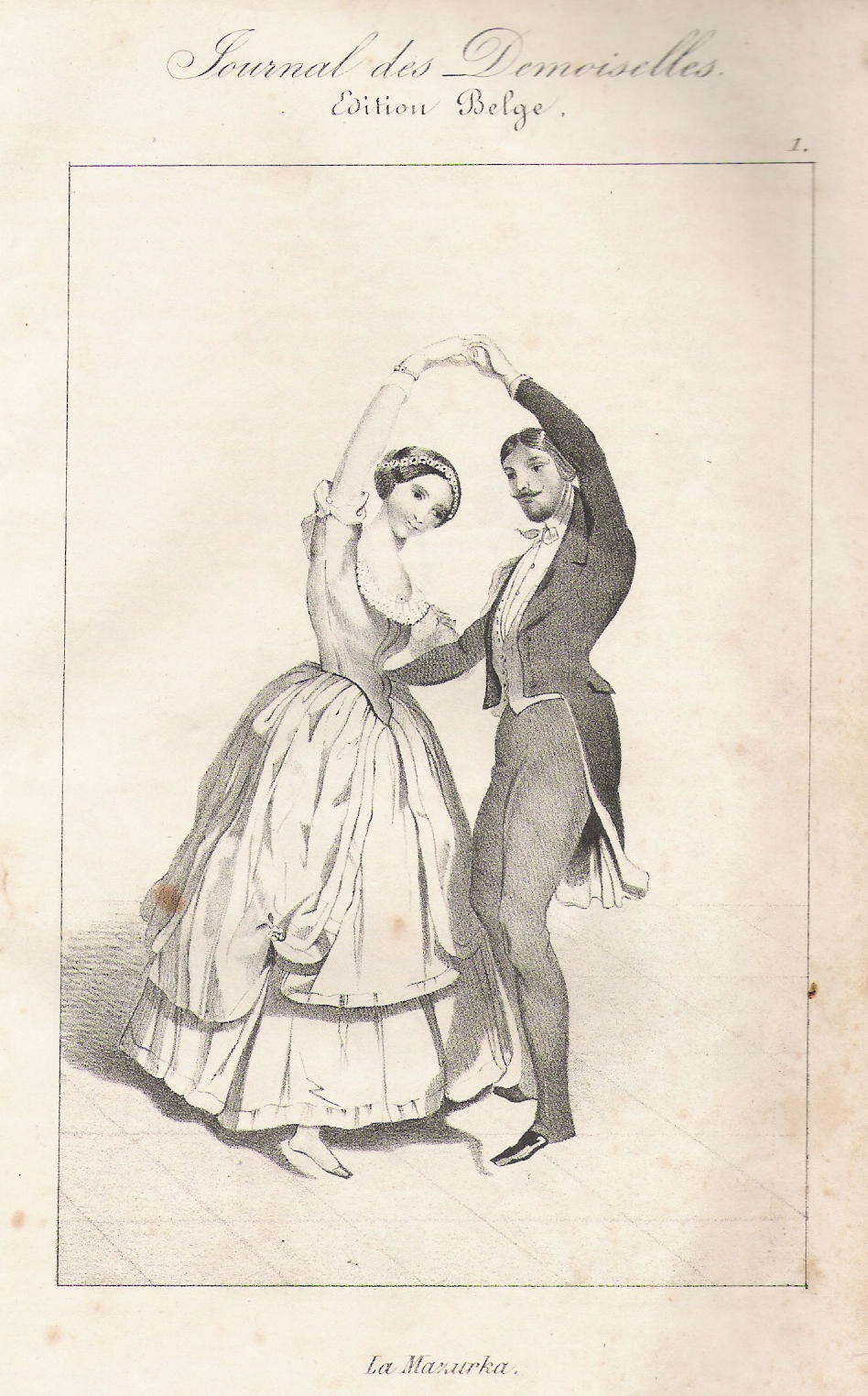 🇵🇱 Poland and 5 moreMazurka
A lively Polish folk dance in triple time, known for its shifting accentsFolk dance · Couple · Group
🇫🇷 FranceMinuetmenuet
A French social dance for two people in triple time, known for its graceful and controlled steps.Social dance · Couple
🇵🇱 Poland and 5 moreMazurka
A lively Polish folk dance in triple time, known for its shifting accentsFolk dance · Couple · Group
🇫🇷 FranceMinuetmenuet
A French social dance for two people in triple time, known for its graceful and controlled steps.Social dance · Couple
Its cousins elsewhere
All social dances 🇦🇷 Argentina and 1 moreTango
A partner dance from the Río de la Plata, danced in close or open embraceSocial dance · Couple
🇦🇷 Argentina and 1 moreTango
A partner dance from the Río de la Plata, danced in close or open embraceSocial dance · Couple
 🇮🇳 India and 1 moreFolk dance
Traditional group dances rooted in local life and passed down through generationsFolk dance · Group · Circle
🇮🇳 India and 1 moreFolk dance
Traditional group dances rooted in local life and passed down through generationsFolk dance · Group · Circle
 🇪🇬 Egypt and 3 moreBelly danceرقص شرقي
A Middle Eastern dance focused on hip and torso articulation.Folk dance · Solo
🇪🇬 Egypt and 3 moreBelly danceرقص شرقي
A Middle Eastern dance focused on hip and torso articulation.Folk dance · Solo
 🇦🇷 Argentina and 1 moreArgentine tango
A partner dance from Buenos Aires suburbs, defined by the bandoneon and an intimate embrace.Social dance · Couple
🇦🇷 Argentina and 1 moreArgentine tango
A partner dance from Buenos Aires suburbs, defined by the bandoneon and an intimate embrace.Social dance · Couple