
Scottish highland dance
In its own language: dannsa Gàidhealach
A solo step dance with raised arms, performed at Highland games and competitions
Scottish highland dance is a technical solo dance style from the Scottish Highlands, formalised in the 19th and 20th centuries. Dancers perform on the balls of their feet with precise steps and raised arms, often to Highland bagpipe music. Today, it is a competitive sport seen at Highland games in Scotland and worldwide, with most dancers being women.
Watch it dancedShare on WhatsApp
- Dancers perform on the balls of their feet with raised arms
- Usually accompanied by Highland bagpipe music
- Most competitors today are women, though men also take part
- A key feature of Highland games in Scotland and worldwide
- Governed by the Royal Scottish Official Board of Highland Dancing since 1950
What is Scottish highland dance?
Scottish highland dance is a demanding solo dance style that combines precise footwork with expressive arm and hand movements. Dancers perform on the balls of their feet, often raising their arms above their heads in distinctive shapes. The dance is athletic and technical, requiring stamina and strength. It is usually performed to the sound of Highland bagpipes, and dancers wear soft shoes called ghillies or pumps. While rooted in Scottish tradition, it is now practiced and competed in by people of all genders and ages around the world.
Where does Scottish highland dance come from?
The dance developed in the Scottish Highlands during the 19th and 20th centuries, drawing on older Gaelic folk dances and shaped by the conventions of ballet. Earlier forms included ritual and martial dances, such as sword dances performed by warriors. References to such dances in Scotland date back to at least the 13th century, with mentions in medieval chronicles and performances at royal events. The modern form became closely linked to the revival of Highland games in the 1800s, which narrowed the range of dances for competition and led to the loss of some older steps.
How is Scottish highland dance danced?
Highland dance is performed mainly as a solo, with dancers keeping upright posture and moving on the balls of their feet. Steps are combined with coordinated arm and hand positions, often held high above the head. Some dances, like the Highland reel, involve small groups who alternate between facing each other for solo steps and weaving in figures of eight. The style is distinct from other Scottish and Irish dances, with more use of the upper body and different foot positions.
Scottish highland dance, drawn
The music of Scottish highland dance
The dance is most often accompanied by Highland bagpipe music, which sets the rhythm and mood. The tunes played are traditional Scottish melodies, and the music is a key part of the atmosphere at Highland games and competitions. Dancers must match their steps closely to the tempo and phrasing of the pipes.
Costume and what is carried
Dancers wear specialised soft shoes called ghillies or pumps. The rest of the costume can vary, but is often based on Highland dress, especially for competitions. Historically, men wore kilts, but today most dancers are women, and costumes may include tartan skirts or dresses. The look is completed with accessories such as knee socks and sometimes a sash.


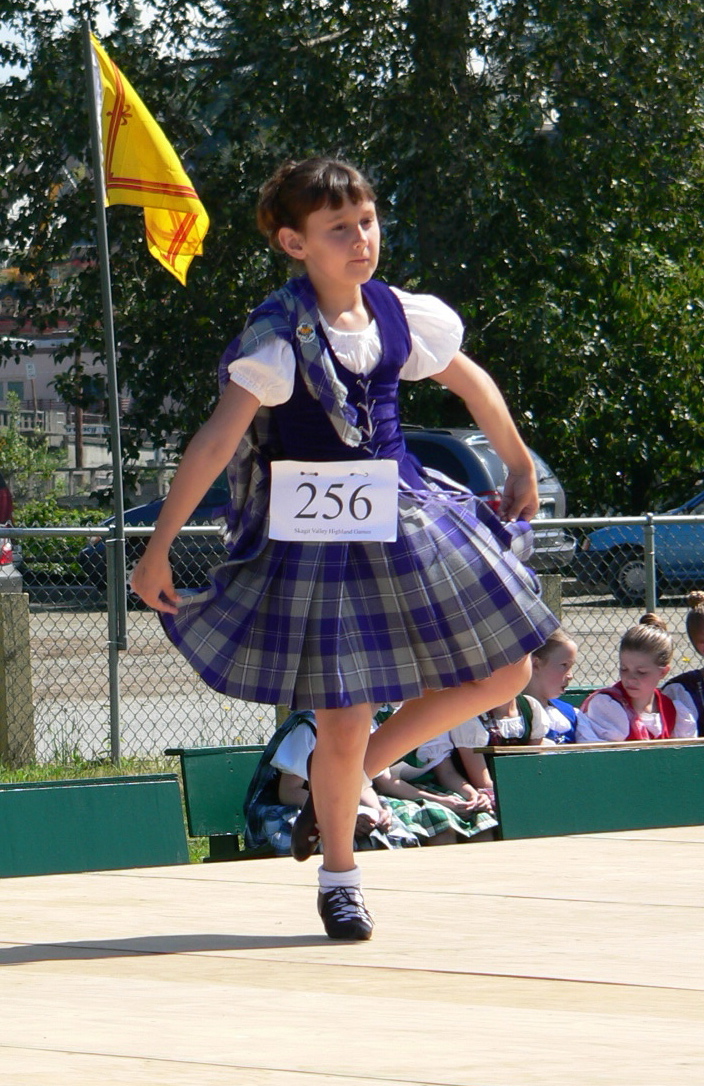
When and where Scottish highland dance is danced
Highland dance is most closely associated with the Highland games, where it is a featured competition. It is also performed at other festivals and events celebrating Scottish culture, both in Scotland and in countries with Scottish communities. Dancers train through local clubs and societies, and must pass exams to teach or judge. Competitions are held indoors or outdoors, depending on the event and weather.
Styles of Scottish highland dance
While most Highland dances are solo, a few, like the Highland reel, involve groups. There are several organisations worldwide that set rules and syllabi, including the Royal Scottish Official Board of Highland Dancing and national bodies in Australia, New Zealand, Canada, South Africa, and the United States. Some competitions are not affiliated with the main governing body and have their own rules.
What Scottish highland dance means
Highland dance is recognised as a sport in Scotland and is a symbol of Scottish identity at home and abroad. Its competitive nature and formal training have helped it spread worldwide, especially in countries with Scottish heritage. The dance has shifted from being performed mainly by men to being dominated by women, reflecting broader changes in folk traditions. It remains a central part of Highland games and cultural festivals.
Questions people ask about Scottish highland dance
Where does Scottish highland dance come from?
Scottish highland dance developed in the Scottish Highlands, drawing on Gaelic folk dances and formalised in the 19th and 20th centuries.
When and why is highland dance performed?
It is performed mainly at Highland games and competitions, as well as festivals and cultural events celebrating Scottish heritage.
What music is used for highland dance?
The dance is most often accompanied by Highland bagpipe music, playing traditional Scottish tunes.
Who can take part in highland dance?
Anyone can learn and compete in highland dance. Today, most competitors are women, but men also participate.
How is highland dance different from other Scottish or Irish dances?
Highland dance uses raised arms and precise footwork, while Irish dance keeps the arms at the sides and uses different steps and shoes.
Good reading and sources
- Highland dance on WikipediaEncyclopedia
- More photos and video on Wikimedia CommonsPhotos and video
- Wikidata recordOpen data
- Videos of Scottish highland dance on YouTubeSearch results, not chosen by Ghungroo
The facts on this page come from the Wikipedia article "Highland dance", written by its contributors and used under the CC BY-SA 4.0 licence, and from its Wikidata record (CC0). Ghungroo rewrote the text in its own words, with AI assistance, and compares every page with the article to make sure no passage is copied. It may be reused under the same CC BY-SA 4.0 licence with a link back.
It may contain mistakes, and it describes the dance in outline: it is not a lesson. Traditions differ from one teacher, village or family to the next. If something is wrong, tell us. Last refreshed 2026-10-03.
More from the United Kingdom
All the dances of the United Kingdom 🇮🇳 India and 1 moreGarba
A circle dance from Gujarat performed around a clay pot during the Navratri festival.Folk dance · Circle
🇮🇳 India and 1 moreGarba
A circle dance from Gujarat performed around a clay pot during the Navratri festival.Folk dance · Circle
 🇧🇪 Belgium and 5 moreProcessional giant
Huge costumed figures carried and danced in European street processionsFolk dance · Solo · Procession
🇧🇪 Belgium and 5 moreProcessional giant
Huge costumed figures carried and danced in European street processionsFolk dance · Solo · Procession
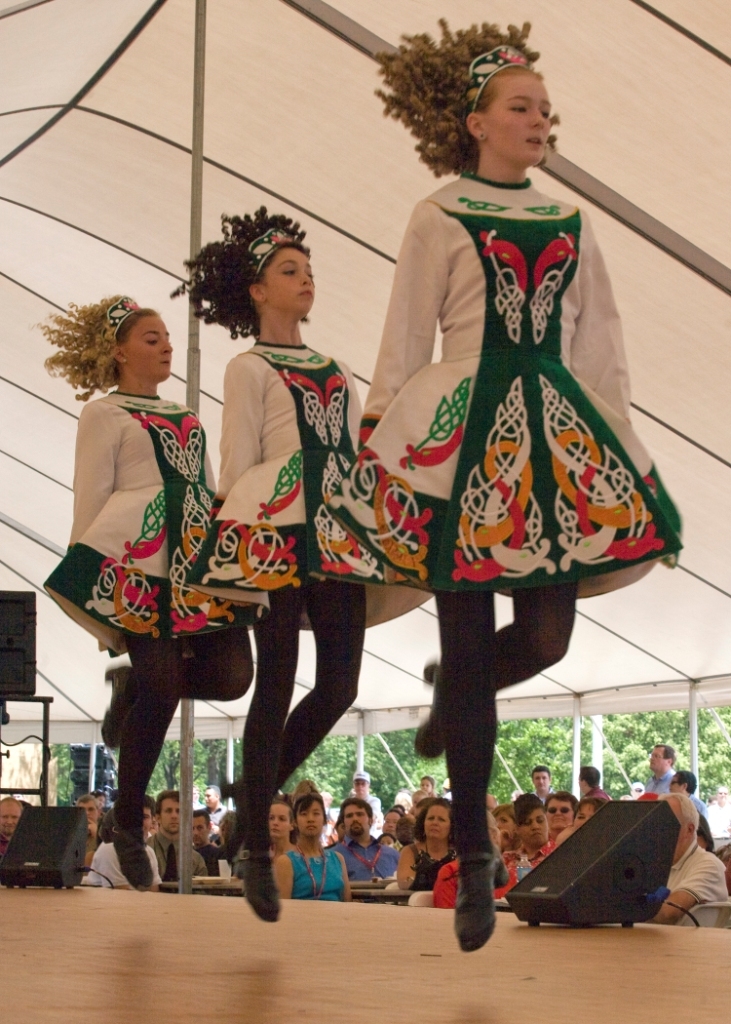 🇮🇪 Ireland and 3 moreIrish dance
Solo and group dances from Ireland, known for fast footwork and lively formationsFolk dance · Solo · Group
🇮🇪 Ireland and 3 moreIrish dance
Solo and group dances from Ireland, known for fast footwork and lively formationsFolk dance · Solo · Group
 🇮🇪 Ireland and 2 moreJigport
A lively folk dance in compound time, central to Irish and Scottish traditionFolk dance · Solo · Group
🇮🇪 Ireland and 2 moreJigport
A lively folk dance in compound time, central to Irish and Scottish traditionFolk dance · Solo · Group
Its cousins elsewhere
All folk dances 🇦🇷 Argentina and 1 moreTango
A partner dance from the Río de la Plata, danced in close or open embraceSocial dance · Couple
🇦🇷 Argentina and 1 moreTango
A partner dance from the Río de la Plata, danced in close or open embraceSocial dance · Couple
 🇮🇳 India and 1 moreFolk dance
Traditional group dances rooted in local life and passed down through generationsFolk dance · Group · Circle
🇮🇳 India and 1 moreFolk dance
Traditional group dances rooted in local life and passed down through generationsFolk dance · Group · Circle
 🇧🇷 BrazilCapoeira
A Brazilian martial art that blends dance, acrobatics, and music in a circle gameWar or martial dance · Circle · Solo
🇧🇷 BrazilCapoeira
A Brazilian martial art that blends dance, acrobatics, and music in a circle gameWar or martial dance · Circle · Solo
 🇪🇬 Egypt and 3 moreBelly danceرقص شرقي
A Middle Eastern dance focused on hip and torso articulation.Folk dance · Solo
🇪🇬 Egypt and 3 moreBelly danceرقص شرقي
A Middle Eastern dance focused on hip and torso articulation.Folk dance · Solo