
War dance
A ritual or ceremonial dance that imitates combat or battle
A war dance is a ritual or ceremonial dance that imitates combat, often performed by tribal warrior societies. These dances may prepare fighters for battle, celebrate victories, or display martial skill, and are found in many cultures worldwide, sometimes using weapons or strong rhythms.
Watch it dancedShare on WhatsApp
- War dances imitate combat or battle as ritual or ceremony.
- They are found in many cultures worldwide.
- Weapons or replicas are often used in the dance.
- Strong percussive rhythms commonly accompany the movements.
- Some war dances celebrate victories or martial skill.
What is War dance?
A war dance is a type of dance that imitates fighting or battle, often performed by members of a warrior society. These dances can be done solo or in groups and may use weapons or their replicas as part of the performance. The movements often resemble combat, showing off martial skill or preparing for conflict. War dances are found in many cultures and can be both ritual and celebratory.
Where does War dance come from?
War dances have roots in societies where warfare was common and served as rituals linked to battle. They may have been used to prepare warriors mentally and physically, to invoke courage, or to celebrate victories. Over time, some war dances became stylized performances, preserving martial traditions even after their original context faded. The details of their origins vary widely across cultures.
How is War dance danced?
Movements in war dances often mimic fighting actions, such as strikes, parries, or stances, sometimes with real or imitation weapons. Dancers may move in formation, face each other as opponents, or perform solo displays of skill. The choreography can be fierce and energetic, aiming to evoke the spirit of battle or demonstrate martial prowess.
War dance, drawn
The music of War dance
Music for war dances often features strong, percussive rhythms to match the forceful movements. Drumming and other rhythmic instruments are common, providing a driving beat that energizes the dancers. In some traditions, singing or chanting may accompany the dance, further heightening its ritual or ceremonial feel.
Costume and what is carried
Costumes for war dances vary by culture but may include traditional warrior dress, body paint, or items that represent status or achievements in battle. Dancers sometimes carry weapons or replicas, such as swords, sticks, or shields, which are integral to the choreography.


When and where War dance is danced
War dances are performed for various reasons: to prepare for battle, to celebrate victories, during festivals, or as part of ceremonies. In modern times, they may also be presented on stage for audiences, preserving cultural heritage and martial traditions. Participation can depend on age, gender, or social role, depending on the community.
Styles of War dance
There are many forms of war dance across the world, each with its own style and meaning. Some, like the Haka of New Zealand or the Hopak of Ukraine, are well-known internationally. Others are specific to regions or peoples, reflecting local history and martial practices. Some dances incorporate weapons, while others focus on unarmed combat movements.
What War dance means
War dances hold cultural significance as expressions of identity, history, and values. They can symbolize bravery, unity, or the memory of past conflicts. In some places, war dances are recognized as important cultural heritage and are performed at national events or festivals. Their continued practice helps maintain links to ancestral traditions.
Questions people ask about War dance
Where do war dances come from?
War dances are found in many cultures around the world, especially among societies with traditions of warfare. Each culture has its own style and history for these dances.
When or why are war dances performed?
War dances may be performed to prepare for battle, celebrate victories, display martial skill, or as part of festivals and ceremonies.
What do war dances look like?
They often involve movements that imitate fighting, sometimes with weapons or replicas, and can be performed solo or in groups.
Are war dances always accompanied by music?
Many war dances use strong, percussive rhythms or drumming, and some include singing or chanting to enhance the performance.
Who performs war dances?
Participation varies by culture and tradition; dancers may be men, women, or mixed groups, depending on the community.
Good reading and sources
- War dance on WikipediaEncyclopedia
- More photos and video on Wikimedia CommonsPhotos and video
- Wikidata recordOpen data
- Videos of War dance on YouTubeSearch results, not chosen by Ghungroo
The facts on this page come from the Wikipedia article "War dance", written by its contributors and used under the CC BY-SA 4.0 licence, and from its Wikidata record (CC0). Ghungroo rewrote the text in its own words, with AI assistance, and compares every page with the article to make sure no passage is copied. It may be reused under the same CC BY-SA 4.0 licence with a link back.
It may contain mistakes, and it describes the dance in outline: it is not a lesson. Traditions differ from one teacher, village or family to the next. If something is wrong, tell us. Last refreshed 2026-10-03.
More from Indonesia
All the dances of Indonesia 🇨🇳 China and 5 moreLion dance舞獅
A costumed dance that mimics a lion to bring luck and drive away evilFolk dance · Group · Procession
🇨🇳 China and 5 moreLion dance舞獅
A costumed dance that mimics a lion to bring luck and drive away evilFolk dance · Group · Procession
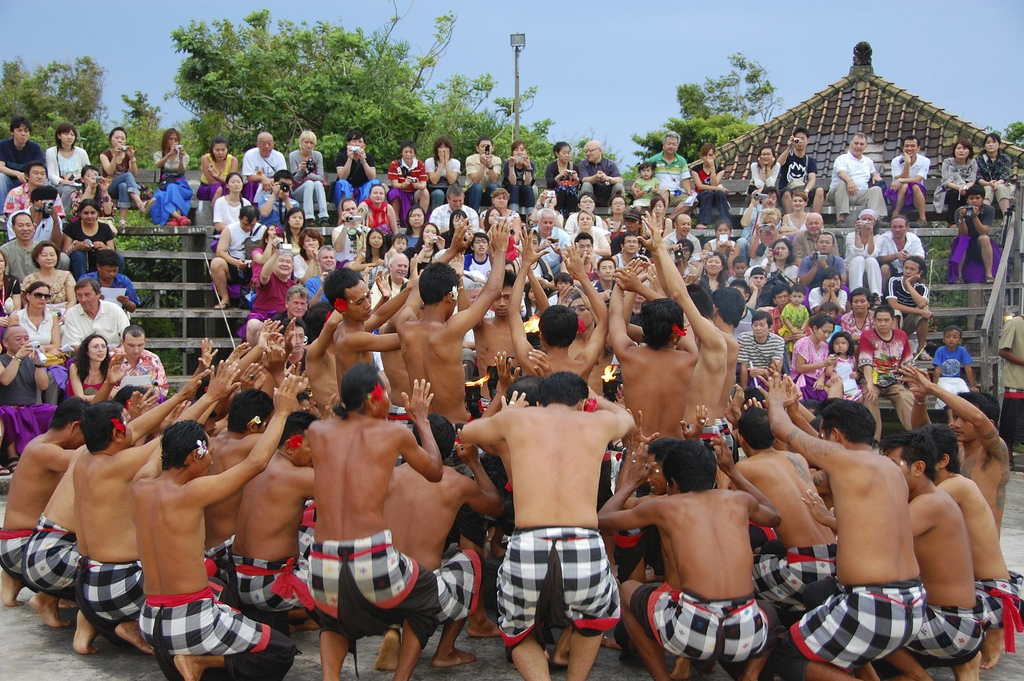 🇮🇩 IndonesiaKecakᬓᬾᬘᬓ᭄
A massed chant and dance-drama from Bali, performed in a circle at duskFolk dance · Circle · Group
🇮🇩 IndonesiaKecakᬓᬾᬘᬓ᭄
A massed chant and dance-drama from Bali, performed in a circle at duskFolk dance · Circle · Group
 🇮🇩 IndonesiaPendetᬧᭂᬦ᭄ᬤᭂᬢ᭄
A Balinese dance where girls offer flowers to greet guests and spiritsFolk dance · Group
🇮🇩 IndonesiaPendetᬧᭂᬦ᭄ᬤᭂᬢ᭄
A Balinese dance where girls offer flowers to greet guests and spiritsFolk dance · Group
 🇨🇳 China and 6 morePeacock dance
A folk dance imitating the peacock, found across South and Southeast AsiaFolk dance · Solo · Group
🇨🇳 China and 6 morePeacock dance
A folk dance imitating the peacock, found across South and Southeast AsiaFolk dance · Solo · Group
Its cousins elsewhere
All war and martial dances 🇧🇷 BrazilCapoeira
A Brazilian martial art that blends dance, acrobatics, and music in a circle gameWar or martial dance · Circle · Solo
🇧🇷 BrazilCapoeira
A Brazilian martial art that blends dance, acrobatics, and music in a circle gameWar or martial dance · Circle · Solo
 🇳🇿 New ZealandHaka
A ceremonial group dance from New Zealand featuring vigorous movement and chanted words.Folk dance · Group
🇳🇿 New ZealandHaka
A ceremonial group dance from New Zealand featuring vigorous movement and chanted words.Folk dance · Group
 🇺🇸 United States and 4 morePole dance
A vertical acrobatic dance combining strength and artistry on a chrome or steel column.Social dance · Solo
🇺🇸 United States and 4 morePole dance
A vertical acrobatic dance combining strength and artistry on a chrome or steel column.Social dance · Solo
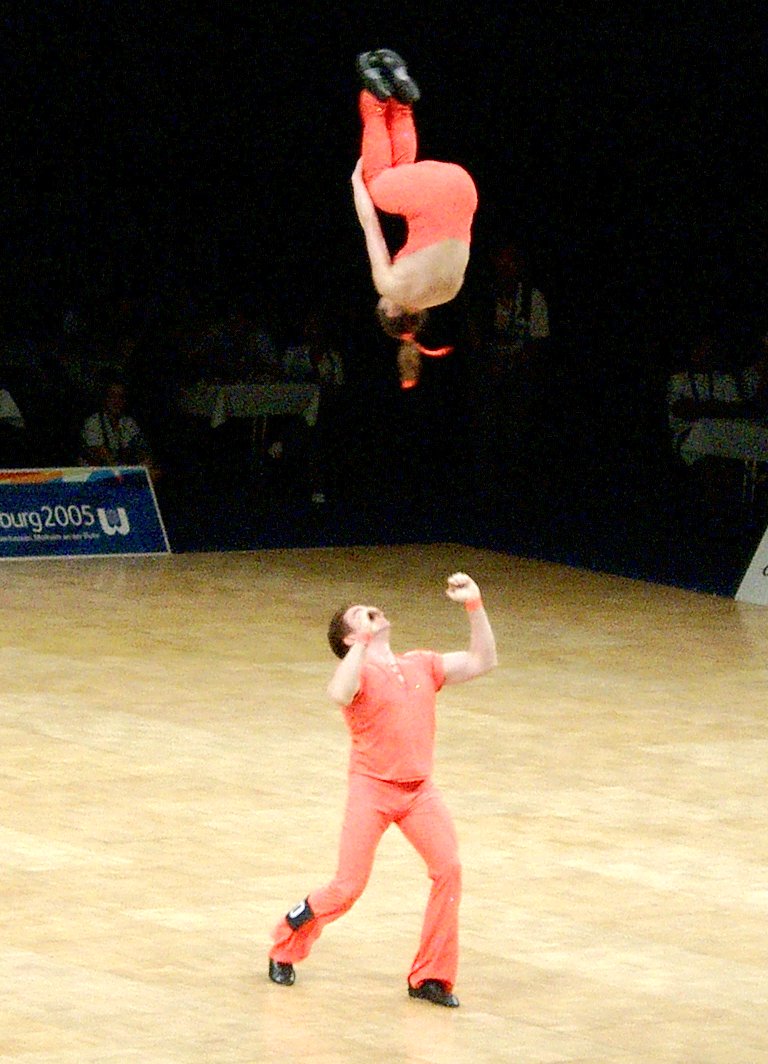 InternationalAcrobatic rock and roll
A fast partner dance with flips and lifts, danced in formal competition.Social dance · Couple · Group
InternationalAcrobatic rock and roll
A fast partner dance with flips and lifts, danced in formal competition.Social dance · Couple · Group