
Yangge
In its own language: 秧歌
A lively folk dance in lines or circles, often with ribbons, drums, and fans
Yangge is a folk dance from northern China, danced in lines or circles by groups of all ages, especially older people. Dancers wear colorful costumes, often with red ribbons, and move to music played by drums, trumpets, and gongs, sometimes using props like fans or waistdrums. It is performed in streets and public spaces, especially during festivals and the New Year, and has both traditional and modern forms.
Watch it dancedShare on WhatsApp
- Danced in lines or circles, often in public spaces
- Props include red ribbons, fans, drums, and umbrellas
- Stilt yangge features dancers on tall wooden stilts
- Reformed in the 1940s for political messaging
- Popular during New Year and festivals in northern China
What is Yangge?
Yangge is a group dance from northern China, often seen in both rural and urban areas. People gather in lines or circles, sometimes forming processions that move through streets or public squares. Dancers wear bright costumes, often with a red silk ribbon tied at the waist, and may carry props like fans, drums, or even ride fake donkeys. The music is loud and energetic, played on drums, trumpets, and gongs. The dance is open to anyone, and crowds often join in as it moves along.
Where does Yangge come from?
Yangge traces its roots to a Song dynasty dance called Village Music. It became especially popular in northern China, where it was performed during New Year celebrations and other festivals. In the 1940s, the Chinese Communist Party adopted and reformed yangge as a tool for political messaging, simplifying its steps and changing its themes to support socialist ideals. This period saw the rise of 'Struggle Yangge,' which removed some traditional elements and added new rules for performance.
How is Yangge danced?
The dance is marked by swinging body movements, with dancers stepping forward and back in repeated patterns. In some styles, dancers move in single file or circles, following a leader who may carry an umbrella or other prop. Movements can be brisk and lively, sometimes imitating daily life or telling stories. In stilt yangge, dancers perform on tall wooden stilts, adding height and spectacle. Props like fans or drums are swung or played as part of the dance.
Yangge, drawn
The music of Yangge
Yangge is accompanied by loud, rhythmic music. Drums, trumpets, and gongs set the pace and mood. Songs may be improvised, especially by the leader, with the group echoing lines. In traditional settings, the music and singing can include playful or congratulatory exchanges, while in reformed versions, the songs focus on political or social themes.
Costume and what is carried
Dancers wear colorful outfits, often in red and green, with a red silk ribbon tied around the waist. Some versions feature traditional Manchu dress or costumes to represent different characters. Props such as fans, waistdrums, umbrellas, or even fake donkeys and litters are common. In stilt yangge, performers wear costumes that cover the stilts, creating a dramatic effect.
When and where Yangge is danced
Yangge is most often danced during festivals, especially the New Year, but also appears at other celebrations and public gatherings. It is popular among older people, but open to all. In the past, it was a village rite, but it is now common in both countryside and city streets. Performances can be spontaneous, with people joining as the dance moves along.
Styles of Yangge
There are many regional styles of yangge. In Shaanxi, large groups follow a leader called the santou, with comic characters and changing formations. Shandong has several types, including guzi yangge, where dancers take on specific roles. Liaoning and Beijing are known for stilt yangge, with dancers performing on stilts in the street or open spaces. Manchurian yangge features brisk movements and traditional dress.
What Yangge means
Yangge is seen as a symbol of northern Chinese folk culture and community spirit. It has been used to promote national identity and, at times, political messages. The dance has adapted over time, reflecting changes in society and government policy. It remains a lively part of public life, especially during major festivals, and is recognized as one of China's most representative folk arts.
Questions people ask about Yangge
Where does yangge come from?
Yangge originated in northern China and developed from a Song dynasty dance called Village Music. It is now popular in provinces like Shaanxi, Shandong, and Liaoning.
When is yangge usually performed?
Yangge is most often danced during festivals and New Year celebrations, but it can also be seen at other public gatherings and in the evenings in both cities and villages.
Who can dance yangge?
Anyone can join in yangge, though it is especially popular among older people. Dancers gather in groups and often invite others to join as the dance moves along.
What props or costumes are used in yangge?
Dancers wear colorful costumes, usually with a red silk ribbon at the waist, and may use props like fans, drums, umbrellas, fake donkeys, or stilts.
How did yangge change in the 1940s?
In the 1940s, the Chinese Communist Party simplified yangge, changed its themes to support socialist ideals, and introduced new rules for performance, creating 'Struggle Yangge.'
Good reading and sources
- Yangge on WikipediaEncyclopedia
- More photos and video on Wikimedia CommonsPhotos and video
- Wikidata recordOpen data
- Videos of Yangge on YouTubeSearch results, not chosen by Ghungroo
The facts on this page come from the Wikipedia article "Yangge", written by its contributors and used under the CC BY-SA 4.0 licence, and from its Wikidata record (CC0). Ghungroo rewrote the text in its own words, with AI assistance, and compares every page with the article to make sure no passage is copied. It may be reused under the same CC BY-SA 4.0 licence with a link back.
It may contain mistakes, and it describes the dance in outline: it is not a lesson. Traditions differ from one teacher, village or family to the next. If something is wrong, tell us. Last refreshed 2026-10-03.
More from China
All the dances of China 🇨🇳 China and 5 moreLion dance舞獅
A costumed dance that mimics a lion to bring luck and drive away evilFolk dance · Group · Procession
🇨🇳 China and 5 moreLion dance舞獅
A costumed dance that mimics a lion to bring luck and drive away evilFolk dance · Group · Procession
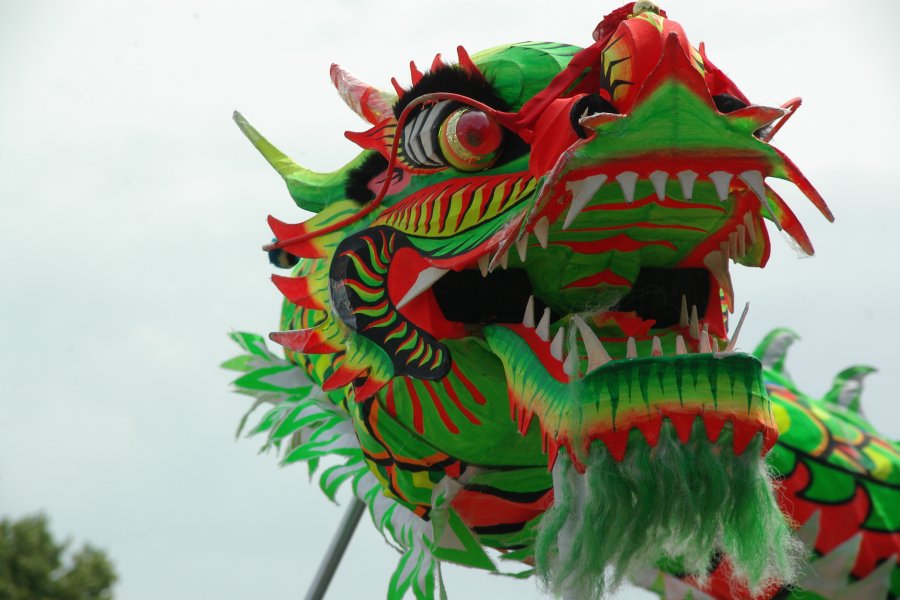 🇨🇳 ChinaDragon dance舞龙 / 舞龍
A team dance with a giant dragon puppet, seen at Chinese New Year and festivalsFolk dance · Group · Procession
🇨🇳 ChinaDragon dance舞龙 / 舞龍
A team dance with a giant dragon puppet, seen at Chinese New Year and festivalsFolk dance · Group · Procession
 🇰🇷 South Korea and 2 morePungmul풍물
A Korean folk performance with drumming, dance, and song, rooted in farming lifeFolk dance · Group · Solo
🇰🇷 South Korea and 2 morePungmul풍물
A Korean folk performance with drumming, dance, and song, rooted in farming lifeFolk dance · Group · Solo
 🇨🇳 China and 6 morePeacock dance
A folk dance imitating the peacock, found across South and Southeast AsiaFolk dance · Solo · Group
🇨🇳 China and 6 morePeacock dance
A folk dance imitating the peacock, found across South and Southeast AsiaFolk dance · Solo · Group
Its cousins elsewhere
All folk dances 🇨🇿 Czech Republic and 5 morePolka
A lively partner dance in 2/4 time from 19th-century BohemiaFolk dance · Couple · Circle
🇨🇿 Czech Republic and 5 morePolka
A lively partner dance in 2/4 time from 19th-century BohemiaFolk dance · Couple · Circle
 🇧🇪 Belgium and 5 moreProcessional giant
Huge costumed figures carried and danced in European street processionsFolk dance · Solo · Procession
🇧🇪 Belgium and 5 moreProcessional giant
Huge costumed figures carried and danced in European street processionsFolk dance · Solo · Procession
 🇧🇧 BarbadosBarbados Land-ship
A parade and dance tradition in Barbados, mimicking naval maneuvers on landFolk dance · Group · Procession
🇧🇧 BarbadosBarbados Land-ship
A parade and dance tradition in Barbados, mimicking naval maneuvers on landFolk dance · Group · Procession